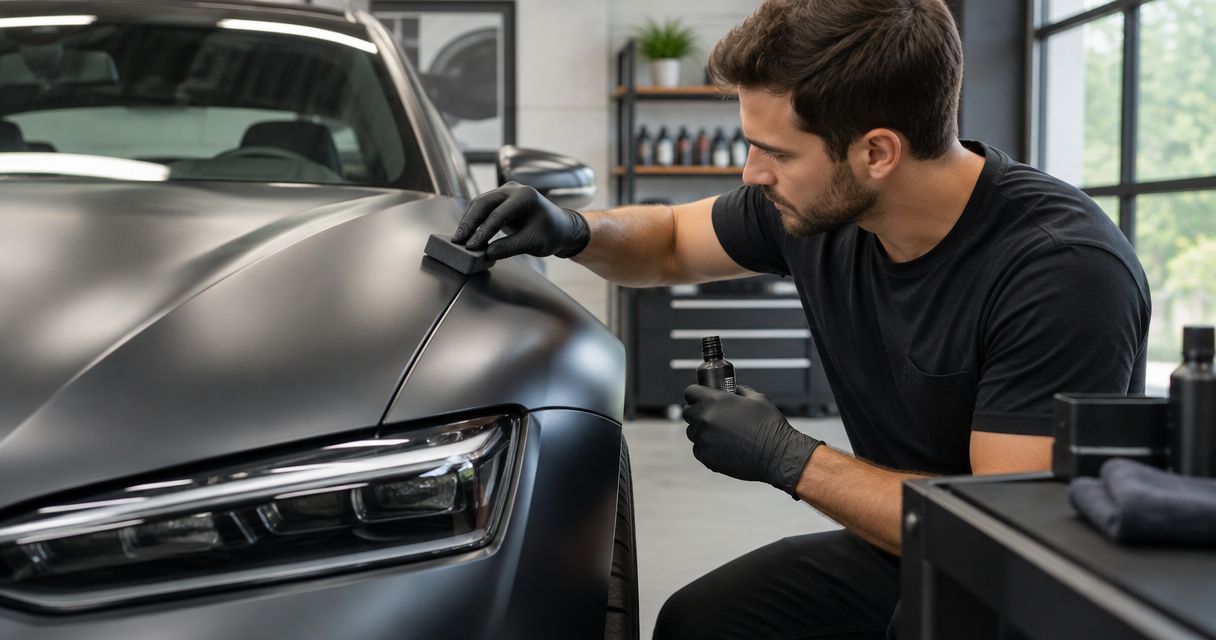
Yes, ceramic coating on matte paint is safe when the coating is approved for that finish and the preparation follows the vehicle manufacturer’s care instructions. The main risks are an unwanted change in sheen and preparation or removal methods that polish the matte surface; ceramic coating does not make matte paint scratch-proof.
- Ceramic coating on matte paint requires documented compatibility with the finish, not a general promise of paint protection.
- Matte paint must not receive the abrasive polishing commonly used to prepare glossy paint.
- A discreet test area helps you check for unwanted darkening, streaking, or added sheen.
- Spiffy Me provides mobile detailing and ceramic coatings in Orange County; confirm matte-finish suitability before booking.
Is ceramic coating safe to apply on matte paint?
A compatible coating can protect matte paint without turning it into a gloss finish, but compatibility must be established before application. Check the vehicle’s care manual alongside the coating manufacturer’s current application instructions. Neither document replaces the other.
For a 2026 appointment, ask the detailer to identify the exact coating and explain how the preparation preserves the finish. Orange County owners can contact the detailing team with the vehicle details and photos before requesting a quote.
Use this sequence before authorizing the work:
- Identify the finish. Establish whether the surface is factory matte paint, a matte repaint, matte paint protection film, or a vinyl wrap.
- Check compatibility. Confirm that the coating instructions explicitly include the surface being treated and do not conflict with the vehicle’s care requirements.
- Approve preparation. Specify finish-compatible cleaning without abrasive polishing or unapproved surface treatments.
- Inspect a test area. Check the result in suitable lighting after following the product’s application and curing instructions.
- Plan aftercare. Agree on where the vehicle will remain while the coating cures and which cleaning products you should use afterward.
Do not treat a successful coating application on a glossy car as evidence that the same process suits matte paint. The finish changes the preparation rules.
Why this matters
Matte paint gets its appearance from the way its surface scatters light. Polishing changes that surface, which can leave a visibly shinier patch rather than a repaired finish.
That makes preparation especially important. A coating should go over a clean, suitable surface, but the detailer cannot automatically use the polishing routine associated with glossy clear coat.
The goal is to preserve the existing finish, not make it shinier. If your main concern is a scratch, stain, or uneven sheen, have that condition assessed before discussing protection. Applying coating is not the same job as repairing the paint.
Which coating approach fits matte paint?
Choose by documented surface compatibility, not by the word ceramic on the label. A coating’s suitability for glossy clear coat does not establish suitability for matte paint.
| Approach | Best for | Benefit | Limitation or risk |
|---|---|---|---|
| Coating explicitly approved for matte paint | Owners protecting a confirmed matte painted finish | Provides a protection option designed for the stated surface | Still requires compatible preparation, careful application, and aftercare |
| General-purpose coating without matte approval | Owners seeking clarification before proceeding | Its documentation provides a starting point for questions | Matte compatibility is unconfirmed; do not authorize it on that basis |
| Finish-compatible washing without coating | Owners delaying treatment until compatibility is established | Avoids applying an unverified product | Does not add the protection of a ceramic coating |
A product marketed for matte finishes still needs an appearance check. Do not interpret “matte compatible” as a guarantee that every painted panel, previous repair, or existing treatment will look unchanged.
For your 2026 booking, request the product name rather than accepting “a professional ceramic coating” as the full specification. You need enough information to check the instructions and understand the proposed work.
Factory matte paint: preserve the original surface
For factory matte paint, start with the vehicle manufacturer’s care instructions. These establish the baseline for washing, contamination removal, and products that should not touch the finish.
Ask whether the proposed preparation includes compound, polish, an abrasive pad, or a gloss-enhancing finishing step. Do not approve those steps simply because they appear in a standard ceramic coating process.
A new vehicle still needs inspection and appropriate cleaning. New paint is not proof that the surface is free of transport residue, water spotting, or previous treatments, and it is not permission to polish a matte panel.
If you see a defect, separate the questions: can it be cleaned safely, does it need repair, and is the remaining surface suitable for coating? Those are different decisions.
Repainted matte surfaces: confirm the paint system first
A matte repaint requires information from the refinisher about the paint system and its care requirements. Establish whether the finish is ready for an additional treatment before applying a coating.
Do not use a generic waiting period. Follow the paint system’s instructions and the refinisher’s guidance, then check that the proposed coating is compatible.
Tell the detailer about repaired panels even when the color looks consistent. A vehicle can have different paint histories across adjacent panels, and a test on one area does not establish compatibility everywhere.
Keep the inspection focused on sheen as well as color. An acceptable result should not introduce an obvious difference between a repaired panel and the surrounding finish.
Matte film and wraps: use surface-specific instructions
Matte paint protection film and matte vinyl wrap are not matte paint. Their installation and care instructions govern which cleaners, preparation products, and coatings are suitable.
Check both the film or wrap manufacturer’s requirements and the coating instructions. Approval for painted surfaces alone is not enough.
Pay attention to edges and existing lifting or damage during inspection. Coating is not an adhesive repair, and it does not correct a failing installation.
If you cannot identify the material, pause the coating decision. Establishing what covers the panel is more useful than choosing a product based only on appearance.
Why ceramic coating results on matte paint vary
The result depends on the surface, product, and application process—not a universal promise attached to ceramic coatings.
- Surface identity: Painted clear coat, paint protection film, and vinyl require their own compatibility checks.
- Existing condition: Scratches, stains, uneven sheen, and previous treatments need assessment before application.
- Coating formulation: Use the manufacturer’s stated surface applications rather than assuming every ceramic coating behaves alike.
- Preparation method: Cleaning must remove suitable contamination without introducing abrasive polishing or incompatible chemicals.
- Application and leveling: Uneven application or residue can leave visible differences across a matte panel.
- Curing environment: The working conditions and exposure restrictions must match the coating instructions.
For a 2026 quote, ask the provider to address these factors in the proposed scope. A service description that only says “wash, polish, coat” needs clarification before it is suitable for matte paint.
What should happen before application?
Approve the process before anyone opens the coating bottle. A written scope helps distinguish cleaning, defect assessment, coating application, and aftercare without treating them as interchangeable tasks.
Use the following checklist when discussing the appointment:
- Finish identification: Record what surface is present, including known repairs or film.
- Compatibility check: Match the proposed coating and preparation products to that surface.
- Gentle preparation: Follow the applicable care instructions without abrasive correction.
- Appearance test: Inspect an approved, discreet area for changes in sheen or color.
- Aftercare plan: Confirm curing restrictions and the maintenance routine before work starts.
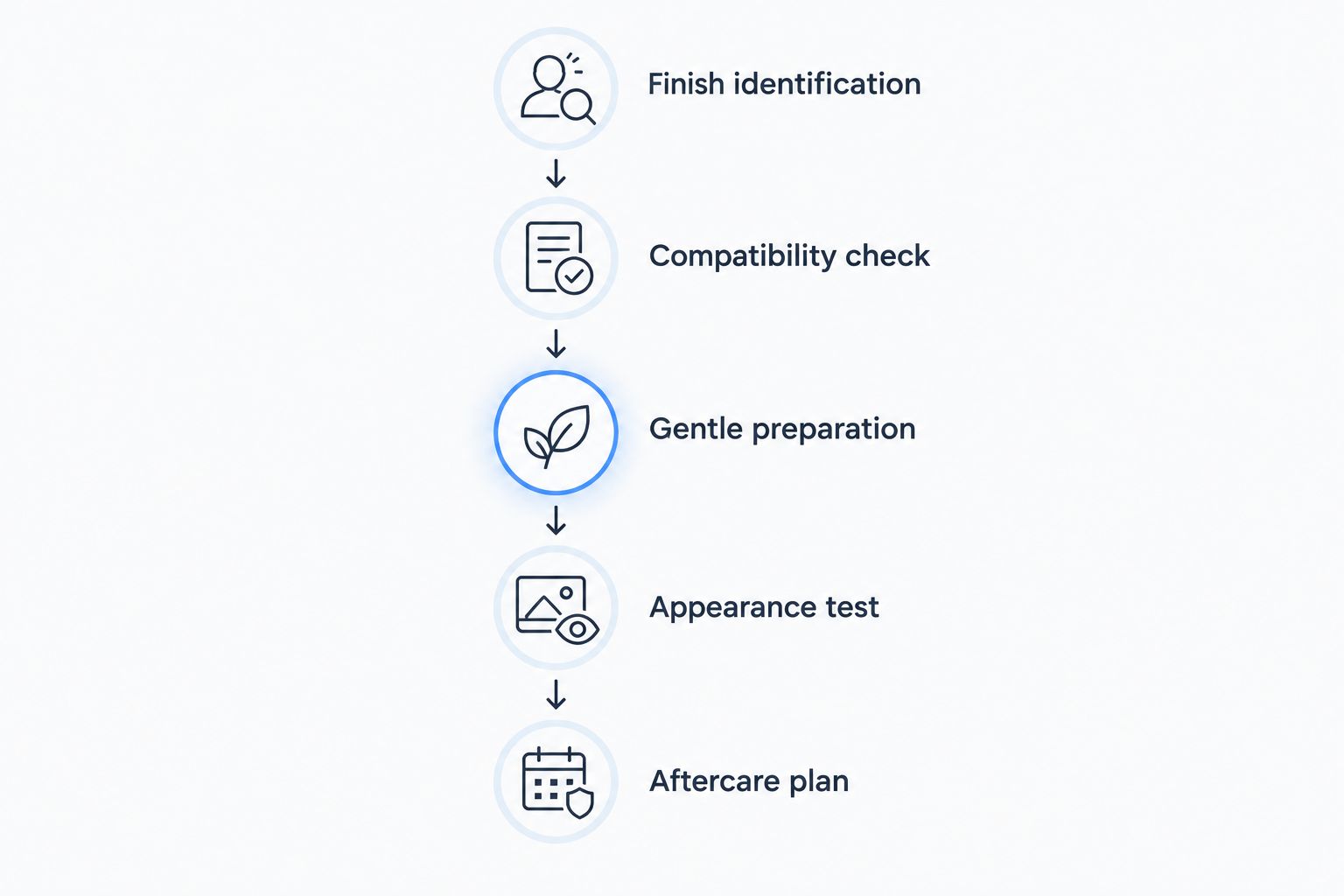
The test area is a useful screening step, not a substitute for product approval. Check it under lighting that reveals differences in reflection, and follow the manufacturer’s instructions before judging the result.
If you cannot accept any visible change, say so before testing. The right decision is to stop when the proposed result does not meet that requirement.
Will ceramic coating make matte paint shiny?
A matte-compatible coating should preserve the intended low-sheen appearance, but you still need to inspect the result. Product choice, existing treatments, and uneven residue all matter when assessing appearance.
Ask to see the test area from different viewing angles. Look for darkened patches, streaks, or sections that reflect light differently from the surrounding panel.
Do not accept added shine as evidence of better protection. On matte paint, preserving the specified appearance is part of a satisfactory outcome.
Can you polish matte paint before ceramic coating?
No—do not use conventional abrasive polishing to prepare matte paint. Polishing changes the surface responsible for its appearance and can create a shiny patch.
A detailer should assess contamination and defects separately, then follow the finish manufacturer’s approved cleaning methods. If damage requires paint repair, address that before coating rather than trying to conceal it with protection.
How do you care for coated matte paint?
Use a maintenance routine compatible with both the matte finish and the installed coating. The stricter applicable instruction should guide your choice of cleaners and methods.
Avoid assuming that a gloss-enhancing shampoo, wax, quick detailer, or abrasive water-spot treatment is suitable. Check the product instructions before applying it, including products you previously used on another vehicle.
Plan curing before the appointment, especially for mobile work. Review how long ceramic coating takes to cure, then get the restrictions for the actual coating being installed rather than relying on a general timeline.
Keep the coating name and aftercare instructions with your vehicle records. During later detailing appointments, tell the provider that the paint is matte and already coated.
How should you request a mobile coating quote?
Send the vehicle’s make, model, finish type, current concerns, and clear photos. Include any known repainting, film installation, or previous coating, then ask whether an inspection is needed to confirm suitability.
Spiffy Me is an Orange County option for car owners seeking mobile detailing and ceramic coatings. For matte paint, confirm product compatibility, preparation, and working conditions before authorizing the service; the general ceramic coating offering alone does not establish matte-finish approval.
Ask for a 2026 written quote that separates the proposed work from any condition-dependent preparation. Also confirm location access, the required working environment, and the booking steps rather than assuming every parking space is suitable.
Request a ceramic coating quote
Share your vehicle details, matte finish type, and photos so you can discuss suitability before booking.
FAQ
Is ceramic coating on matte paint safe?
Ceramic coating on matte paint is safe when the coating is approved for that finish and the preparation follows the vehicle manufacturer’s instructions. Confirm compatibility and inspect a test area before full application.
Will ceramic coating turn my matte car glossy?
A matte-compatible coating should preserve the intended low-sheen finish. Inspect a test area for added sheen, darkening, or streaks rather than relying on a general appearance claim.
Can I use the ceramic coating I already bought for glossy paint?
Use it on matte paint only if its manufacturer explicitly approves that application and it meets the vehicle’s care requirements. Approval for glossy clear coat alone does not establish matte compatibility.
Does matte paint need polishing before ceramic coating?
Matte paint should not receive conventional abrasive polishing before coating. Preparation must follow the finish manufacturer’s approved cleaning methods without changing the surface texture.
Can ceramic coating hide scratches in matte paint?
Ceramic coating is not a repair for scratches in matte paint. Have the damage assessed before application, and do not approve abrasive correction as a routine preparation step.
Can I coat matte paint protection film the same way as matte paint?
Matte paint protection film needs its own compatibility check. Follow the film manufacturer’s instructions and use a coating approved for that material.
How do I ask Spiffy Me about ceramic coating for a matte car?
Send Spiffy Me your vehicle details, finish type, photos, and any known repair or coating history. Ask for confirmation of matte compatibility, the preparation method, aftercare requirements, and a quote before booking.
One last thing
Ask how an application mistake would be handled before approving the coating. Abrasive polishing is a common correction method on glossy paint, but it conflicts with preserving a matte finish.
For your 2026 appointment, make “no abrasive polishing” and “preserve the existing sheen” explicit requirements. If the proposed process cannot satisfy both, do not proceed with that process.


