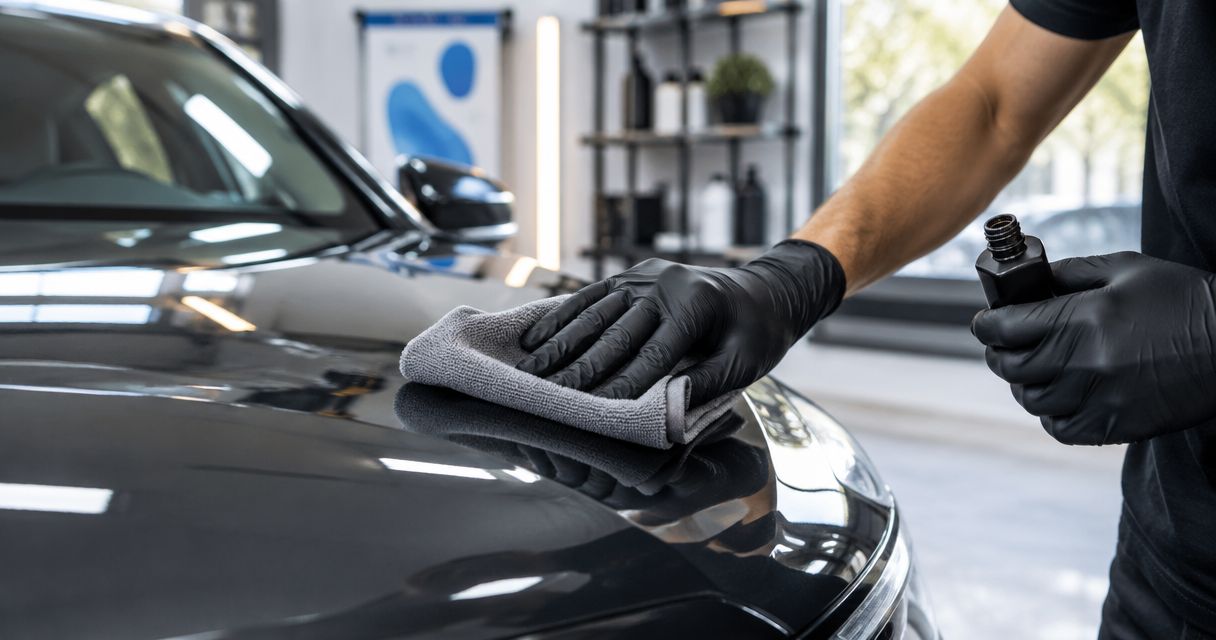
Yes, ceramic coating can be removed from automotive paint, usually through abrasive polishing once the coating has cured. Removal also affects the surface beneath the coating, so the method must account for the paint’s condition rather than simply make water stop beading. This 2026 guide explains when removal is necessary, when cleaning is enough, and what to ask before authorizing work.
- Can ceramic coating be removed? Yes. Cured automotive coatings generally require abrasive polishing rather than ordinary washing.
- Clean and inspect the surface before deciding that weak water beading means the coating needs removal.
- Choose localized correction for an isolated defect when inspection supports it, rather than automatically polishing the whole vehicle.
- Spiffy Me provides mobile detailing and ceramic coating services for Orange County car owners.
Can ceramic coating be removed?
Yes. Polishing is the usual removal method for a cured ceramic coating on glossy automotive paint. Cleaning removes contamination; polishing abrades the surface. Those are different jobs, and confusing them leads to unnecessary work.
The coating’s application stage matters. A fresh application error and an old, fully cured coating do not call for the same response. Read about how long ceramic coating takes to cure before treating a newly coated panel as a removal project.
| Approach | Best for | Main benefit | Limitation |
|---|---|---|---|
| Coating-compatible cleaning | Dirt, deposits, or contamination affecting surface behavior | Starts without intentional abrasive removal | Does not establish that a cured coating has been removed |
| Manufacturer-directed leveling | A fresh application defect within the product’s correction window | Addresses excess product before full curing | Instructions depend on the coating and application stage |
| Localized polishing | An isolated cured high spot or surface defect | Limits corrective work to the affected area | Requires inspection and suitable protection afterward |
| Broader abrasive polishing | Preparing coated paint for substantial correction or replacement protection | Addresses the coating and correctable surface defects | Also removes some underlying finish once polishing reaches it |
Why this matters
Removing a ceramic coating is not the same as peeling off a film. A cured coating does not normally come away as a separate sheet, and a clean-looking panel does not prove that removal is complete.
Protecting the paint matters more than removing every suspected trace of coating. If your actual problem is a deposit, a streak, or disappointing water behavior, identify that problem before approving abrasive work. In 2026, the useful question remains practical: what defect needs fixing, and what is the least aggressive method that fixes it?
Cleaning: best for contamination, not confirmed removal
Road grime, mineral deposits, and other surface contamination can interfere with how coated paint sheds water. A suitable wash and targeted decontamination can address those deposits without making full coating removal the objective.
That is the benefit of starting with cleaning: you can inspect the finish without dirt obscuring it. The limitation is equally important. A stronger cleaner is not automatically a reliable coating stripper, and an aggressive chemical can damage surrounding materials without delivering predictable removal.
Ask the detailer to distinguish what is sitting on the coating from what is wrong with the coating. Avoid using household solvents, oven cleaners, or improvised chemical mixtures as a shortcut. Follow the coating manufacturer’s maintenance instructions and the cleaner’s surface-compatibility directions.
Fresh application correction: best before the coating cures
A high spot is excess coating left unevenly on the surface. It can appear as a darker patch, streak, or rainbow-like mark under suitable lighting. An uneven appearance after application deserves inspection, not an automatic assumption that every panel needs stripping.
Before curing, the coating manufacturer’s instructions govern whether and how excess product can be leveled. After curing, polishing is generally needed to correct a persistent high spot. Do not apply more product simply because that technique worked with a different coating.
The advantage of early inspection is that it identifies the affected area before you choose a correction method. The drawback is that timing and technique are product-specific. If the application was recent, contact the installer and provide clear photographs before attempting a repair yourself.
Localized polishing: best for an isolated cured defect
When the problem is confined to a small area, localized polishing can be more appropriate than polishing the entire vehicle. Examples include a cured high spot or a correctable defect limited to a particular panel.
Start with 1 test area before expanding abrasive work. The test should establish whether the chosen method addresses the defect without creating unacceptable finish damage. A successful test is a reason to follow that method carefully, not permission to polish every surface indiscriminately.
The benefit is a limited work area. The limitation is that the corrected area needs an appropriate protection plan, and adjacent coating can complicate preparation. Ask how the detailer will finish and protect the corrected section rather than focusing only on whether the mark disappears.
Broader polishing: best when correction requires it
Broader removal makes sense when the vehicle needs paint correction across multiple panels or when preparation for replacement protection requires it. The exact process depends on the existing finish, the coating, and the next product’s instructions.
Polishing has a clear trade-off: it can remove coating and improve correctable defects, but it also consumes some of the finish beneath the coating. Repeated polishing is not a maintenance habit to schedule without a reason.
Do not approve wet sanding as a routine coating-removal shortcut. It is a more aggressive refinishing technique with additional risks. A detailer should explain why any proposed abrasive process is appropriate for your paint, especially if the vehicle has previous repairs, thin areas, or an uncertain polishing history.
How should ceramic coating removal be approached?
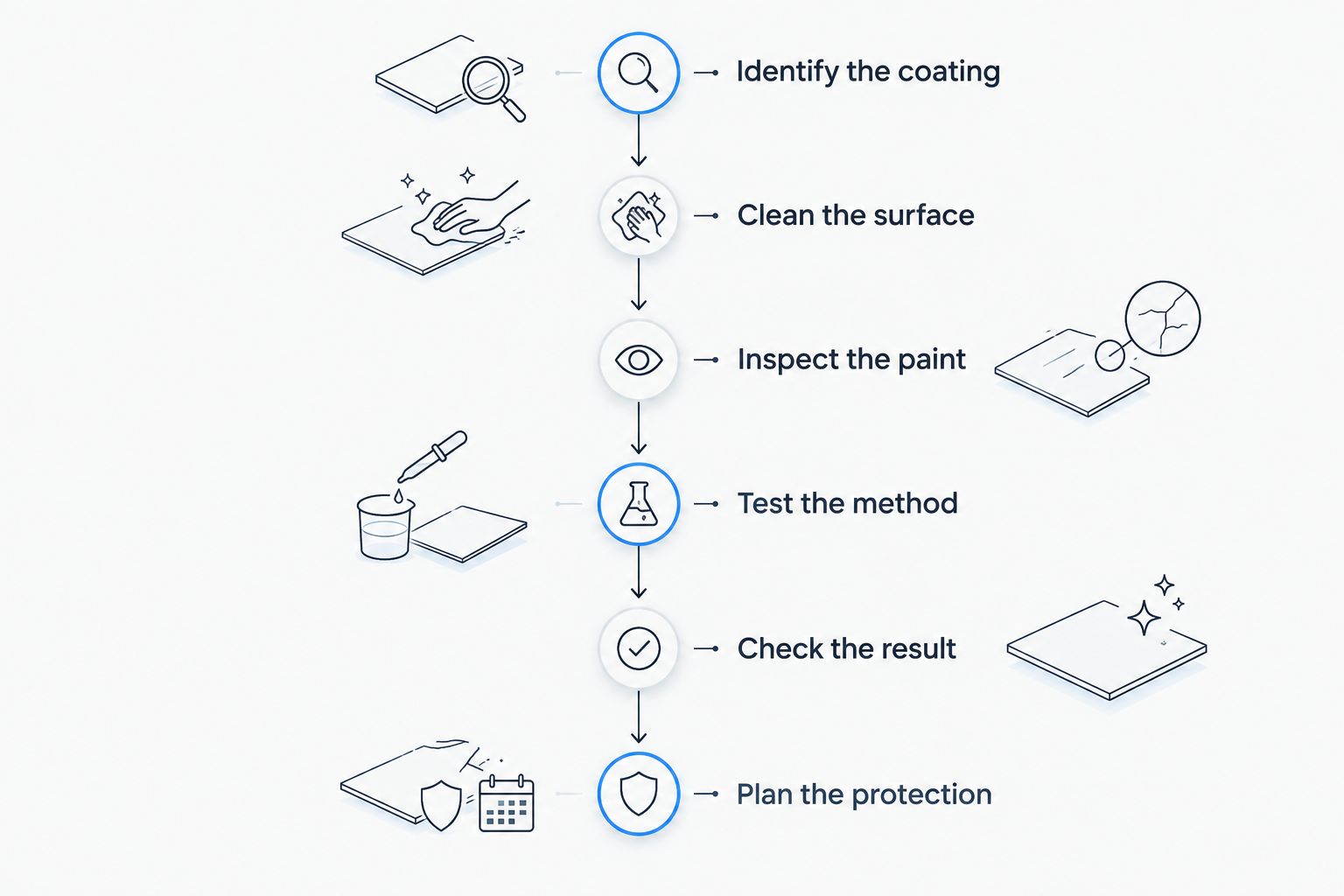
A sensible removal plan separates diagnosis, correction, and replacement protection. Use the following sequence when discussing the job; it is not a substitute for product instructions or hands-on paint assessment.
- Identify the coating. Share the product name, application record, and installer information when you have them. Describe any maintenance products added afterward.
- Clean the surface. Remove contamination using methods compatible with the coating and vehicle materials before evaluating the finish.
- Inspect the paint. Identify high spots, scratches, deposits, previous repairs, and areas that need special handling.
- Test the method. Use a controlled test area to assess the least aggressive practical correction approach.
- Check the result. Inspect under suitable lighting after removing polishing residue with a compatible preparation method.
- Plan the protection. Decide what goes onto the corrected surface and follow that product’s preparation and curing instructions.
For a 2026 appointment, send the coating history alongside photographs rather than asking only for a removal quote. Those details help define the requested work before anyone commits to a correction process.
Why the removal method varies
The right approach depends on the surface and the problem, not just the word ceramic on a bottle. These factors belong in the assessment:
- Coating identity: Preparation, correction, and maintenance instructions differ between products.
- Cure state: Fresh excess product and a fully cured high spot require different handling.
- Underlying surface: Gloss paint, matte finishes, trim, wheels, and protective film cannot be treated interchangeably.
- Paint condition: Existing defects, previous repairs, and prior polishing affect the acceptable approach.
- Problem location: An isolated defect does not automatically justify whole-vehicle removal.
- Next protection: The replacement product’s preparation requirements help determine the endpoint.
Give the detailer the outcome you want: remove an application defect, correct scratches, prepare for repainting, or change protection. Each request describes a different job. A quote that only says coating removal leaves too much scope undefined.
Can you remove ceramic coating yourself?
You can attempt removal with suitable polishing equipment and experience, but learning machine polishing on a vehicle you need to preserve is a poor trade-off. Removing a coating and preserving the finish are separate goals, and both matter.
The benefit of doing the work yourself is control over the process. The downside is the risk of marring, uneven correction, or excessive paint removal. Edges, body lines, repaired panels, and unfamiliar finishes demand particular care.
If you cannot identify the underlying surface or explain how you will assess the test area, stop at cleaning and inspection. Matte and satin finishes should not be polished like glossy clear coat; abrasive correction can change their appearance. The same caution applies to coatings installed over paint protection film.
Does weak water beading mean the coating is gone?
Weak water beading does not prove that a ceramic coating is gone. Contamination, maintenance products, and surface condition can change water behavior, so the result needs context.
The reverse is also true: strong beading does not independently prove that the original coating remains intact. A recently applied maintenance product can affect what you see. Use water behavior as an observation, not a complete coating-removal test.
For a 2026 inspection, describe when the change started and what was used on the vehicle beforehand. That history is more useful than a photograph of water droplets alone.
Can you apply a new ceramic coating over the old one?
A new ceramic coating should be applied over an existing coating only when the relevant manufacturer’s preparation and compatibility instructions support it. Do not assume that adding another layer will repair high spots, hide scratches, or restore a contaminated finish.
Separate the decision into 2 goals: correcting the surface and installing compatible protection. A gloss improvement does not establish compatibility, and a compatible product does not eliminate the need to address defects beneath it.
If you are changing products, ask what preparation is required and how the detailer will verify that the surface is ready. The answer should describe the process, not promise that any coating can go over any other coating.
What should you ask before booking in Orange County?
Spiffy Me is best for Orange County car owners seeking mobile detailing and ceramic coating services. Mobile service brings the appointment to an agreed location, but you still need to confirm whether the proposed correction work and site conditions fit your request.
Through Spiffy Me, request a quote describing the actual issue rather than selecting coating removal as a diagnosis. Ask whether assessment and any necessary removal or correction are included in the proposed work. Do not treat a general ceramic coating service listing as confirmation of a particular repair procedure.
Send 3 details with your request: the affected areas, the coating history, and the result you want. Include photographs and disclose repainting or previous polishing. Before approving a 2026 booking, confirm the written scope, location requirements, expected appointment duration, and aftercare instructions.
Request a detailing quote
Describe the coating issue, vehicle condition, and desired result before confirming the work.
FAQ
Can ceramic coating be removed without damaging the paint?
Ceramic coating can be removed with controlled polishing, but abrasive work is not risk-free. The method must account for the underlying finish, prior repairs, and paint condition.
Will a normal car wash remove ceramic coating?
A normal car wash is not a reliable method for removing a cured ceramic coating. Cleaning and abrasive coating removal are different processes.
Does clay bar treatment remove ceramic coating?
Clay bar treatment is not a reliable standalone method for complete ceramic coating removal. It removes bonded contamination and can introduce marring that needs separate correction.
Will polishing remove ceramic coating?
Abrasive polishing can remove ceramic coating. The required approach depends on the coating, the defect, and the underlying surface; not every polish or polishing pass produces the same result.
Can a cured ceramic coating high spot be fixed?
A cured ceramic coating high spot can generally be corrected through localized polishing. The affected area then needs suitable preparation and a protection plan.
Can ceramic coating be removed from matte paint?
Ceramic coating removal from matte paint requires finish-specific guidance. Conventional polishing can change the sheen, so do not use the glossy-paint process as a default.
Can Spiffy Me help me choose a ceramic coating service?
Spiffy Me provides mobile detailing and ceramic coating services for Orange County car owners. Describe your existing coating and the problem when requesting a quote, and confirm the proposed assessment and correction scope before booking.
One last thing
The best removal decision can be deciding not to remove the coating. If cleaning resolves the issue, polishing would add work without addressing a remaining defect. Ask for a diagnosis first, a test area second, and a clearly defined correction plan only when the finish actually needs it.


