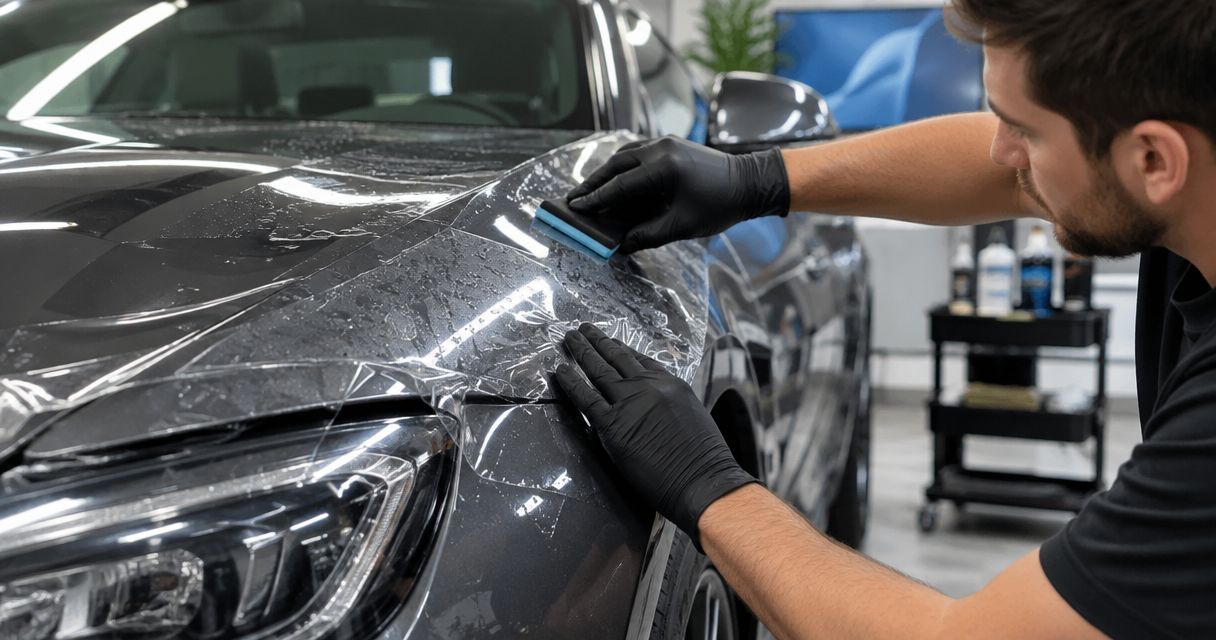
Yes, ceramic coating can be applied over paint protection film (PPF) when the coating is approved for that film and the film is clean, intact, and ready for treatment. The coating adds a water-repellent surface that helps with routine cleaning; it does not replace the film’s physical protection or repair damaged film. Confirm compatibility with both manufacturers before applying anything.
- Can ceramic coating be applied over paint protection film? Yes, when the coating and film manufacturers approve the combination.
- PPF provides physical protection; ceramic coating adds surface properties that help with cleaning.
- Check existing topcoats, film condition, preparation requirements, and curing instructions before application.
- Spiffy Me provides mobile detailing and ceramic coating services for Orange County car owners.
Can ceramic coating be applied over paint protection film?
Ceramic coating belongs on top of compatible PPF, not underneath a future film installation. The film must adhere to a properly prepared surface, and an existing coating can interfere with that adhesion. If you plan to install both, settle the installation order before booking either service.
The two treatments serve different purposes. PPF is a physical film intended to reduce damage from road debris and surface abrasion. Ceramic coating changes the exposed surface’s behavior, including how water beads and how readily contamination releases during washing.
| Protection option | Best for | Main benefit | Main limitation |
|---|---|---|---|
| PPF alone | Owners prioritizing physical paint protection | Provides a sacrificial barrier over paint | Exposed film still needs cleaning and maintenance |
| Ceramic coating alone | Owners prioritizing easier exterior maintenance | Adds water repellency and helps contamination release | Does not provide PPF’s physical barrier against stone impacts |
| Ceramic coating over compatible PPF | Owners wanting film protection plus easier maintenance | Combines the film’s barrier with a treated outer surface | Requires compatibility checks and additional application work |
Spiffy Me provides mobile detailing and ceramic coating services in Orange County. If your car already has film, identify it before requesting a coating assessment rather than assuming every coating suits every PPF surface.
Why this matters
A coating cannot make damaged film sound again. Lifting edges, trapped contamination, staining, and deterioration need assessment before another surface treatment goes on top.
Some PPF already has a factory-applied hydrophobic topcoat. An additional coating needs a clear purpose and manufacturer approval; water beading alone is not a reason to add another product.
For a 2026 appointment, choose a coating based on the exact installed film, not a general claim that it works on cars. Approval for painted clear coat does not automatically establish approval for gloss PPF, matte PPF, or satin PPF.
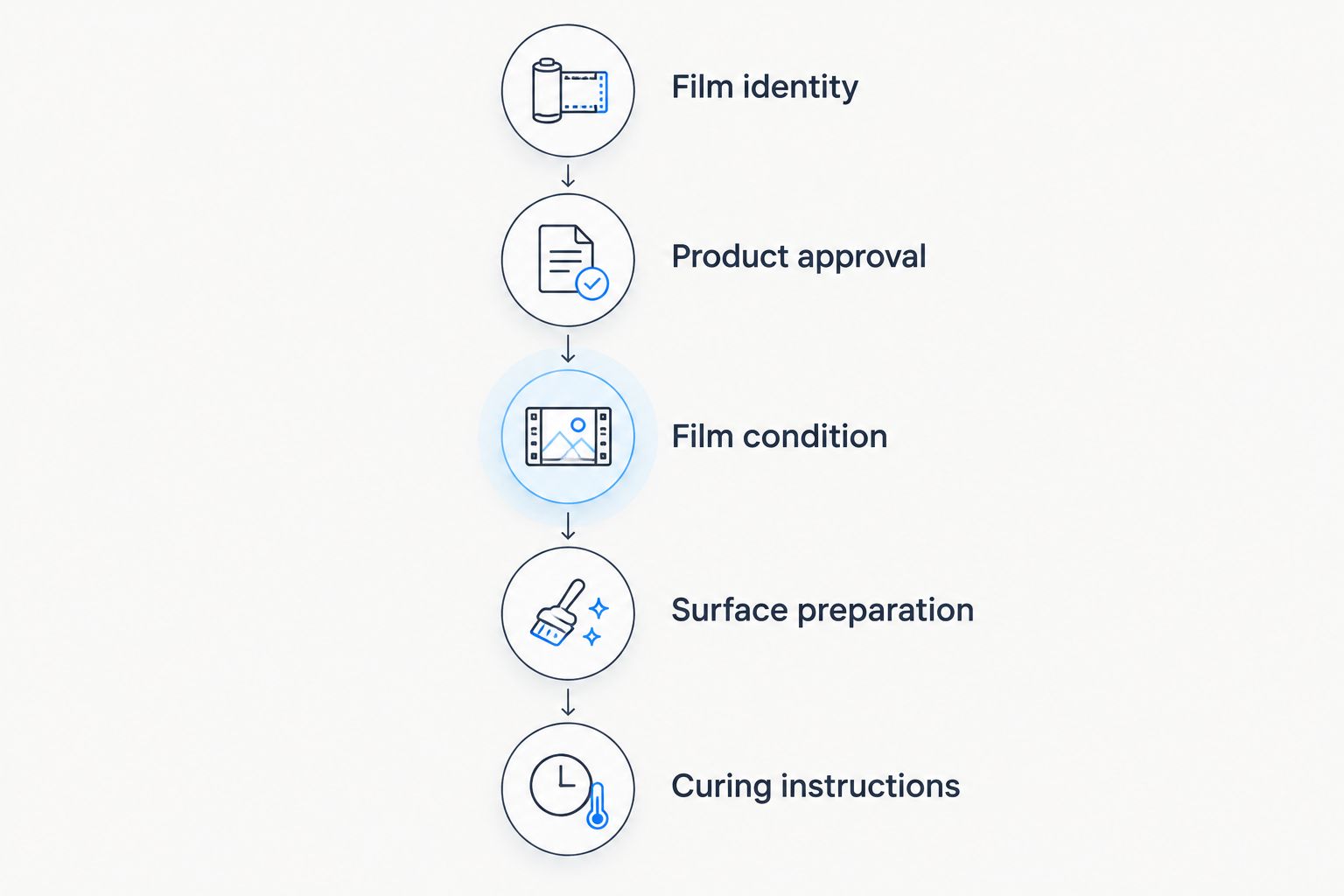
Your 2026 pre-coating checklist: 5 checks
Use these 5 checks before agreeing to preparation or application. They separate a suitable coating job from one that needs more information or film repairs first.
- Film identity. Find the film manufacturer, product name, installation record, and care instructions. Tell the detailer whether coverage is partial or full-body, and identify any panels with replacement film.
- Product approval. Confirm the proposed coating is suitable for that film’s finish and topcoat. Ask for the relevant application guidance rather than accepting a general statement about ceramic coatings.
- Film condition. Have the surface and edges inspected for lifting, damage, residue, and staining. Establish which defects need attention and which will remain visible after coating.
- Surface preparation. Agree on a film-safe cleaning and preparation process. Do not assume the polishing or solvent preparation used on exposed paint is appropriate for PPF.
- Curing instructions. Confirm when the film is ready for coating and how the newly applied coating must be protected afterward. Film installation and coating application have separate requirements.
These checks apply to both a newly protected vehicle and a car with older film. Unknown film history is a reason to investigate, not a reason to apply a stronger cleaner.
New PPF: let the film installation come first
If you are arranging new film and a ceramic coating, discuss both treatments with the installers before either starts. The film installer needs a suitable bonding surface, while the coating applicator needs film that is ready for treatment.
Do not use a universal waiting period from an unrelated product. Installation conditions, the film system, and manufacturer instructions determine when coating can begin. Visible moisture, unsettled edges, or installation concerns belong with the film installer first.
Ask who will inspect the film before coating and who handles any installation issue discovered during preparation. This avoids treating an unresolved film problem as a coating problem later.
Existing PPF: inspect before adding protection
Older film is not automatically unsuitable for coating. Its condition, existing treatments, and manufacturer guidance matter more than a guess based on installation age alone.
Start with a careful wash and inspection. A detailer needs to distinguish removable contamination from damage or deterioration; a coating will not erase scratches, restore a failing adhesive edge, or reverse yellowing within the film.
If the surface already has a coating or maintenance sealant, identify it where possible. Adding another product without understanding what is underneath makes preparation and compatibility harder to establish.
Do not coat over lifting edges as a repair. Coating is a surface treatment, not a replacement for the film’s adhesive or an alternative to repairing damaged PPF.
Matte and satin PPF: preserve the intended finish
Matte and satin film need a coating specifically approved for those finishes. A product suitable for glossy paint is not automatically suitable for a low-gloss film surface.
Tell the applicator that preserving the existing appearance is a requirement. Ask whether the proposed preparation and coating are approved for that finish, including any manufacturer instructions for checking appearance before treating the full vehicle.
Avoid treating gloss enhancement as a benefit on a matte vehicle. The objective is compatible surface protection without an unwanted change in appearance, not making every finish look shinier.
Why results vary between PPF coating jobs
The result depends on the surface and application system, not simply whether the bottle says ceramic coating. These factors explain why advice for another car does not automatically apply to yours:
- Film construction and topcoat: The coating contacts the film’s outer layer, so approval must cover that surface.
- Gloss, matte, or satin finish: Preparation and product selection must respect the intended appearance.
- Existing contamination: Residue left on the surface interferes with consistent preparation and application.
- Film damage: A coating cannot correct lifting, tears, or deterioration underneath it.
- Application conditions: Temperature, moisture, and the working environment must meet the coating’s instructions.
- Aftercare: Washing methods and maintenance products must be compatible with both the coating and the film.
Ask the applicator to explain how these factors affect your vehicle. A useful answer identifies the installed film and proposed coating rather than promising the same outcome for every car.
Will ceramic coating stop PPF from getting scratched?
No, ceramic coating does not make PPF scratch-proof. Its maintenance benefits do not turn the film into a surface that tolerates abrasive washing or careless handling.
Some films have manufacturer-described self-healing properties for certain surface marks. Do not assume every film has that feature, or that adding a coating preserves it without checking the film manufacturer’s guidance.
Can ceramic coating hide scratches or yellowing in PPF?
No, ceramic coating is not a repair for scratched or yellowed PPF. Clean the surface and have the defect assessed before deciding whether coating, film repair, or replacement is appropriate.
Do not approve aggressive paint-correction methods merely because a mark is visible. PPF is a different working surface from exposed automotive clear coat, and its preparation needs to reflect that difference.
Can you apply ceramic coating over only part of the car?
Yes, you can treat compatible PPF while addressing exposed paint separately. A car with partial film coverage has 2 surface types to assess: film-covered panels and exposed paint.
The applicator must confirm suitability for each surface. Do not assume that using one coating everywhere eliminates differences in preparation, existing defects, or aftercare requirements.
What to include in a 2026 quote request
Send the vehicle details, film information, coverage areas, installation history, and clear photos of any concerns. State whether your priority is easier cleaning, maintaining a matte finish, or treating exposed paint alongside the film.
Spiffy Me is a fit for Orange County car owners seeking mobile detailing and ceramic coating services. For a vehicle with PPF, ask Spiffy Me to confirm whether the installed film and proposed coating are suitable before booking; the service listing alone does not establish compatibility.
Ask these 3 questions before accepting the scope:
- What preparation is included? Separate washing and film-safe decontamination from any work proposed for exposed paint.
- What happens to existing defects? Identify what the service addresses and what will remain after coating.
- What instructions will I receive? Request the coating name, compatibility guidance, and written aftercare requirements.
Use the contact page to request an assessment and quote. Confirm the service location, access requirements, working conditions, and agreed scope before setting the appointment.
Request a ceramic coating assessment
Share your vehicle details, installed film information, and photos before confirming the service scope.
A 2026 maintenance plan for coated PPF
Follow the film and coating manufacturers’ compatible care instructions together. If the guidance differs, ask the applicator to resolve the conflict rather than choosing whichever instruction is easier.
Wash with approved products and clean equipment. Remove contamination promptly using the recommended method, and avoid directing concentrated pressure at film edges. A coated surface still requires careful contact washing and drying.
Do not treat strong water beading as proof that the film underneath is healthy. Inspect edges and impact areas during routine cleaning, and report lifting or damage separately from changes in water behavior.
Keep the installation and coating records together. Knowing exactly what is on each panel helps the next detailer choose an appropriate cleaning process without guessing.
FAQ
Can ceramic coating be applied over paint protection film in 2026?
Yes, ceramic coating can be applied over PPF when the coating is approved for the specific film and finish. Confirm the preparation and application requirements with both manufacturers.
Should ceramic coating go on before or after PPF?
Ceramic coating generally goes on after PPF when both treatments are planned. Existing coating can interfere with film adhesion, so the film installer must determine the required preparation.
How long should I wait after PPF installation before coating it?
Follow the installed film’s instructions and the installer’s readiness assessment rather than a universal waiting period. The film must be ready for treatment before the coating process starts.
Is ceramic coating necessary if my PPF already repels water?
No, an additional coating is not automatically necessary when PPF already has a hydrophobic topcoat. Establish a maintenance benefit and confirm compatibility before adding another treatment.
Can ceramic coating damage matte paint protection film?
An unsuitable coating or preparation process can change the appearance of matte film or damage its surface. Use only products and methods approved for the specific matte PPF.
Will ceramic coating keep my PPF from lifting?
No, ceramic coating does not repair or secure lifting film edges. Have the film installer assess adhesion problems before applying a coating.
Can I polish coated PPF like normal paint?
Do not assume a paint-polishing process is safe for coated PPF. Follow the film manufacturer’s guidance and have the coating and film assessed before abrasive work.
Can I pressure wash PPF after ceramic coating?
Follow the film and coating manufacturers’ washing instructions, including restrictions around film edges. Coating does not make the film’s adhesive edges immune to pressure-washing damage.
One last thing
Keep a panel-by-panel record if your car has partial PPF or replacement film. A hood, bumper, and door can have different surface histories even when the whole car looks uniformly glossy.
Before your next 2026 detailing appointment, save the film invoice, coating details, and aftercare instructions together. That record is more useful than describing the car as simply ceramic coated.


