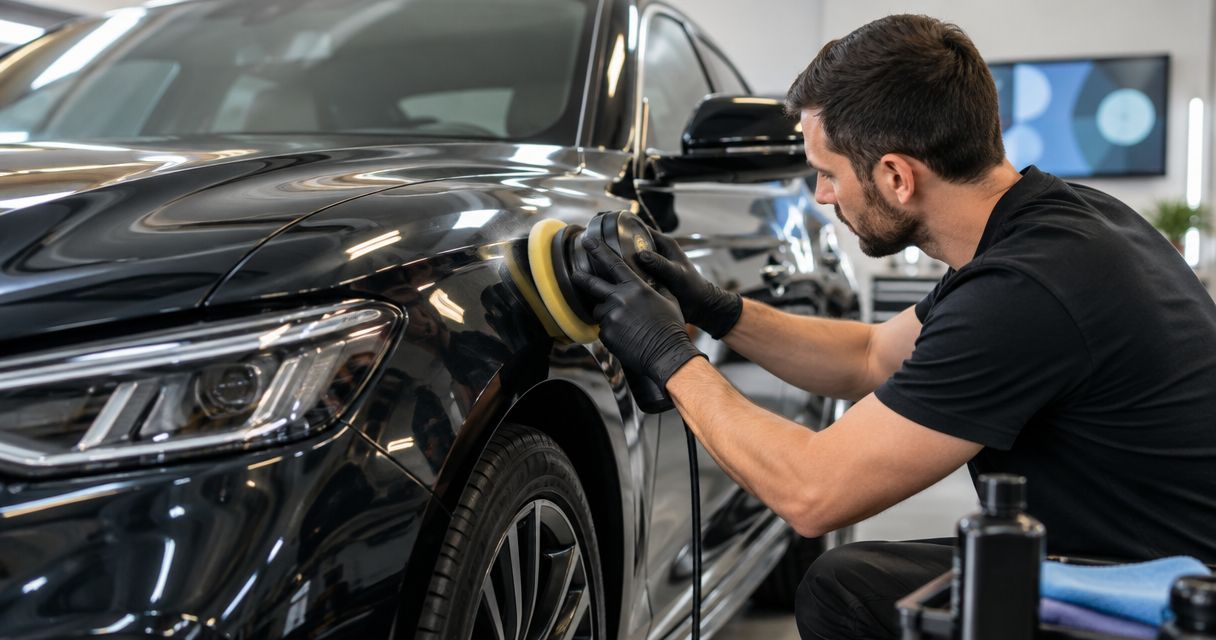
No, paint correction is not always necessary before ceramic coating; it is necessary when you want to reduce existing swirls, haze, or correctable scratches before protecting the finish. A coating does not remove those defects, and correcting them afterward generally requires removing the coating from the affected area. For your 2026 appointment, approve correction based on inspected paint condition—not simply because the car is new or used.
- Is paint correction necessary before ceramic coating? Only when correctable paint defects need improvement before protection.
- Ceramic coating protects the prepared finish; it does not remove scratches or replace paint correction.
- Spiffy Me offers mobile ceramic coating services for Orange County car owners; confirm preparation scope before booking.
- Choose the least aggressive correction that achieves an acceptable finish without chasing unsafe scratch removal.
Why this matters
Coating preparation and paint correction are not interchangeable. Preparation gives the coating a suitable surface. Correction changes the appearance of the paint by reducing defects through abrasive polishing.
If you are considering Spiffy Me for mobile ceramic coating in Orange County, ask what preparation the quote includes and whether paint correction is separate. A ceramic coating service does not automatically tell you how much polishing, if any, is included.
Make that distinction before booking. Otherwise, you can approve a protective treatment while expecting scratch removal that was never part of the agreed work.
Is paint correction necessary before ceramic coating?
Paint correction is necessary when the existing finish falls short of your appearance goal and the defects can be safely improved. It is not automatically necessary for coating adhesion. The surface must instead meet the particular coating manufacturer's preparation requirements, including any required polishing.
Use this comparison to separate the available approaches. These are general preparation choices, not verified service packages from any particular business.
| Approach | Best for | Main benefit | Main limitation |
|---|---|---|---|
| Required preparation without correction | Paint you already find acceptable | Avoids unnecessary abrasive work | Existing swirls and scratches remain |
| Light finishing polish | Mild haze or fine defects that respond to a test spot | Improves clarity with a restrained approach | Does not address every scratch |
| More involved paint correction | More noticeable, safely correctable defects | Allows greater improvement before coating | Removes more paint material and cannot safely fix every defect |
| Paint repair before coating | Damage beyond safe polishing | Addresses problems polishing cannot repair | Requires a repair assessment rather than a stronger polish |
Choose correction for a visible, achievable improvement—not as an automatic prerequisite. Inspect clean paint under useful lighting, agree on what will remain, and then select the preparation approach.
Preparation without correction: keep an acceptable finish
Skipping abrasive correction makes sense when clean paint already meets your expectations and the coating's application instructions allow it. Washing, removing relevant contamination, and completing the specified final surface preparation still matter.
This approach preserves the existing finish rather than improving its defects. If you dislike the swirls before coating, do not expect the coating to make them disappear.
Light polishing: improve minor defects
A light finishing polish addresses suitable minor haze or fine marks. A test spot shows whether this restrained approach produces the improvement you want before the entire vehicle receives the same treatment.
Do not assume that light polishing means complete correction. Results depend on the paint, the defect, and the selected polishing process; the acceptable result should be demonstrated rather than promised from a photograph.
More involved correction: address more visible defects
More involved correction uses additional abrasive work to reduce defects that a finishing polish leaves behind. It suits paint with correctable damage when the improvement justifies removing additional material.
More polishing is not automatically better. Deep scratches, compromised clear coat, sharp edges, and previous repairs require particular caution. Some marks should remain because removing them would demand an unsafe amount of material removal.
Why paint correction needs vary
The right scope depends on the finish in front of you. For a 2026 ceramic coating quote, describe these factors rather than requesting the most intensive treatment by default:
- Visible defects: Fine wash marks, haze, and deeper scratches call for different assessments. Dirt alone does not establish a need for correction.
- Paint condition: Failing clear coat and damaged paint are repair concerns, not problems to solve with increasingly aggressive polishing.
- Previous work: Repainting and earlier correction affect the assessment. Share any known repair or polishing history before work begins.
- Your finish standard: A daily driver whose appearance already satisfies you has a different goal from a vehicle being prepared for close inspection.
- Test-spot response: The same polishing approach does not produce identical results on every finish. Inspect the demonstrated improvement before approving broader work.
- Application requirements: The coating manufacturer's instructions determine the required preparation. They do not make every cosmetic defect safe to remove.
These factors also explain why a blanket recommendation based only on vehicle age is inadequate. A newer car can have visible wash damage; an older car can have a finish its owner is happy to preserve.
How to decide before your coating appointment
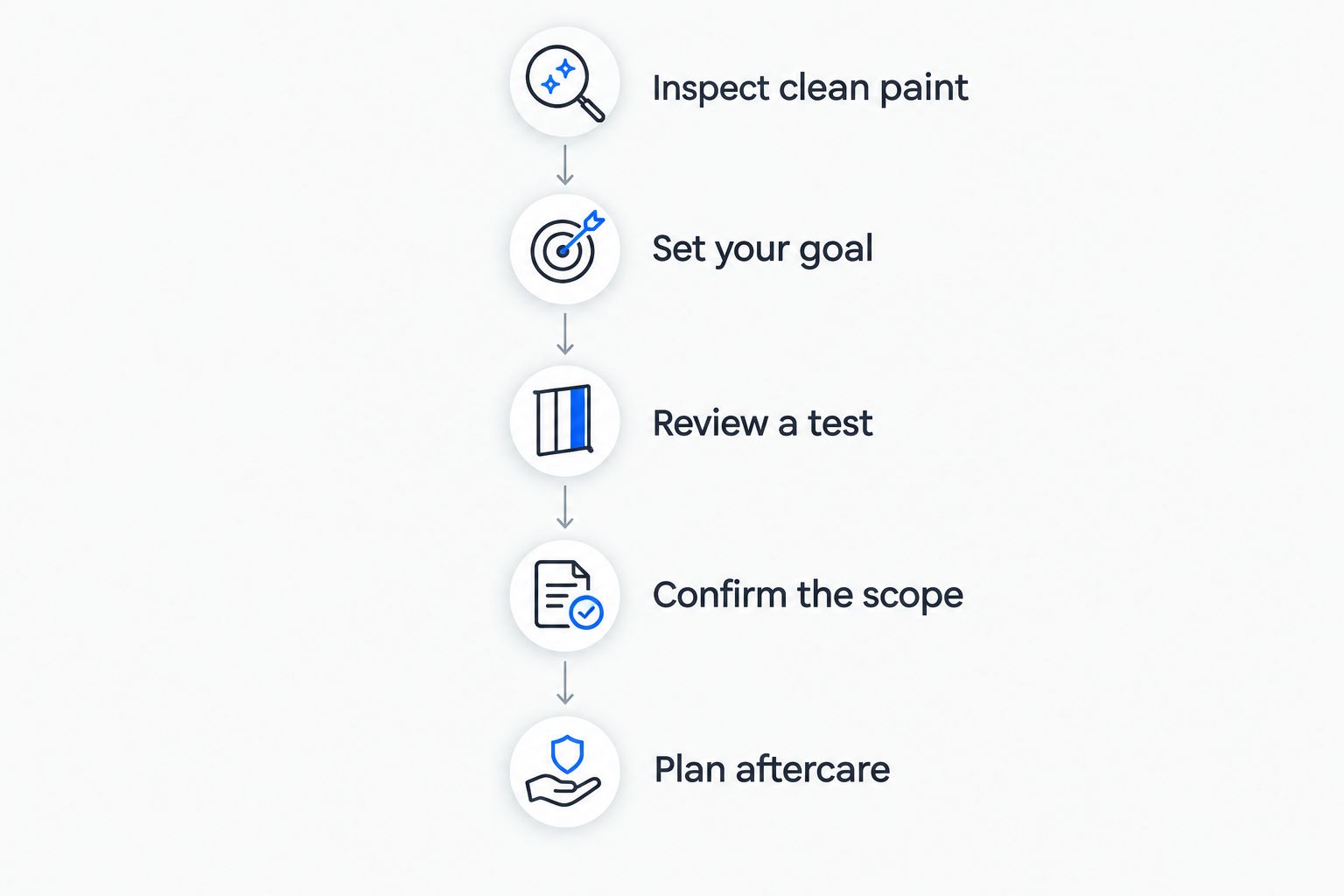
Use this sequence to make the decision before the coating goes on. The goal is an agreed finish, not an open-ended instruction to remove every mark.
Inspect clean paint
Assess the vehicle after washing rather than judging through road film. Look at the hood, doors, roof, and other painted areas from different angles under lighting that reveals defects.
Separate surface contamination from actual paint damage. A rough surface does not automatically need aggressive polishing, and a smooth surface can still show swirls.
Set your goal
Identify the marks that bother you and the marks you can accept. Ask whether the goal is better clarity, reduced wash swirls, or improvement of a particular scratch.
Be specific. An instruction such as making the paint look better is harder to evaluate than an agreement to improve visible wash marks while leaving deeper scratches alone.
Review a test
Ask whether the detailer can demonstrate the proposed correction on a representative area. Review the result under lighting that shows the original defects, not just lighting that makes the paint look glossy.
The test should establish both improvement and limits. It is more useful than an unsupported promise that every scratch will disappear.
Confirm the scope
Before authorizing work, confirm the preparation, agreed polishing approach, remaining defects, and coating application requirements. Keep appearance goals separate from protection claims.
For mobile work, also confirm that the location and working conditions meet the selected coating's requirements. Do not assume every parking space is suitable just because the service is mobile.
Plan aftercare
Ask what must happen after application, including restrictions on water exposure, washing, and driving. Follow the instructions for the coating actually applied rather than a generic timetable.
The guide to how long ceramic coating takes to cure covers the next decision after preparation. Correction quality and curing requirements are separate parts of the job; neither replaces the other.
This sequence keeps the discussion focused: inspect the paint, define an acceptable result, test the approach, agree on the work, and understand aftercare.
Does a new car need paint correction before ceramic coating?
A new car needs correction only if inspection finds defects worth safely improving. New ownership does not establish that the paint is defect-free, and it does not prove that correction is necessary.
Inspect the finish rather than approving polishing solely because the vehicle is new. If the paint already meets your standard, unnecessary abrasive work offers no useful correction benefit.
For a new vehicle purchased in 2026, discuss any visible marks before booking the coating. Ask the detailer to distinguish correctable wash damage from defects that warrant a separate repair discussion.
Can ceramic coating be applied over scratches?
Ceramic coating can be applied over scratched paint if the surface otherwise meets the coating's preparation requirements. The scratches remain; coating is not scratch repair.
Accepting some defects is a valid choice, especially when removal would require excessive abrasion. The key is making that choice deliberately before application rather than expecting the protective layer to erase the damage.
A deep scratch that exposes underlying material needs a repair assessment. Polishing removes surrounding material; it does not replace missing paint.
Can paint correction be done after ceramic coating?
Paint correction can be done after ceramic coating, but abrasive polishing removes or compromises the coating where the work occurs. The affected area then needs preparation and coating reapplication according to the selected system's instructions.
That is why the appearance decision belongs before application. If you already know that a particular scratch bothers you, assess it before coating rather than planning to polish it out later.
This does not mean every future defect is preventable. Washing technique and ongoing care still matter after coating, and a coated finish is not immune to scratches.
What should your ceramic coating quote explain?
A useful 2026 quote separates the work needed for application from the work chosen to improve appearance. Ask for a clear description of both before comparing services.
Your written scope should explain:
- Surface preparation: What cleaning and contamination removal are included, where needed, and how the surface will be prepared for application.
- Correction work: Whether abrasive polishing is included, separately proposed, or excluded.
- Expected limits: Which defects the detailer expects to improve and which marks will remain.
- Mobile setup: What access, shelter, and working conditions the appointment requires.
- Aftercare instructions: What you must do after application and which restrictions apply to the selected coating.
Spiffy Me offers mobile auto detailing and ceramic coating services for Orange County car owners. The relevant fit is local mobile service; correction scope, site suitability, and the expected finish still need confirmation before you book.
Spiffy Me is best for Orange County car owners seeking mobile detailing and ceramic coating services. Request a quote with your vehicle details, location, paint concerns, and clear photographs, then confirm whether an in-person inspection is needed to finalize the work.
Request a ceramic coating quote
Describe your vehicle, Orange County location, and paint concerns. Confirm preparation before booking.
FAQ
Do I always need paint correction before ceramic coating?
No, paint correction is not always necessary before ceramic coating. Correct defects when you want a safer, achievable improvement in appearance; complete the coating manufacturer's required surface preparation regardless.
Will ceramic coating hide swirl marks?
Ceramic coating does not remove swirl marks. If the swirls bother you, assess polishing before application rather than expecting the coating to correct them.
Is washing enough before applying ceramic coating?
Washing alone does not establish that paint is ready for ceramic coating. Follow the selected coating's preparation instructions, including any required contamination removal and final surface cleaning.
Should I get every scratch removed before ceramic coating?
No, you should not pursue every scratch if removal would require unsafe abrasion. Agree on which defects can be improved and which should remain or receive a separate repair assessment.
Does paint correction remove clear coat?
Abrasive paint correction removes material from the surface being polished, including clear coat on a clear-coated finish. Use the least aggressive effective approach and assess paint condition before approving correction.
Does ceramic coating prevent future scratches?
Ceramic coating does not make paint scratch-proof. Careful washing and handling remain necessary after application.
What should I ask when booking ceramic coating in 2026?
Ask whether the ceramic coating quote includes paint correction, what defects will remain, and what preparation the coating requires. Confirm mobile working conditions and aftercare instructions before authorizing the appointment.
One last thing
Leaving a scratch can be the correct professional decision. The best result is not necessarily the fewest visible marks; it is the finish you accept without unnecessary removal of sound paint.
Before approving ceramic coating in 2026, ask to see the paint after any agreed correction and before application. That is the practical checkpoint for confirming that the appearance matches your expectations while changes are still straightforward to discuss.


