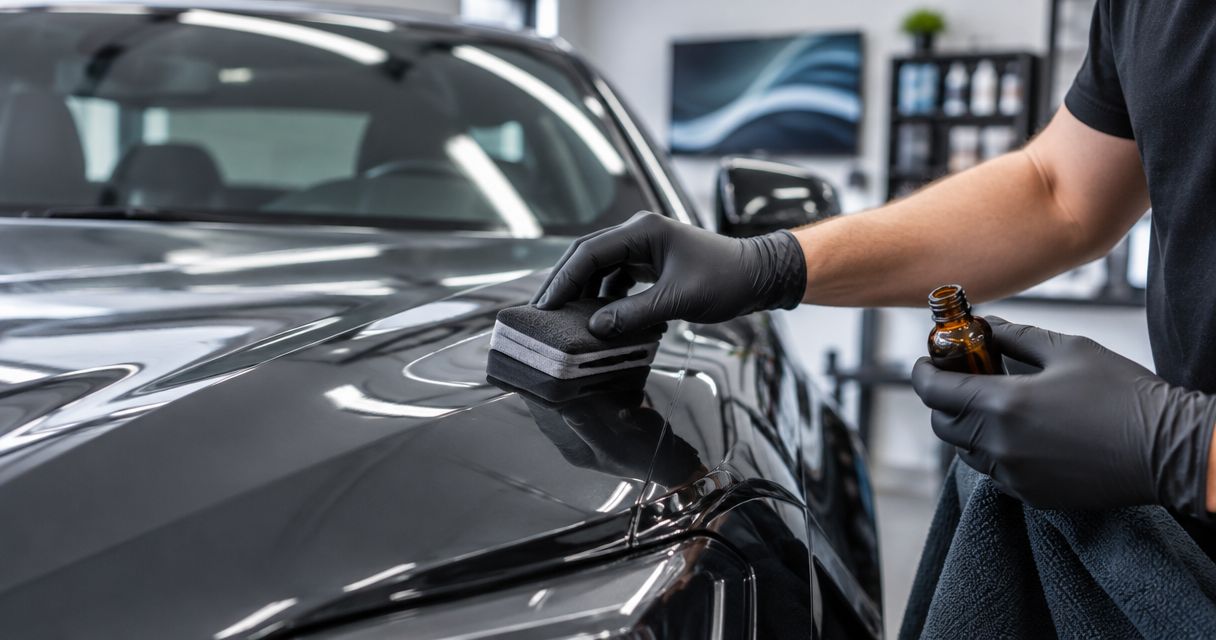
Choose a wash method that matches your car’s dirt level, then compare total water use and runoff handling—not an “eco” label. Spiffy Me is a mobile detailing option for Orange County owners seeking interior detailing, exterior detailing, or ceramic coating; confirm the proposed wash process before booking.
- For eco friendly mobile detailing orange county searches, compare the actual wash process rather than environmental labels.
- Waterless washing suits light surface dust; rinseless washing avoids a separate hose-rinse stage.
- Heavy grit needs safe removal before contact washing, even when that requires more water.
- Spiffy Me provides Orange County mobile detailing; ask about water use, runoff handling, and your vehicle’s condition.
Why this matters
A mobile detailer bringing a water tank does not establish how much water the appointment uses. Likewise, a waterless exterior wash does not describe water used for wheels, interior cleaning, equipment cleanup, or towel laundering.
For your 2026 booking, compare the same work across providers. An exterior maintenance clean and a full interior/exterior detail are different jobs, so their water totals need different context.
Spiffy Me provides mobile interior and exterior detailing and ceramic coatings in Orange County. Those service categories help you identify the work you need, but they do not establish an environmental ranking.
The best choice is the least water-intensive process that safely completes your actual job and handles dirty water appropriately. This guide ranks wash approaches by their suitability for different cleaning needs, not companies by unsupported gallons-per-car claims.
What makes the best low-water mobile detailing service?
Use these criteria before comparing a provider’s method:
- Defined water scope: Ask whether the estimate covers paint, wheels, prewashing, interior work, and cleanup.
- Condition-matched cleaning: The process should change when the car has sand, mud, or bonded contamination instead of light dust.
- Runoff handling: Ask where dirty water goes and how the operator prevents it from reaching storm drains.
- Surface compatibility: Confirm the method suits your paint finish, trim, existing coating, and any protective film.
- Clear service scope: Get the included tasks, site requirements, and exclusions in writing before approving the appointment.
Do not treat biodegradable chemicals as a substitute for wastewater control. Dirty wash water also contains material removed from the car, so the cleaning-product label answers only part of the question.
Low-water detailing approaches at a glance
The order below starts with a no-hose-rinse approach for light dust and ends with rinsing for heavier contamination. It is a decision sequence, not a measured water-consumption leaderboard: equipment, technique, vehicle condition, and service scope determine the total.
| Approach | Best for | Standout feature | Key limitation |
|---|---|---|---|
| Waterless exterior cleaning | Light dust between fuller cleans | Spray-and-wipe process without a separate rinse stage | Not a default choice for mud or heavy grit |
| Rinseless exterior washing | Routine maintenance on suitable surfaces | Wash solution without a separate hose rinse | Prewashing can still be necessary |
| Targeted steam cleaning | Selected crevices and compatible surfaces | Directs heat and moisture at a specific area | Requires careful material and temperature control |
| Controlled-rinse washing | Mud, sand, and heavier loose contamination | Removes loose debris before contact cleaning | Requires particular attention to water collection and disposal |
1. Waterless cleaning: best for lightly dusty paint
Waterless exterior cleaning uses a suitable spray product and clean towels to remove light surface contamination without a separate rinse. It is a maintenance approach, not a reason to wipe a visibly gritty car.
For a 2026 maintenance appointment, describe the dirt rather than requesting “waterless” by name. A detailer needs to distinguish light dust from particles that require removal before wiping.
Waterless cleaning pros:
- Avoids a separate hose-rinse stage on suitable exterior work.
- Targets small areas instead of wetting the entire vehicle.
- Fits light maintenance when the surface condition supports it.
Waterless cleaning cons:
- Heavy grit makes direct wiping a poor starting point.
- Dirty or repeatedly reused towel faces increase the risk of dragging debris.
- The wash label does not account for towel laundering or other detailing tasks.
Best for: Owners maintaining lightly dusty exterior surfaces between more involved cleanings.
Ask the operator what condition would trigger a switch to prewashing. A clear answer matters more than a promise to use the same method on every car.
Verdict: Buy only when the detailer confirms that the contamination suits a waterless process; skip direct wiping on gritty paint.
2. Rinseless washing: best for routine exterior maintenance
Rinseless washing uses a cleaning solution designed for a process without a separate hose-rinse stage. The operator cleans and dries sections while controlling how dirt transfers into towels or wash media.
Rinseless does not mean that every vehicle can go straight to contact washing. Sand, mud, and heavier loose contamination still require a suitable removal step first.
Rinseless washing pros:
- Eliminates the separate hose-rinse stage of the main wash.
- Supports section-by-section cleaning and drying.
- Allows the operator to adapt preparation to the car’s condition.
Rinseless washing cons:
- A necessary prewash changes the appointment’s total water use.
- Poor wash-media management can transfer dirt back onto paint.
- Wheel cleaning and other tasks need separate discussion.
Best for: Owners seeking routine exterior maintenance when the vehicle’s condition suits the process.
For a useful comparison, ask each provider whether the proposed scope includes wheels, wheel wells, and any preliminary rinse. Otherwise, you are comparing different jobs under the same service label.
Verdict: Buy for suitable maintenance cleaning when the operator explains both contamination removal and clean-media handling.
3. Targeted steam: best for selected crevices and surfaces
Steam equipment directs heat and moisture at a chosen area. In detailing, suitability depends on the material, equipment settings, distance, and technique—not simply the presence of a steam machine.
Treat steam as a targeted tool rather than proof that an entire appointment uses less water. It also does not establish that a provider sanitizes every treated surface.
Targeted steam pros:
- Directs treatment at a specific area.
- Reaches some crevices that are awkward to wipe directly.
- Adds a different cleaning technique where the material permits it.
Targeted steam cons:
- Heat and moisture require care around sensitive materials and electronics.
- Some surfaces call for another cleaning method.
- A steam treatment does not replace every exterior washing step.
Best for: Selected crevices and compatible surfaces after the detailer checks material suitability.
Ask which areas will receive steam and which will not. For an interior appointment, also ask how the operator controls moisture around switches, screens, seams, and adhesives.
Verdict: Buy targeted steam only for clearly identified, compatible areas; skip an unspecified “steam everything” approach.
4. Controlled rinsing: best for mud, sand, and heavier debris
Controlled-rinse washing uses flowing water to remove loose contamination as part of the cleaning process. On a gritty car, removing debris before touching the paint takes priority over selecting a no-rinse label.
This is not a claim that more water always produces a better result. The useful questions are where rinsing is necessary, how the operator controls it, and what happens to the wastewater.
Controlled-rinse washing pros:
- Removes loose debris before contact cleaning.
- Addresses areas where wiping alone is inappropriate.
- Allows the preparation stage to match heavier contamination.
Controlled-rinse washing cons:
- Requires a clear runoff-management plan.
- Unnecessary continuous flow wastes water.
- The work area must suit the proposed setup.
Best for: Cars carrying mud, sand, or heavier loose debris that needs removal before contact washing.
If your vehicle has visible sand after a beach visit, disclose it when requesting the appointment. Do not ask the operator to force a light-maintenance method onto a heavier cleaning job.
Verdict: Buy when contamination requires rinsing and the provider explains water control and wastewater handling.
How these approaches are ranked
This shortlist prioritizes surface suitability, rinse requirements, complete service scope, and wastewater handling. It does not assign invented water totals to businesses or assume that a method guarantees the same result on every vehicle.
A defensible 2026 provider comparison needs a defined measurement boundary. “Water per exterior wash” should identify the vehicle, starting condition, included areas, prewashing, and whether the figure is measured or estimated.
Use gallons per appointment when discussing an actual quote, but compare equivalent appointments. A tank’s capacity is an equipment specification, not the amount consumed by your car’s detail.
What to ask before requesting a quote
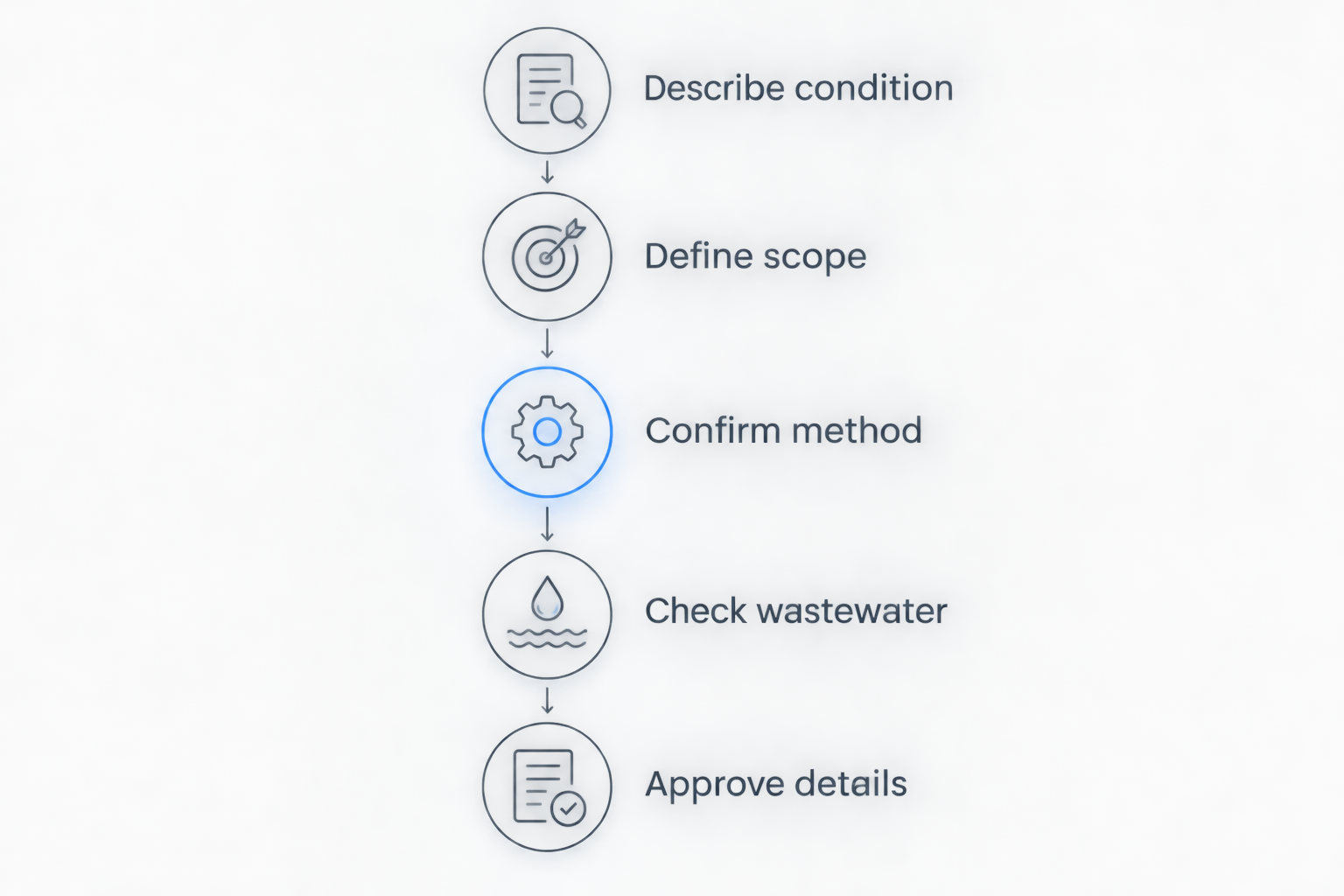
Follow this sequence so the detailer can recommend a process instead of guessing from a service name.
- Describe condition. Identify light dust, visible sand, mud, stains, pet hair, or other concerns. Send current photos if the business accepts them.
- Define scope. Specify interior, exterior, or both, and identify areas that need particular attention.
- Confirm method. Ask which wash approach fits the condition and what would change that recommendation.
- Check wastewater. Ask how dirty water is contained, collected where necessary, and disposed of appropriately.
- Approve details. Confirm the quote, site requirements, included work, and appointment arrangements directly with the business.
Before a 2026 appointment, confirm permission to use the proposed parking space. Ask about water and power access rather than assuming that “mobile” means the operator needs neither.
For Spiffy Me mobile detailing, use the contact page to request a quote and confirm whether your location and proposed work area are suitable. Ask how to complete booking once the scope is agreed.
Request a detailing quote
Describe your vehicle, cleaning needs, and location. Ask about wash methods and site requirements.
Which mobile detailing approach should you choose?
Start with rinseless maintenance as a discussion point for a routinely maintained exterior, not as an instruction the detailer must follow. Choose waterless cleaning for suitable light dust, targeted steam for compatible areas, and controlled rinsing when debris needs removal before contact.
Spiffy Me is a fit for Orange County owners seeking mobile interior/exterior detailing or ceramic coating. Confirm the process for your vehicle before treating any service as the lowest-water option.
For your 2026 shortlist, reject comparisons that substitute an environmental slogan for a process description. Keep the provider that explains what the car needs, how water use is controlled, and where wastewater goes.
FAQ
What’s the best eco friendly mobile detailing option in Orange County?
Choose a provider that matches the cleaning method to your vehicle and explains total water use and wastewater handling. A waterless, rinseless, or steam label alone does not establish the best overall environmental choice.
Does Spiffy Me offer mobile detailing in Orange County?
Spiffy Me provides mobile auto detailing for Orange County car owners, including interior detailing, exterior detailing, and ceramic coatings. Confirm your specific location, service scope, and wash process when requesting a quote.
Is waterless washing better than rinseless washing?
Waterless washing suits light surface contamination, while rinseless washing uses a wash solution without a separate hose-rinse stage. Choose according to the car’s condition rather than assuming either method is best for every appointment.
How many gallons does mobile detailing use?
Water use depends on the method, vehicle condition, and included work. Ask for a measured or clearly identified estimated total covering the same tasks before comparing providers.
Is steam cleaning safe for every interior surface?
No, steam is not appropriate for every interior surface. The operator must consider heat and moisture sensitivity, including nearby electronics, adhesives, and material condition.
Does ceramic coating eliminate the need to wash a car?
No, ceramic coating does not eliminate washing. Ask for maintenance instructions appropriate to the coating and disclose existing protection before the detailer selects cleaning products and methods.
Can I book mobile detailing in an apartment parking area?
Confirm property permission and the detailer’s site requirements before booking. Parking access, working space, utility needs, and wastewater handling all affect whether the proposed location is suitable.
What should I send when requesting a detailing quote?
Provide your vehicle type, location, condition, and requested interior or exterior work. Ask whether photos are useful, then confirm the proposed method, included tasks, site requirements, and booking process.
One last thing
Separate water supply from water disposal in your questions. Bringing water answers where clean water comes from; it does not answer where dirty water goes.
Ask both questions before approving the appointment. That distinction gives you a more useful basis for choosing than a green service name.