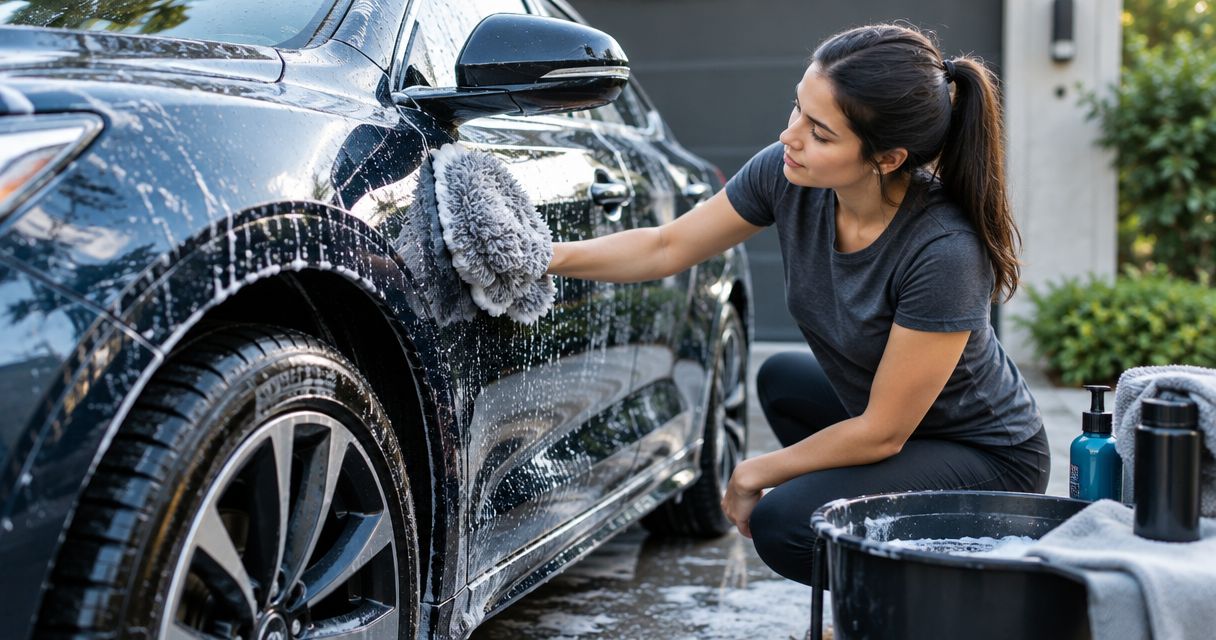
Wash a ceramic-coated car only after the coating’s specified no-wash period has ended, using a compatible automotive shampoo, clean wash media, and a thorough rinse followed by gentle drying. For the first wash and routine maintenance, follow the installer’s aftercare instructions; ceramic coating does not make paint scratch-proof or prevent mineral deposits from drying water.
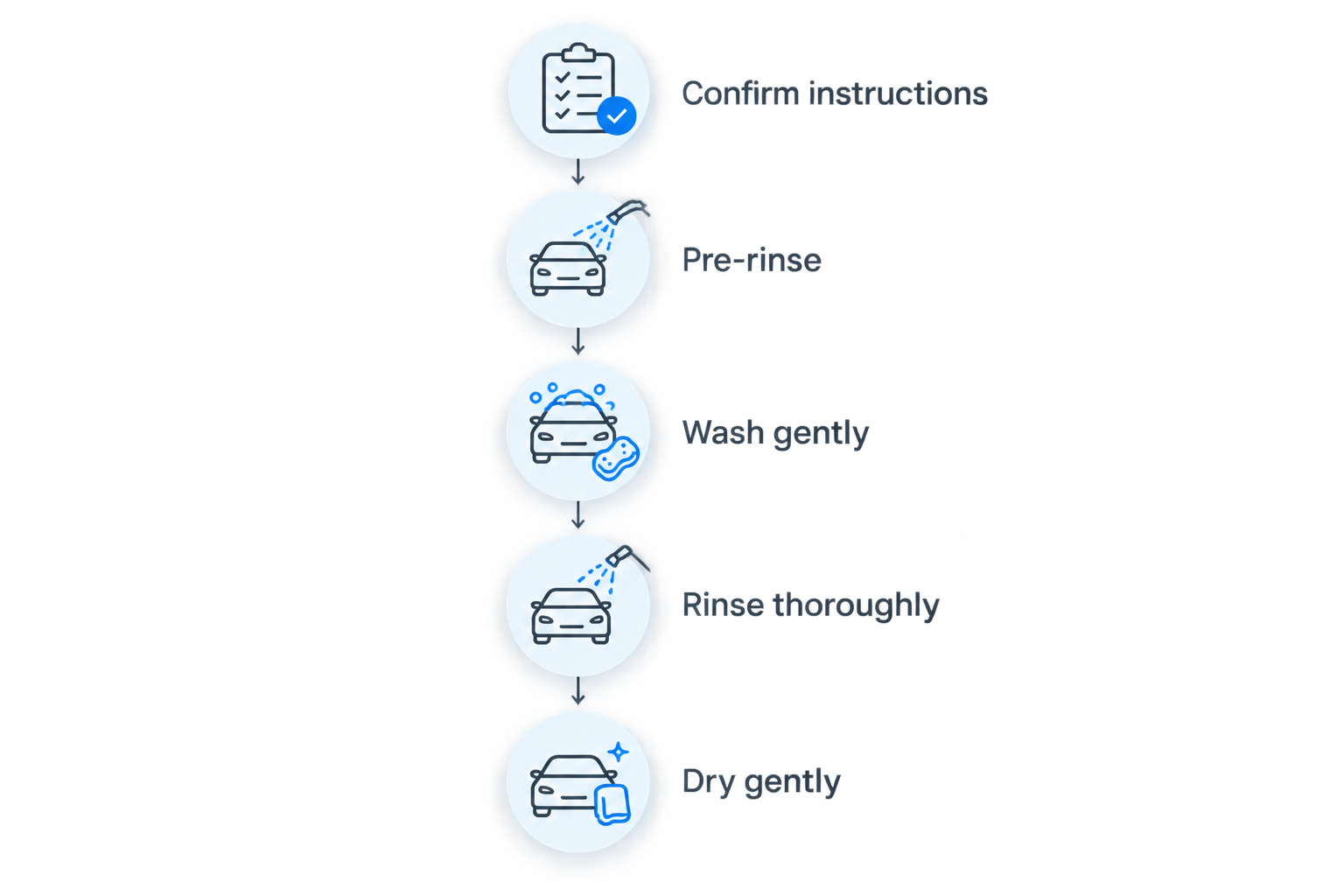
- How to wash car after ceramic coating: follow curing instructions, pre-rinse, wash gently, rinse thoroughly, and dry.
- A careful hand wash is the best routine option when you can control cleanliness, shampoo compatibility, and drying.
- Avoid automatic brushes, dry wiping, and abrasive cleaners on ceramic-coated paint.
- Spiffy Me provides mobile exterior detailing and ceramic coatings for Orange County car owners seeking on-site service.
Why this matters
The coating does not replace safe washing. Dirt trapped in a mitt or towel can still mark the surface, and water left to evaporate can leave mineral deposits. Your goal is to remove contamination without dragging it across the paint or leaving cleaning chemicals behind.
For your 2026 maintenance routine, start with the instructions for the coating actually installed on your car—not a generic waiting period. Read the guide to how long ceramic coating takes to cure before planning the first wash.
How do you wash a car after ceramic coating?
Use this sequence once the installer confirms washing is permitted. Set out your equipment before wetting the car so you can work without leaving shampoo or rinse water drying on the panels.
1. Confirm the first-wash instructions
Check the coating name, installation date, no-wash period, and recommended maintenance products. Permission to drive the car does not automatically mean permission to wash it with detergent.
If you do not have the aftercare sheet, ask the installer for it. Do not choose a waiting period from an unrelated coating’s instructions. Also ask what to do if bird droppings, rain residue, or another contaminant lands on the car during curing.
2. Park in shade and check panel temperature
Work on cool panels, away from direct sunlight. A shaded parking space is not enough if the hood or roof is still hot from driving or sitting in the sun.
Heat speeds up evaporation, making it harder to rinse away shampoo before it dries. If conditions prevent you from keeping the working area wet, move the car or postpone the wash.
3. Prepare clean, separate equipment
Use a clean automotive wash mitt, clean buckets, suitable drying towels, and shampoo approved for the coating. Keep wheel-cleaning tools separate from anything that touches painted body panels.
A bucket of shampoo and a separate rinse bucket help you rinse dirt from the mitt before reloading it. Multiple clean mitts are another way to avoid carrying contamination across the car, but neither setup excuses using visibly dirty equipment.
Read dilution instructions on the shampoo label. Stronger concentration is not automatically safer or more effective, and leftover detergent makes a poor starting point for judging the coating’s condition.
4. Pre-rinse loose contamination
Rinse away loose dust and grit before touching the paint. Pay attention to lower panels and areas where debris collects, while following the vehicle manufacturer’s guidance around seals, cameras, trim, and damaged surfaces.
If you use a pressure washer, follow its safe-use instructions and avoid concentrating the jet against edges or vulnerable areas. Do not adopt an arbitrary pressure or nozzle distance without checking the equipment and vehicle guidance.
5. Wash from cleaner areas toward dirtier areas
Start with the roof and upper body panels, then work toward the lower sections. Use light pressure and short, controlled passes rather than scrubbing repeatedly over a stubborn spot.
Rinse or replace the mitt whenever it becomes dirty. If you drop it, remove it from use until it has been properly cleaned; a quick splash does not establish that trapped grit is gone.
Deal with wheels using their separate tools. Do not bring a wheel brush, wheel towel, or dirty wheel-cleaning water back onto the paint.
6. Rinse before shampoo dries
Rinse each working area before the shampoo dries, adjusting the size of that area to the conditions. Check panel gaps, mirror housings, trim edges, and other places that hold suds.
If a cleaning product starts drying, follow its label instructions rather than scrubbing the residue with a dry towel. Keeping the surface manageable is more useful than rushing to soap the entire vehicle at once.
7. Dry without dragging contamination
Use a clean, soft automotive drying towel with light pressure. Blot where practical, or use gentle passes on paint you have already washed and rinsed thoroughly.
A suitable automotive blower can help remove water from gaps, but it does not clean dirt that remains on the surface. Keep blower nozzles and other equipment from contacting the paint, and check for drips after the main drying pass.
8. Inspect before adding anything
Check the clean, dry surface for remaining dirt, water spots, streaks, and other residue. Do not automatically apply wax, a drying aid, or a spray coating after every wash.
Use an additional product only when its instructions and the installed coating’s aftercare guidance support that use. A clean coating does not need an unverified extra layer just because the wash is finished.
Which wash method should you use?
A controlled hand wash is the best routine choice when you have clean equipment and a suitable place to work. It lets you inspect contamination, choose compatible products, and dry the car properly. Poor hand-washing technique still creates risk.
| Wash method | Best for | Main advantage | Main limitation |
|---|---|---|---|
| Careful hand wash | Owners who can control the process | Control over tools, chemistry, contact, and drying | Dirty mitts or heavy pressure can mark paint |
| Touchless automatic wash | Situations where avoiding brush contact is the priority | No mechanical brushes touching the body | Chemistry and drying are outside your control; residue can remain |
| Brush automatic wash | Owners prioritizing an automated wash rather than coating care | Automated cleaning with little owner involvement | Shared contact equipment creates a risk of paint marring |
A touchless wash is not automatically approved for every coating. Check the coating manufacturer’s restrictions before using one, especially during the initial curing period.
For your 2026 wash plan, choose the process you can carry out correctly—not the one with the strongest protection claims. Avoid brush washes when your priority is preserving a carefully finished exterior.
Why ceramic-coating wash care varies
The basic sequence stays the same, but these factors change the preparation and attention your car needs:
- Coating instructions: Different formulations have different curing and maintenance requirements. The installed product’s documentation controls the first wash.
- Surface contamination: Loose dust needs a different response from bonded residue. Repeated rubbing is not a substitute for identifying the contamination.
- Water quality: Dissolved minerals can remain after water evaporates. Thorough drying matters even when the paint beads water strongly.
- Panel temperature: Hot paint shortens your working window. Wash smaller areas or wait for cooler conditions rather than letting chemicals dry.
- Paint and surface type: Matte finishes, wraps, and paint protection film need compatible care. Do not assume a product suitable for glossy clear coat suits every exterior surface.
- Equipment cleanliness: A compatible shampoo cannot compensate for a gritty towel. Inspect and clean the tools that touch the car.
Keep these factors in your 2026 care notes alongside the coating name. They provide more useful guidance than treating every coated vehicle as if it has identical requirements.
How long should you wait before washing a ceramic-coated car?
Wait for the no-wash period specified for your installed coating. There is no universal waiting time that replaces the product’s instructions, application conditions, and installer’s aftercare guidance.
Ask separately about water exposure, detergent washing, and full curing. Those are different milestones, and permission for one does not establish permission for the others.
If you are arranging coating work in 2026, request written aftercare instructions before the appointment. That gives you time to plan parking and washing without guessing after installation.
Does weak water beading mean the coating has failed?
Weak water beading alone does not prove coating failure. Dirt, mineral deposits, and product residue can change how water behaves on the surface.
Start with a correct maintenance wash and inspect again. If performance remains different, ask the installer to assess the coating before using stronger chemicals, abrasive cleaners, or a polishing compound.
Beading is useful to observe, but it is not permission to ignore visible contamination. A surface that sheds water still needs cleaning and drying.
When should you ask a detailer for help?
Stop home treatment when ordinary washing leaves bonded spots, an unfamiliar film, or a defect you cannot identify. Tell the detailer which coating is installed and what you have already used; repeated experimentation makes the next decision harder.
Spiffy Me mobile auto detailing is best for Orange County car owners seeking on-site interior or exterior detailing and ceramic coating services. The practical benefit is the mobile service format; you still need to confirm the requested work, location suitability, and appointment arrangements.
When contacting Spiffy Me about a coated vehicle, include:
- Your vehicle and whether the finish is glossy, matte, wrapped, or covered with film.
- The coating name and installation date, if known.
- Whether you want routine exterior cleaning or help with a specific problem.
- Clear photos of spots, streaks, or residue.
- Your Orange County location and any access restrictions.
Use the contact page to request a quote from Spiffy Me and confirm the service scope before booking. Ask whether the proposed process suits your existing coating; do not assume spot removal, polishing, or coating repair is included in routine exterior detailing.
Request an exterior detailing quote
Share your location, coating details, and cleaning concerns to confirm the service scope.
FAQ
What’s the best way to wash a car after ceramic coating?
A careful hand wash with coating-compatible shampoo, clean wash media, thorough rinsing, and gentle drying is the best routine approach when you can control the process. Start only after the installed coating’s specified no-wash period ends.
Can I use regular car shampoo on ceramic coating?
Use a car shampoo only when its instructions are compatible with the installed coating. Check dilution guidance and avoid assuming that added waxes, gloss enhancers, or stronger cleaners are suitable for routine maintenance.
Can I pressure wash a ceramic-coated car?
Pressure washing is an option when the vehicle, coating, and equipment instructions permit it. Use the equipment as directed and avoid concentrating the jet against edges, seals, damaged paint, or vulnerable trim.
Can I take a ceramic-coated car through a touchless wash?
Use a touchless wash only if the installed coating’s guidance permits its cleaning process. Avoiding brushes removes brush contact, but it does not give you control over the chemicals, cleaning completeness, or drying.
Should I dry my car after washing if it has ceramic coating?
Yes, dry a ceramic-coated car after washing to limit mineral deposits from evaporating water. Use clean, suitable drying equipment and light contact on thoroughly cleaned paint.
Can I use dish soap on ceramic-coated paint?
Do not use dish soap as your routine ceramic-coating wash product. Choose an automotive shampoo compatible with the coating rather than substituting a household cleaner with different intended uses.
What should I do about bird droppings on a newly coated car?
Contact the installer promptly for removal instructions that suit the coating’s curing stage. Do not scrub the deposit dry or assume that a full detergent wash is allowed.
Do I need to wax a ceramic-coated car after washing?
No, waxing is not an automatic requirement after washing a ceramic-coated car. Add a maintenance product only when the installed coating’s instructions support it, because additional products can change the surface’s behavior.
One last thing
Do not polish a coated panel just to see whether a mark comes off. Polishing is abrasive and can remove or reduce the coating along with the defect. Identify the mark first, then choose a treatment that matches the surface.
For the rest of 2026, keep the coating’s aftercare sheet with your vehicle records. Before anyone washes or details the car, share the coating name and restrictions rather than relying on the phrase ceramic-safe alone.


