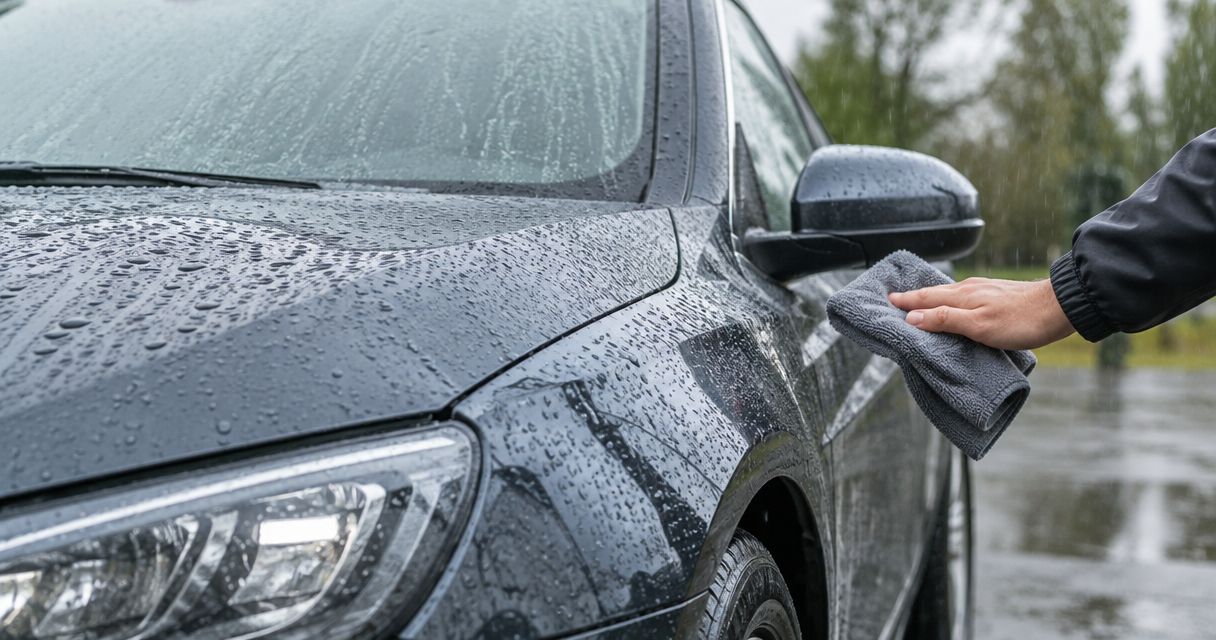
A new ceramic coating should stay out of rain until the coating manufacturer's initial water-exposure restriction has passed. Rain before that point does not automatically mean the coating has failed, but water spotting and contamination need your installer's attention—not an improvised wash or polish.
- Ceramic coating rain before curing: avoid exposure until the coating's written aftercare instructions allow it.
- Rain does not automatically mean coating failure; photograph spots and contact the installer before treating them.
- Water beading is not proof that a ceramic coating has fully cured.
- Spiffy Me provides ceramic coating services for Orange County car owners; confirm rain precautions before your appointment.
Is it okay for a new ceramic coating to get rained on?
Not during the product's required dry period. Once that restriction has passed, follow the coating's remaining cure and maintenance instructions. Permission to get wet is not necessarily permission to wash the car, use chemicals, or scrub away spots.
The distinction is between initial protection from water and the full curing process. Your installer should identify both for the actual coating applied. Read more about how long ceramic coating takes to cure, then use your product-specific instructions rather than a general online timetable.
If rain has already reached the car, start with these steps:
- Find shelter safely. Move into a suitable covered space if you can do so without an unsafe drive.
- Leave the surface alone. Do not rub wet paint, apply a spot remover, or add another protection product.
- Record the exposure. Note when installation finished, when rain began, and whether the car was parked or driven.
- Contact the installer. Send photographs and ask for the approved drying or inspection procedure.
Why this matters
A coating's water-repellent behavior and its readiness for normal use are different questions. Visible beads tell you how water behaves on the surface; they do not establish that every aftercare restriction has ended.
The immediate problem is not simply that the car looks wet. Rain can carry contamination, and drying droplets can leave deposits. Treating those deposits with the wrong chemical or rubbing a dirty surface introduces another problem before the original one has been assessed.
For a 2026 ceramic coating appointment, get written rain instructions before application—not after the forecast changes. Ask what you should do if the car gets wet, who to contact, and where you can keep it during the restricted period.
What should you do if rain has already hit the coating?
Your next move depends on the exposure, the coating's instructions, and what remains on the surface. The table below compares response options, not guarantees about the condition of the coating.
| Response | Best for | Benefit | Limitation |
|---|---|---|---|
| Shelter and installer guidance | Fresh exposure during the restricted period | Stops further direct rainfall and avoids unapproved treatment | Shelter does not remove existing deposits or confirm coating condition |
| Approved drying procedure | Water remaining on a surface the installer has cleared for drying | Addresses standing water using the specified method | Dirty paint or incorrect technique creates a risk of scratches |
| Installer inspection | Visible rings, haze, streaks, or uncertain exposure | Allows the surface to be assessed before corrective work | Requires an assessment; photographs alone do not settle every case |
If the car is still wet
Move the car under cover when practical, then ask whether you should dry it and how. Do not assume a microfiber towel makes every wipe safe. A towel can drag particles across the finish, and a newly applied coating needs its own handling instructions.
Avoid using a household towel, rubbing individual droplets, or testing a detail spray on an inconspicuous panel. A small test still changes the surface and complicates the installer's assessment.
If the installer previously supplied a rain-response procedure, follow that procedure. Otherwise, avoid adding products while you seek guidance.
If the rain has already dried
Photograph the affected panels before attempting cleanup. Capture a wider view showing the panel and a closer view showing the marks. Look in ordinary daylight without repeatedly touching the surface to locate a spot.
Dried rings are a reason to investigate, not proof that the coating needs removal. Deposits on top of a coating and changes within the finish require different responses. Do not jump from visible spots to polishing the entire car.
If you drove through the rain
Tell the installer that the car was driven, not just parked outdoors. Road spray adds a different contamination concern from droplets on a stationary vehicle, especially around lower panels and behind the wheels.
Do not treat the drive as a reason to immediately pressure-wash the car. Explain the exposure first and get an approved cleaning plan. The goal is to remove contamination without ignoring the coating's current restrictions.
Why the risk from early rain varies
There is no reliable universal answer based only on the words ceramic coating. These factors determine the appropriate response:
- Coating instructions. The specific product determines its initial dry period, curing requirements, and permitted maintenance.
- Time since application. Exposure during a restricted stage needs a different assessment from exposure after that restriction ends.
- Curing conditions. Temperature and humidity affect curing; the installer must account for the actual conditions.
- Exposure source. Rainfall, sprinkler overspray, and road spray bring different contamination concerns.
- What remains afterward. Standing droplets, dried rings, dirt, and visible haze call for assessment rather than the same automatic treatment.
- What happened next. Wiping, washing, chemical treatment, or polishing changes what the installer needs to evaluate.
For your 2026 aftercare plan, record the coating's name and keep the instructions with the appointment details. A generic answer from another vehicle owner is not a substitute for the directions attached to your installation.
What should you avoid after early rain exposure?
Avoid turning a water-exposure question into an unapproved correction job. Strong cleaners, abrasion, and additional layers are not neutral actions on a fresh coating.
Do not use household vinegar, a general-purpose descaler, or an unfamiliar water-spot remover without approval. Products intended to dissolve deposits still have compatibility and application requirements. A recommendation for ordinary glass or an older coating does not establish suitability here.
Also avoid clay bars, abrasive pads, hand polishing, or machine polishing as a first response. Abrasive correction can alter or remove coating material. It belongs in an assessed repair plan, not a driveway experiment.
Finally, do not add wax, sealant, or a ceramic spray to hide a mark. An additional product does not establish that the underlying coating is sound, and it changes the surface before inspection.
How should you plan a coating appointment around rain?
Start with the place the car will remain after application. Mobile service does not eliminate the need for suitable application and curing conditions. Confirm those conditions before agreeing to the appointment.
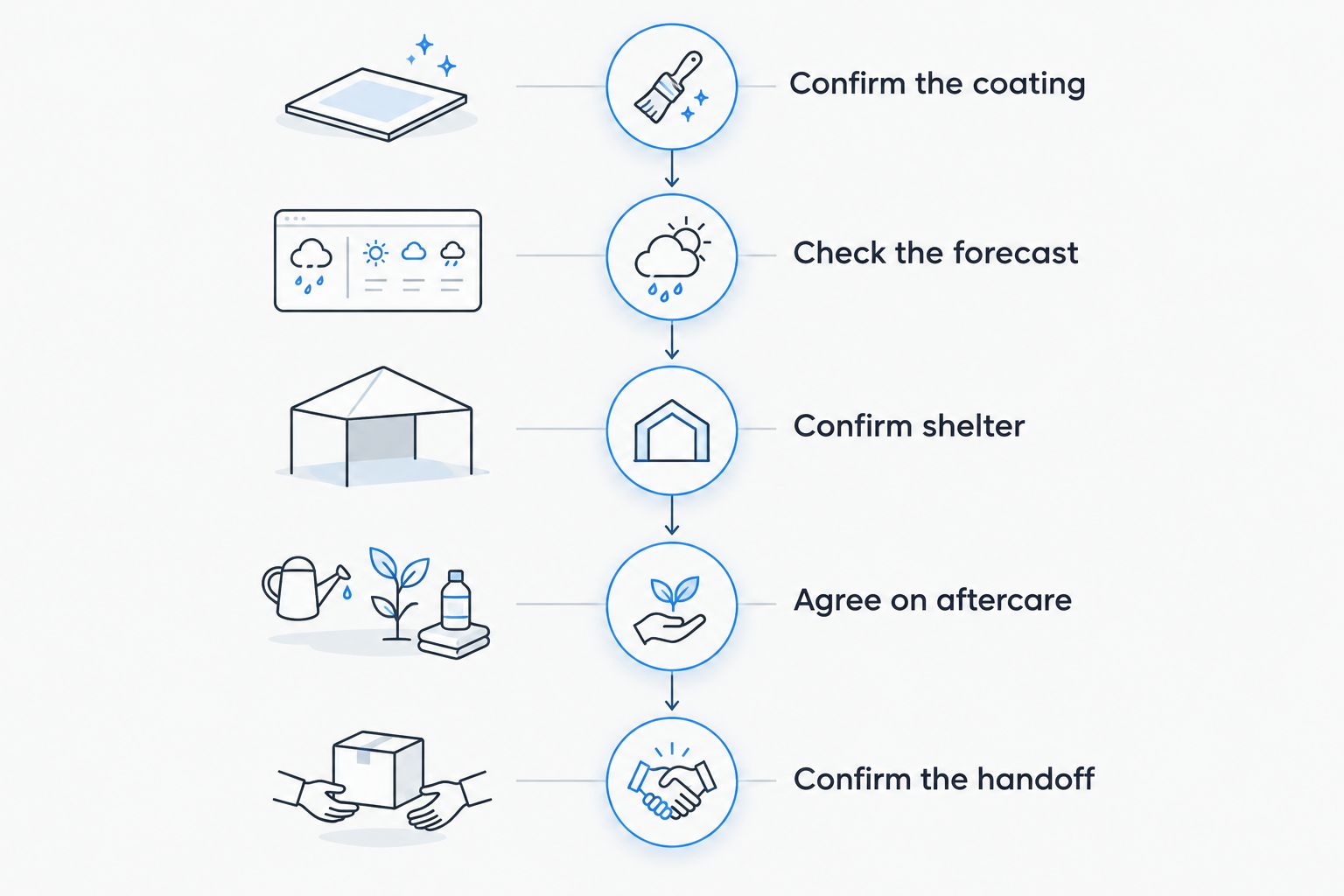
Use this sequence when arranging ceramic coating in 2026:
- Confirm the coating. Ask which product will be applied and request its aftercare requirements.
- Check the forecast. Include the period after the appointment, not just the working hours.
- Confirm shelter. Describe the actual parking space and ask whether it meets the requirements.
- Agree on aftercare. Establish when water exposure, driving, washing, and maintenance products are permitted.
- Confirm the handoff. Know whom to contact if weather changes or the car gets wet.
A garage and an open-sided cover do not provide identical protection. Describe possible wind-driven rain, sprinkler exposure, and any need to move the car. Let the installer decide whether the location is suitable rather than assuming any overhead cover qualifies.
Spiffy Me is a fit for Orange County car owners seeking mobile ceramic coating services. The convenience is having the service come to your location; the limitation is that the site and weather still need to suit the work. Confirm both when requesting a quote through Contact Us.
Include your vehicle, location, parking arrangement, and scheduling constraints in the request. Ask what the quote includes and what preparation or shelter you need to provide. Do not assume a particular package, correction process, or weather contingency is included.
Request a ceramic coating quote
Tell Spiffy Me about your vehicle, Orange County location, and covered parking.
Does water beading mean the ceramic coating has cured?
Water beading does not prove full cure. A surface can repel water while aftercare restrictions still apply, so deliberately spraying it is not a useful readiness test.
Use the coating's instructions and the installer's release guidance instead. Beading also does not tell you whether a dried spot is loose contamination, a deposit, or a mark requiring closer inspection.
If your car beads after unexpected rain, document that observation without treating it as a clean bill of health. Keep the remaining restrictions in place until the installer confirms otherwise.
Can you wash the car after rain during curing?
A rain shower does not cancel the coating's washing restrictions. Do not book a wash simply because the car looks dirty or assume a touchless wash is automatically acceptable.
Washing adds chemicals, water exposure, and potentially contact with the surface. The permitted timing and method must come from the coating's aftercare instructions. Ask the installer how to handle road film or visible deposits before the first approved wash.
For your 2026 maintenance notes, distinguish the first permitted water exposure from the first permitted wash. Keeping those instructions separate prevents a common mistake: interpreting permission to drive outside as permission for unrestricted cleaning.
Does early rain mean the coating needs reapplication?
Early rain does not automatically establish that reapplication is necessary. The coating needs an assessment based on its product requirements, exposure history, and surface condition.
Ask the installer to explain the proposed remedy before authorizing work. Is the recommendation to remove surface deposits, assess an affected panel, or correct a confirmed coating problem? Those are different jobs with different implications.
For Spiffy Me ceramic coating inquiries, provide the same practical details you would give any installer: application timing, exposure timing, photographs, and every product used afterward. Clear information supports a useful assessment without presuming either failure or an easy fix.
FAQ
Is a ceramic coating ruined if it rains before curing?
Rain before curing does not automatically mean a ceramic coating is ruined. Follow the coating's rain-response instructions and contact the installer with the exposure timing and photographs before attempting treatment.
How long must a new ceramic coating stay dry?
A new ceramic coating must stay dry for the period specified for the product applied. Ask the installer to distinguish the initial water restriction from the full cure period and the first permitted wash.
Should I wipe rain off a freshly coated car?
Only wipe or dry a freshly coated car using a method approved for that coating at its current cure stage. Dirty paint and incorrect towel use introduce a risk of scratches, so ask before touching the surface.
Can I park a freshly coated car outside overnight?
Only park a freshly coated car outside if the coating's aftercare requirements permit the expected exposure. Rain, dew, and sprinkler spray all matter when the instructions require the surface to remain dry.
Does strong water beading prove my coating is ready for rain?
Strong water beading does not prove that a ceramic coating has fully cured. Follow the product's water-exposure restrictions rather than testing the surface with more water.
Can I use water-spot remover on a new ceramic coating?
Use water-spot remover on a new ceramic coating only when the installer or coating manufacturer approves the product and timing. Photograph the marks first and avoid acids or abrasive treatment as an improvised fix.
What should I ask before booking mobile ceramic coating in Orange County?
Ask which coating will be applied, what shelter it requires, and when rain exposure and washing are permitted. Spiffy Me provides mobile ceramic coating services in Orange County; confirm your location and parking conditions when requesting a quote.
One last thing
A dry-looking car is not the same as a fully cured coating. Evaporated rain only tells you that visible water has gone; it does not confirm that deposits are absent or that aftercare restrictions have ended.
Before your 2026 appointment ends, save the coating name, written care instructions, and installer contact details together. If rain arrives unexpectedly, that record is more useful than a generic countdown or another owner's experience with a different product.


