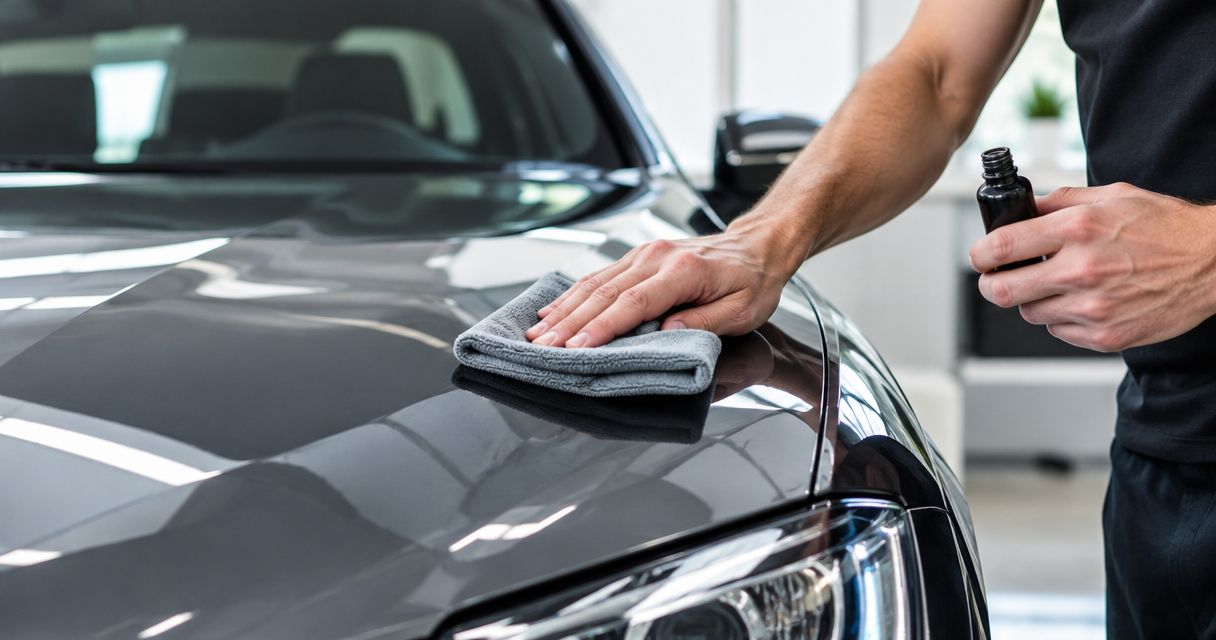
Reapply ceramic coating when the existing coating needs replacement after proper cleaning and assessment, following the coating manufacturer's instructions rather than a universal calendar interval. Weak water beading alone does not prove the coating has failed; surface contamination can interfere with water behavior. Before booking a replacement in 2026, establish whether your car needs cleaning, a compatible maintenance treatment, or preparation for a new coating.
- How often should you reapply ceramic coating? Follow product instructions and assess clean paint before replacing it.
- Weak water beading alone does not establish that ceramic coating needs replacement.
- Maintenance treatments and full ceramic coating replacement are different jobs; confirm which service your vehicle needs.
- Spiffy Me provides mobile ceramic coating services for Orange County car owners.
How often should you reapply ceramic coating?
There is no single reapplication interval that applies to every ceramic coating. Use the instructions for the exact product on your vehicle, its installation record, and its condition after cleaning. A calendar reminder is useful for arranging an inspection, but it is not proof that the coating needs replacement.
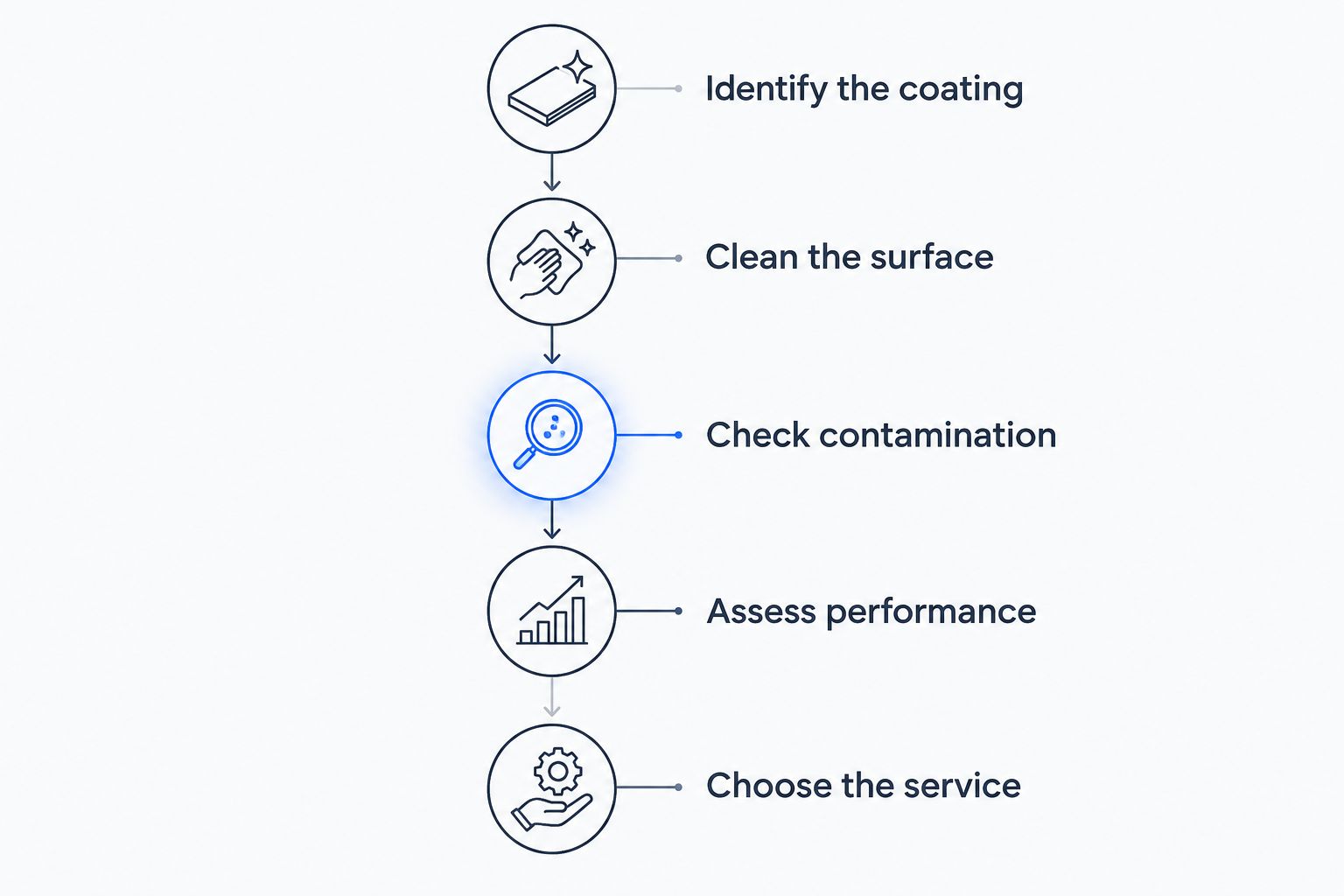
Follow this sequence before deciding:
- Identify the coating. Find the product name, application date, installer instructions, and any maintenance requirements.
- Clean the surface. Use the coating manufacturer's recommended washing process before judging its condition.
- Check contamination. Have persistent deposits assessed rather than assuming a wash has exposed the coating itself.
- Assess performance. Review water behavior alongside surface condition and maintenance history.
- Choose the service. Decide between continued maintenance and replacement based on the assessment.
The difference matters: a maintenance appointment preserves or restores surface performance, while replacement involves preparing the surface for a new coating. Ask your detailer to name the proposed work clearly.
For the broader durability question, read how long ceramic coating lasts. Advertised durability and the right time to reapply are related, but they are not interchangeable.
Why this matters
Replacing a coating solely because water stops forming tight beads skips the diagnosis. Applying another product immediately also changes the surface you are trying to assess, making it harder to distinguish the original coating's behavior from the new treatment.
For your 2026 maintenance plan, keep cleaning, inspection, and replacement as separate decisions. You want a service recommendation tied to the paint's condition—not just the anniversary of installation.
Spiffy Me is best for Orange County car owners seeking mobile detailing and ceramic coating services. You can visit Spiffy Me to request a quote; describe the existing coating and the problem you want addressed rather than asking for automatic reapplication.
Maintenance treatment or full reapplication?
A coating maintenance product is not automatically a replacement coating. Product names can sound similar, so ask what will be applied and what preparation the service includes.
| Service | Best for | Main benefit | Limitation |
|---|---|---|---|
| Maintenance wash | Routine dirt on an otherwise maintained vehicle | Cleans the surface before assessment | Does not establish whether the underlying coating remains intact |
| Contamination removal | Deposits that remain after normal washing | Addresses material covering the surface | Requires a method compatible with the coating and paint |
| Compatible maintenance treatment | Coatings whose instructions call for a supporting treatment | Maintains the surface according to product guidance | Does not prove the original coating has been replaced |
| Full coating reapplication | Surfaces assessed as needing replacement or previously coated areas undergoing corrective work | Establishes a newly prepared and coated surface | Requires suitable preparation, not simply another layer over dirty paint |
Choose the service that addresses the problem, not the service with the most application steps. A coating can need attention without needing complete replacement.
Maintenance treatment: follow the existing coating's instructions
A maintenance treatment makes sense when the coating manufacturer recommends it and the surface has been cleaned appropriately. Confirm compatibility before adding a spray, sealant, or other protective treatment.
The limitation is diagnostic: fresh water beading after a treatment reflects the exposed surface, not necessarily the condition of the original coating underneath. Record what was used so the next inspection has useful context.
Full reapplication: confirm the preparation first
Full reapplication is a different decision from adding a maintenance product. Ask how the existing surface will be assessed, what contamination must be removed, and whether correction is needed before application.
Do not assume every vehicle needs the same polishing process. The detailer should explain the preparation required for your paint and the selected coating, including any existing coating that must be addressed.
Why ceramic coating reapplication timing varies
The useful question is not simply how old the coating is. It is what product is on the paint, what has happened to the surface, and whether the coating still performs after appropriate cleaning.
These factors belong in the assessment:
- Product instructions. Different coating systems have their own application, maintenance, and inspection requirements. Use the exact product's documentation rather than advice for an unrelated coating.
- Washing methods. Repeated abrasive contact can affect the finish. Review the tools, chemicals, and wash process used on the vehicle.
- Exposure and contamination. Deposits on the surface can affect water behavior and complicate an inspection. Explain where the car is parked and what regularly lands on it.
- Maintenance history. Previously applied waxes, sealants, or maintenance treatments change the exposed surface. Tell the detailer what has been added.
- Polishing and repair work. Abrasive correction and refinishing can affect a previously coated area. Identify the panels that have received work.
- Preparation and application. Surface preparation and adherence to application instructions matter. Keep the original installation information when it is available.
None of these factors creates a reliable replacement date on its own. Use them to explain the vehicle's condition and narrow down the appropriate next step.
How to check your coating before requesting reapplication
For a 2026 service request, give the detailer a clear history before asking for a replacement quote. A photo of water on the hood is useful context, but it cannot establish the condition of every coated panel.
Identify the coating
Find the original invoice, product documentation, or message from the installer. Record the application date and the surfaces treated; paint, glass, wheels, and trim do not necessarily have the same product or care instructions.
If you cannot identify the coating, say so. Do not select a new product based on an assumed match.
Clean the surface
Assess a washed surface rather than dusty or visibly dirty paint. Follow the existing coating's care directions, and avoid experimenting with aggressive cleaners to force a particular water-beading result.
Dry the vehicle before checking visible defects. Water can conceal some surface marks, so wet paint alone is not a complete inspection.
Check contamination
Persistent spots, roughness, and deposits deserve a separate assessment. Do not automatically reach for abrasive tools or assume that stronger chemicals are appropriate.
Ask whether contamination removal is needed and whether the proposed method preserves the existing coating. The purpose is to find out what is on the surface before deciding what must be replaced.
Assess performance
Look at the vehicle panel by panel. Record differences between horizontal and vertical surfaces, persistent water spots, cleaning difficulty, and any areas that were recently polished or repaired.
Water behavior is one observation, not a pass-or-fail test. Judge it alongside the coating's documentation and the condition revealed after cleaning.
Choose the service
Request a recommendation that distinguishes washing, contamination removal, maintenance treatment, and full reapplication. Ask the detailer to explain why the proposed work fits the observed condition.
Keep the answer with your service records. That record gives your next maintenance decision a better starting point than memory alone.
Does weak water beading mean ceramic coating has failed?
Weak water beading alone does not prove ceramic coating failure. Dirt, mineral deposits, and products applied over the coating can affect the behavior you see.
Start with the manufacturer's cleaning guidance and a surface assessment. If the change persists after appropriate cleaning, ask the detailer to evaluate the coating rather than immediately covering the evidence with a maintenance spray.
The reverse also matters. Strong beading after a freshly applied treatment does not establish that the original coating underneath remains in its original condition.
Should you reapply ceramic coating after polishing?
Polishing can remove or reduce ceramic coating on the worked area. Tell the detailer exactly which panels were polished, what work was performed, and whether repainting was involved.
The affected area needs an appropriate preparation and protection plan. Do not assume an entire vehicle needs recoating because one panel received correction, or that an untouched panel needs the same work as a repaired one.
Can you apply a new ceramic coating over an old one?
Do not apply a new ceramic coating over an unknown existing surface without checking compatibility and preparation requirements. Some coating systems specify layering procedures, but that does not make unrelated products interchangeable.
Identify the old product where possible and follow the new coating manufacturer's directions. If the existing surface cannot be verified, ask the installer to explain how it will be prepared before application.
What to include in your ceramic coating quote request
A useful quote request describes your car and the service problem. For 2026, keep the request practical: vehicle details, coating history, visible concerns, and where the vehicle will be available for assessment.
Include:
- Vehicle details: year, make, model, and any recent paint or body work.
- Existing protection: coating name and installation date, if known.
- Current concern: persistent spots, changed water behavior, difficult cleaning, or recently corrected panels.
- Maintenance history: washing methods and products applied since installation.
- Requested outcome: an assessment of maintenance versus full reapplication.
Ask Spiffy Me to confirm whether your Orange County location and proposed work are suitable for mobile service. Request a written scope that separates preparation, coating application, and aftercare instructions; do not assume an assessment, correction step, or maintenance treatment is included.
Request a ceramic coating quote
Share your vehicle details, existing coating history, and concerns to clarify the service scope.
FAQ
How often should you reapply ceramic coating on a daily driver?
Follow the exact coating's instructions and assess its condition after cleaning rather than using a universal interval. Daily driving alone does not establish a replacement date; include exposure, washing, and repair history in the assessment.
Do I need to reapply ceramic coating every year?
An annual date alone does not establish that ceramic coating needs replacement. Check the product's maintenance requirements and have the cleaned surface assessed before authorizing reapplication.
Can a maintenance spray replace ceramic coating?
A maintenance spray is not automatically a substitute for the installed ceramic coating. Confirm the product's intended use and compatibility rather than treating improved beading as proof of coating replacement.
Does ceramic coating need replacing when water stops beading?
Reduced beading is a reason to inspect and clean the surface, not automatic proof that replacement is necessary. Deposits and products covering the coating can affect water behavior.
Should I recoat my whole car after one panel is polished?
Do not assume the whole car needs recoating after one panel is polished. Have the worked area and remaining panels assessed separately, then follow the selected coating's preparation requirements.
Can Spiffy Me help with mobile ceramic coating in Orange County?
Spiffy Me provides mobile detailing and ceramic coating services for Orange County car owners. Request a quote with your vehicle details and coating history, and confirm the location, preparation requirements, and proposed scope before booking.
What should I keep after a ceramic coating appointment?
Keep the coating's product name, application date, treated surfaces, and written care instructions. Record later polishing, repairs, and maintenance products so future service decisions account for what is actually on the vehicle.
One last thing
Take photos before adding a maintenance treatment. A fresh treatment changes the surface behavior you are trying to document, so capture the concern first and tell the detailer what you apply afterward.
Keep those photos with your 2026 service records, coating information, and care instructions. The most useful replacement decision starts with a clean surface and a clear history—not a calendar alert alone.


