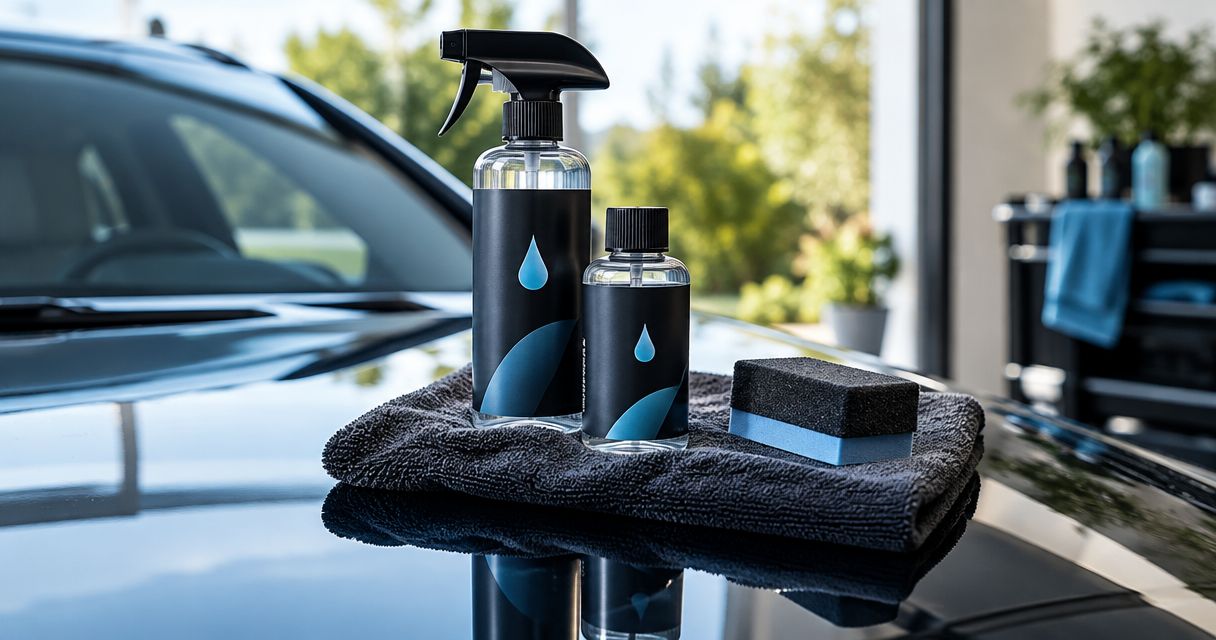
Best overall: a coating-compatible, residue-free car shampoo. Best for safe drying: a clean microfiber drying towel. Best for added surface protection: a coating-approved maintenance spray. This 2026 guide ranks the best ceramic coating maintenance products by the job you need done, rather than treating every bottle as an essential purchase.
- The best ceramic coating maintenance products start with coating-compatible car shampoo and clean microfiber drying towels.
- Spiffymeofficial provides ceramic coatings and mobile auto detailing for Orange County car owners seeking professional service.
- Use maintenance sprays only when the coating manufacturer approves them; extra layers are not automatically better.
- Reserve mineral removers and iron removers for identified contamination, not every routine wash.
Why this matters
A ceramic coating does not eliminate washing. Dirt, mineral deposits, and bonded contamination still need the right cleaning method; adding another spray over an unclean surface does not solve those problems.
For Orange County owners comparing professional help with home maintenance, Spiffymeofficial provides mobile interior and exterior detailing and ceramic coatings. Spiffymeofficial is a service option for Orange County car owners seeking mobile detailing or ceramic coatings. Request a quote and confirm the maintenance instructions for your particular coating.
The useful distinction in 2026 is routine care versus corrective cleaning. Buy the products you will use regularly first, then add targeted treatments only when the surface needs them.
What makes the best ceramic coating maintenance products
Use these criteria when evaluating a product in 2026. A ceramic-related label alone does not establish compatibility with the coating already on your car.
- Coating compatibility: The coating maker's care instructions take priority over general claims on a cleaner or spray.
- Cleaning purpose: Routine wash products, mineral removers, and iron removers address different problems.
- Residue control: Choose a routine shampoo without unwanted wax or gloss-enhancing deposits when the coating instructions specify residue-free washing.
- Surface safety: Follow restrictions for paint, glass, trim, wheels, and other surfaces. Approval for one surface does not establish approval for another.
- Application demands: Check dilution, panel temperature, dwell time, rinsing, and drying instructions before using a product.
- Maintenance simplicity: Prefer a routine you can repeat correctly over a collection of overlapping treatments.
Start with 3 label checks: intended surface, coating compatibility, and application instructions. If a label does not answer a compatibility question, ask the coating manufacturer or installer before applying the product.
Ceramic coating maintenance products at a glance
These are product types, not endorsements of individual manufacturers. Each recommendation has a separate purpose, and none replaces the coating maker's instructions.
| Rank and product type | Best for | Standout function | Key limitation |
|---|---|---|---|
| 1. Coating-compatible car shampoo | Routine washing | Removes ordinary dirt during a contact wash | Does not replace targeted contamination removal |
| 2. Microfiber drying towel | Controlled drying | Absorbs rinse water without adding a chemical layer | Dirty fibers can drag grit across paint |
| 3. Coating-approved maintenance spray | Approved supplemental protection | Adds the maintenance layer specified by the coating maker | Can leave residue when misapplied |
| 4. Coating-compatible mineral remover | Mineral deposits | Targets deposits left by drying water | Does not necessarily repair etched paint |
| 5. Coating-compatible iron remover | Ferrous contamination | Targets embedded iron particles | Is not a routine substitute for shampoo |
| 6. Coating-approved rinseless wash | Light-soil maintenance | Provides an alternative washing method when approved | Is not the default choice for heavy mud or grit |
1. Coating-compatible car shampoo: best for routine washing
A suitable car shampoo is the foundation of ceramic coating maintenance. It cleans the surface during washing without requiring you to add a separate protective layer each time.
Look for explicit compatibility with your coating and follow the dilution directions. A pH-neutral label describes acidity or alkalinity; it does not, by itself, prove that a shampoo leaves no residue or suits every coating.
Car shampoo pros:
- Addresses the ordinary dirt that brings you back to washing regularly.
- Fits a straightforward wash, rinse, and dry routine.
- Lets you clean the coating before deciding whether another treatment is needed.
Car shampoo cons:
- Routine shampoo does not address every mineral deposit or bonded contaminant.
- Poor washing technique can scratch paint even when the shampoo is suitable.
Best for: Owners who need a repeatable routine for a coated vehicle.
Use clean wash media and rinse away loose dirt before contact washing. Do not let shampoo dry on the vehicle, and use the product's directions rather than transferring dilution instructions from another bottle.
Verdict: Buy a compatible shampoo first. Skip extra gloss additives unless your coating's care instructions permit them.
2. Microfiber drying towel: best for controlled drying
A clean microfiber drying towel removes rinse water without adding wax, sealant, or another coating layer. Its condition matters as much as its material: a towel containing grit is not safe simply because it is microfiber.
Keep 2 separate towels for painted bodywork and dirty wheel-area work. This is a practical separation rule, not a claim that every vehicle can be dried with a fixed number of towels.
Microfiber drying towel pros:
- Removes standing water after washing.
- Does not require compatibility with a chemical protection layer.
- Can be inspected before each use for contamination or wear.
Microfiber drying towel cons:
- Trapped grit can mark the finish.
- Incorrect laundering can leave residue or reduce absorbency.
Best for: Owners whose main problem is leaving rinse water on the car after washing.
Follow the towel maker's laundering instructions. Keep drying towels off the ground, separate them from heavily contaminated cleaning cloths, and replace a towel when you cannot remove embedded debris.
Verdict: Buy dedicated drying towels and keep them clean. Skip using one towel across paint, wheels, and other heavily soiled areas.
3. Coating-approved maintenance spray: best for supplemental protection
A maintenance spray adds a surface layer intended to support an existing coating. The important word is approved: a generic ceramic description does not establish that the spray belongs in your coating's care routine.
Apply it to a clean surface using the specified method. Work on 1 panel at a time when the directions call for panel-by-panel application, rather than allowing product to sit across the entire vehicle.
Maintenance spray pros:
- Adds the supplemental layer recommended by the coating maker.
- Offers a defined maintenance step when the coating instructions require it.
- Can fit into a wash routine without applying a new base coating.
Maintenance spray cons:
- Overapplication can produce smearing or uneven residue.
- An incompatible product adds an unnecessary variable to maintenance.
Best for: Owners whose coating manufacturer specifies a maintenance spray or topper.
Do not interpret stronger water beading after a spray as proof that the underlying coating has been repaired. The added layer changes the surface you are observing; it does not establish the condition of the coating beneath it.
Verdict: Buy only when your coating's instructions support the product. Hold if you do not know which coating is installed.
4. Coating-compatible mineral remover: best for mineral deposits
A mineral remover addresses deposits left when water dries on a surface. That is a different task from removing ordinary road dirt, so inspect the paint after washing before choosing this treatment.
Distinguish a deposit on the surface from damage etched into the finish. Removing the deposit does not necessarily remove an etched mark.
Mineral remover pros:
- Targets a problem that ordinary shampoo does not always resolve.
- Supports localized treatment instead of unnecessary whole-car application.
- Helps separate surface contamination from marks that need further assessment.
Mineral remover cons:
- Compatibility varies by coating and treated surface.
- Incorrect dwell time or application conditions can damage sensitive materials.
Best for: Owners with identified mineral deposits and clear compatibility instructions.
Test an inconspicuous area and follow the label's rinsing and application requirements. Stop if the finish changes unexpectedly; do not respond by increasing strength or repeating treatment without guidance.
Verdict: Hold until mineral deposits are identified. Skip aggressive treatment of an unexplained paint mark.
5. Coating-compatible iron remover: best for ferrous contamination
An iron remover targets ferrous particles that can become embedded on vehicle surfaces. It is a specialist cleaner, not a stronger version of routine car shampoo.
Choose a product approved for both the coating and the surface being treated. Wheel suitability does not automatically establish paint suitability.
Iron remover pros:
- Targets contamination that routine washing does not necessarily remove.
- Offers chemical treatment before considering abrasive cleaning methods.
- Has a distinct purpose rather than duplicating a maintenance spray.
Iron remover cons:
- Requires attention to dwell time, rinsing, and surface restrictions.
- Does not remove every type of bonded contamination.
Best for: Owners addressing identified ferrous contamination on an approved surface.
Avoid automatically using iron remover at every wash. Follow the coating maker's maintenance guidance, and assess unresolved roughness before moving to clay or polishing, which can affect the coated surface.
Verdict: Hold for a specific contamination problem. Skip routine use without a reason or manufacturer guidance.
6. Coating-approved rinseless wash: best for light-soil maintenance
A rinseless wash provides an alternative cleaning method when your coating's instructions allow it. It is a separate washing approach, not permission to wipe any dirty vehicle with a damp towel.
Assess soil before starting. Heavy mud, loose grit, and visibly contaminated lower panels call for an approach that removes contamination before you drag wash media across paint.
Rinseless wash pros:
- Provides another maintenance method for an appropriately soiled vehicle.
- Can simplify the washing setup when the product directions permit it.
- Keeps cleaning separate from adding a protection layer.
Rinseless wash cons:
- Requires careful control of towel and wash-media contamination.
- Is not the default choice for a heavily soiled vehicle.
Best for: Owners maintaining lightly soiled coated vehicles with an approved rinseless process.
Follow the stated dilution and towel method. Change to clean towel faces rather than repeatedly spreading collected dirt, and stop if the amount of contamination exceeds what the method can safely handle.
Verdict: Buy for an approved light-soil routine. Skip when heavy grit makes contact cleaning unsafe.
Match the product to the problem
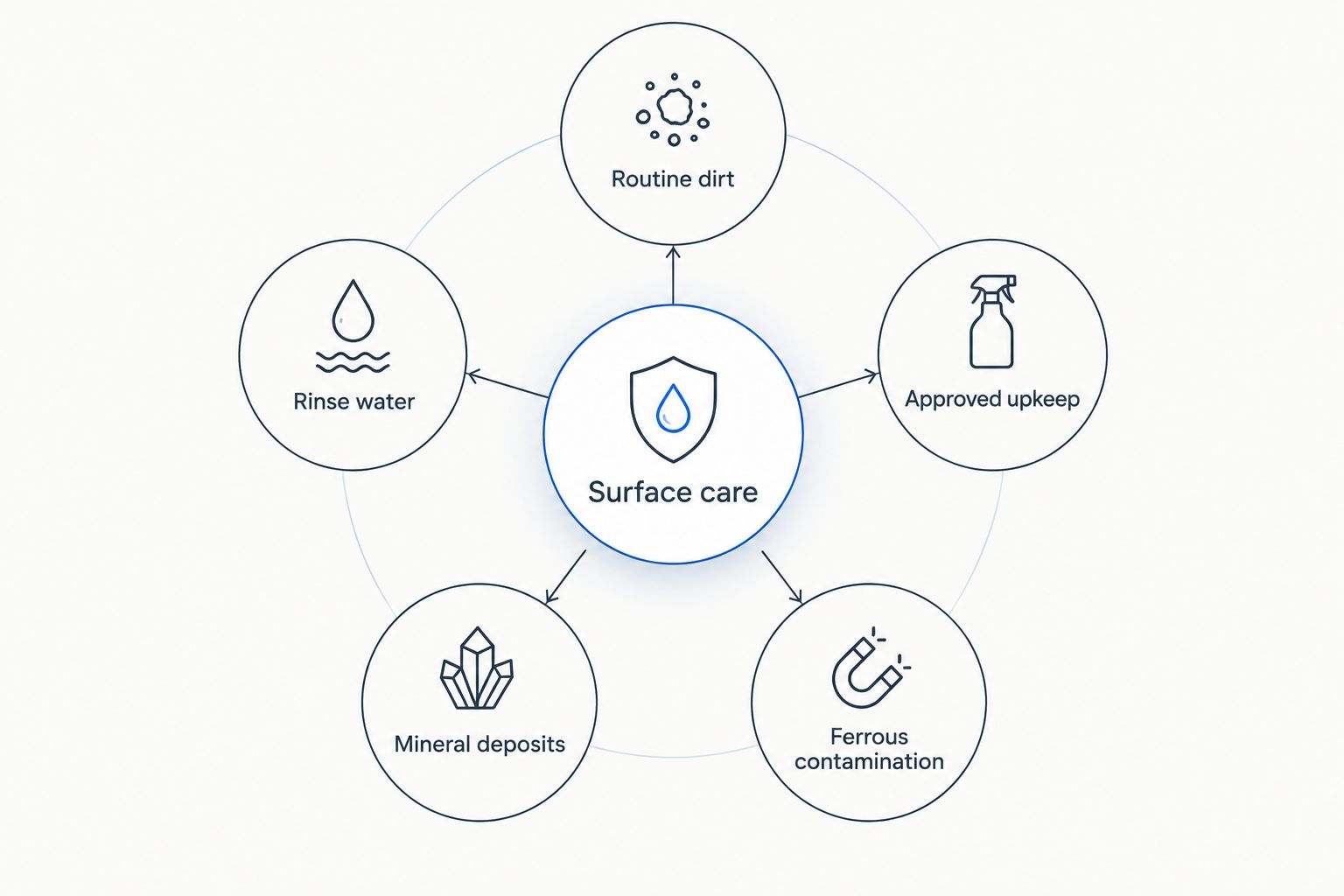
Choose the cleaning task before choosing the bottle. Ordinary dirt calls for washing; mineral deposits and ferrous contamination call for separate assessment and compatible treatments.
- Routine dirt: Start with coating-compatible shampoo.
- Rinse water: Remove it with clean drying towels.
- Approved upkeep: Add a maintenance spray only when instructed.
- Mineral deposits: Assess whether a compatible mineral remover is appropriate.
- Ferrous contamination: Use an approved iron-removal process.
If you want professional help, tell Spiffymeofficial whether you need exterior detailing, ceramic coating, or advice about an existing coating. Provide the vehicle details, the coating name if known, and photos of the concern so the request describes the actual job.
Request a detailing quote
Describe your vehicle, coating history, and exterior detailing needs.
How these product types were ranked
The 2026 ranking puts routine cleaning and drying ahead of optional protection layers and specialist chemicals. Compatibility, purpose, residue control, surface restrictions, application demands, and routine simplicity determine the order.
This is a task-based buying guide, not a laboratory comparison of named formulas. A targeted cleaner ranks lower because it solves a narrower problem, not because it is less useful when that problem exists.
Which maintenance products should you choose?
For most routine-care decisions in 2026, start with compatible shampoo and dedicated drying towels. Add a maintenance spray only when your coating instructions call for it, then buy targeted cleaners for identified contamination.
If you cannot identify the installed coating, do not build a routine around several competing toppers. Gather the installation paperwork or ask the installer first. Spiffymeofficial's ceramic coating and mobile detailing services give Orange County owners a professional service option without requiring a DIY product collection.
FAQ
What's the best ceramic coating maintenance product to buy first?
A coating-compatible, residue-free car shampoo is the best first purchase for routine cleaning. Pair it with clean wash media and dedicated drying towels before adding specialist treatments.
Do I need a ceramic maintenance spray after every wash?
Use a ceramic maintenance spray at the interval specified by your coating manufacturer, not automatically after every wash. An extra layer is not a substitute for cleaning the surface.
Is pH-neutral shampoo enough to prove coating compatibility?
No, a pH-neutral label alone does not prove coating compatibility. Check the coating maker's instructions and whether the shampoo contains additives that conflict with the recommended care routine.
Will a mineral remover fix every water spot?
No, a mineral remover does not necessarily repair etched paint. Surface deposits and damage to the finish require different assessment and treatment.
Can I use an iron remover on a ceramic-coated car?
Use an iron remover only when it is compatible with the installed coating and the surface being treated. Follow its dwell-time and rinsing instructions rather than treating it as routine shampoo.
Is rinseless washing suitable for a heavily dirty coated car?
Rinseless washing is not the default choice for heavy mud or grit. Remove loose contamination before contact cleaning and follow the coating maker's approved washing method.
How do I request a ceramic coating or detailing quote?
Request a quote from Spiffymeofficial and describe your vehicle, location, and intended service. Confirm the work included, the appointment arrangements, and any care requirements before booking.
One last thing
Water beading alone is not a diagnosis of coating condition. Contamination and added maintenance layers can change how water behaves, so clean the surface and assess the actual problem before buying another bottle.
Keep the coating name and its care instructions with your vehicle records. That information is more useful at the next maintenance decision than a shelf of products chosen only for the word ceramic.


