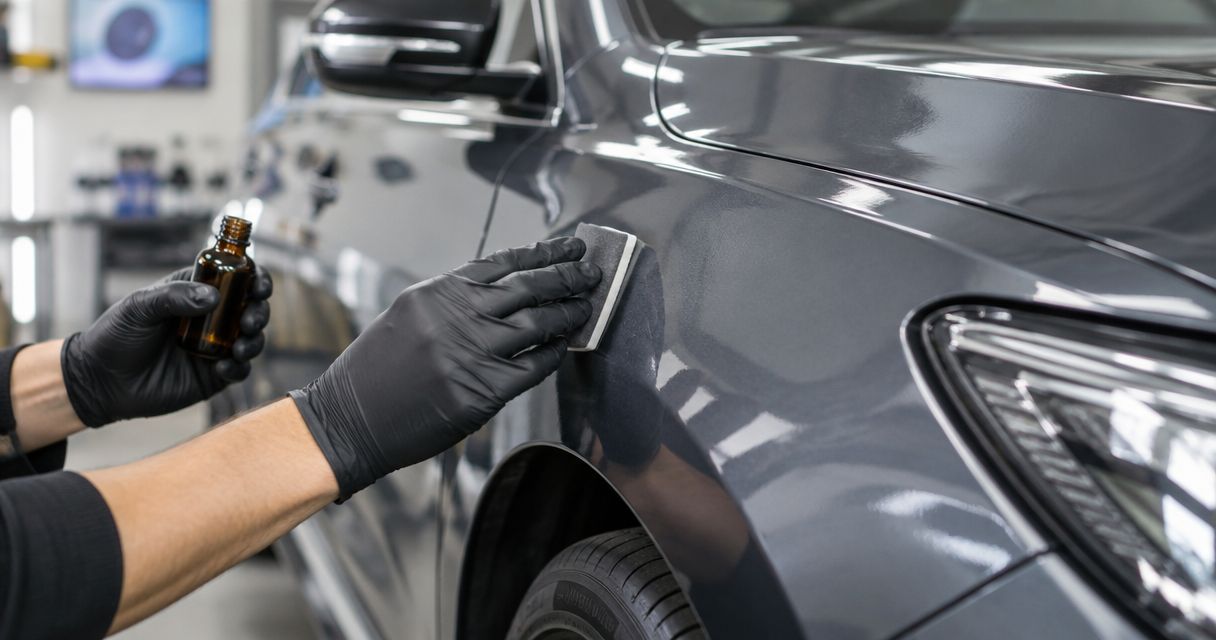
Ceramic coating does not make a car rustproof or stop existing corrosion; it helps protect the intact painted surface, not exposed steel or hidden cavities. For your 2026 detailing decision, repair rust and damaged paint first, then consider coating for easier exterior maintenance.
- Does ceramic coating prevent rust? No. It does not repair exposed steel, paint chips, or existing corrosion.
- Spiffymeofficial offers ceramic coating for Orange County car owners seeking exterior surface protection, not rust repair.
- Repair damaged paint before coating; water beading does not prove that underlying metal is protected.
- Orange specks can be embedded iron contamination rather than rust originating in the body panel.
Why this matters
Buying ceramic coating to solve rust confuses surface maintenance with metal repair. You can have water beading on a coated hood while corrosion develops at an untreated chip, inside a seam, or underneath the vehicle.
Choose the service that addresses the damage, not just the finish you want. If your paint has scratches or defects, start with the distinction between preparation and repair in Is paint correction necessary before ceramic coating?. Polishing improves certain finish defects; it does not rebuild missing paint or corroded metal.
Does ceramic coating prevent rust?
No. Automotive ceramic coating is not a substitute for intact paint, rust repair, or a purpose-designed corrosion treatment. Its practical role is protecting and maintaining the surface it is applied to. It does not restore a broken paint system or treat inaccessible metal elsewhere on the vehicle.
Rust forms when iron or steel corrodes in the presence of moisture and oxygen. Salts can accelerate that process. Factory paint and underlying protective treatments help separate the metal from its environment; a detailing coating sits on top of the finished surface rather than replacing those layers.
Use this comparison when deciding what belongs in your 2026 maintenance plan:
| Option | Best for | Main benefit | Main limitation |
|---|---|---|---|
| Ceramic coating | Maintaining intact exterior finishes | Makes routine cleaning easier and adds surface protection | Does not repair chips, remove rust, or protect untreated cavities |
| Paint protection film | Reducing impact damage on covered painted panels | Provides a physical barrier against some road debris | Does not repair existing corrosion or protect uncovered areas |
| Body and paint repair | Addressing corroded metal or broken paint coverage | Treats the damaged area and restores its protective finish | Requires assessment beyond ordinary detailing |
| Purpose-designed corrosion treatment | Addressing specified vulnerable metal areas | Targets corrosion prevention in the areas treated | Suitability depends on the vehicle, treatment, and existing condition |
These are different jobs, not interchangeable upgrades. Ask a body repair specialist about corrosion and a detailer about finish preparation and maintenance.
Intact paint: coating supports maintenance
Ceramic coating is most relevant when your paint is sound and your goal is easier cleaning. Its water-repellent surface helps water move differently across the finish, but that does not establish whether metal underneath is protected everywhere.
The benefit is practical. Contamination that is easier to remove gives you a more manageable washing routine; the limitation is that washing and inspection still matter. A coated car is not a maintenance-free car.
For a 2026 coating appointment, ask what surfaces the proposed service covers and what preparation those surfaces need. Do not assume that an exterior coating includes wheel wells, the underbody, panel interiors, or every exposed component.
Chipped paint: repair the break first
A stone chip that exposes steel creates a different problem from dirt sitting on clear coat. The original barrier has been interrupted, and coating the surrounding paint does not rebuild it.
Have exposed metal and suspicious chips assessed before coating. A small defect and a corroded panel do not necessarily need the same repair, so avoid deciding the treatment from size alone.
Paint protection film is a separate option to discuss when your concern is future impact damage on covered panels. Film still does not fix a chip that already exists, and neither film nor ceramic coating turns damaged paint into an intact factory finish.
Existing rust: detailing is not the repair
Ceramic coating does not convert rust back into sound metal, replace lost material, or stop corrosion spreading beneath failing paint. Applying a finish-protection product over an unresolved problem is not a repair plan.
Look for bubbling paint, flaking material, recurring staining at a chip, or corrosion around seams. These signs call for an assessment rather than a promise that coating will seal everything permanently.
Keep structural concerns separate from appearance. If corrosion affects a mounting point, suspension area, or another safety-related component, arrange a mechanical or body inspection instead of treating it as an exterior detailing issue.
Why rust risk varies
Your vehicle's condition and exposure matter more than whether the hood beads water. For Orange County owners comparing ceramic coating in 2026, these factors explain why one surface-protection service cannot answer every corrosion concern:
- Paint condition: Chips, scratches through the paint system, and failing finishes interrupt the barrier over metal.
- Salt exposure: Coastal salt deposits and road salt brought back from travel can contribute to corrosive conditions when moisture is present.
- Moisture retention: Dirt-packed areas, seams, and blocked drainage paths can hold moisture against vulnerable surfaces.
- Previous repairs: Existing bodywork and paint damage need inspection; coating does not establish the quality of an earlier repair.
- Coverage: A coating on exterior paint does not automatically reach hidden cavities, undersides, or untreated components.
- Maintenance: Leaving contamination in place and ignoring paint damage creates problems that water repellency alone does not address.
You do not need to diagnose hidden corrosion yourself. You do need to describe where the problem appears and avoid assuming the visible finish tells the whole story.
Are orange spots on paint always rust?
No. Orange specks can come from iron particles embedded in the surface rather than corrosion originating in the body panel. This distinction matters because surface decontamination and metal repair solve different problems.
Brake dust and other ferrous particles can settle on paint and oxidize. That can create rust-colored dots even where the underlying painted panel is not itself rusting. Appearance alone does not confirm the source.
Ask for an inspection before buying an abrasive product or trying to polish the spots away. Decontamination can address embedded material, but it cannot restore steel that has already corroded beneath damaged paint.
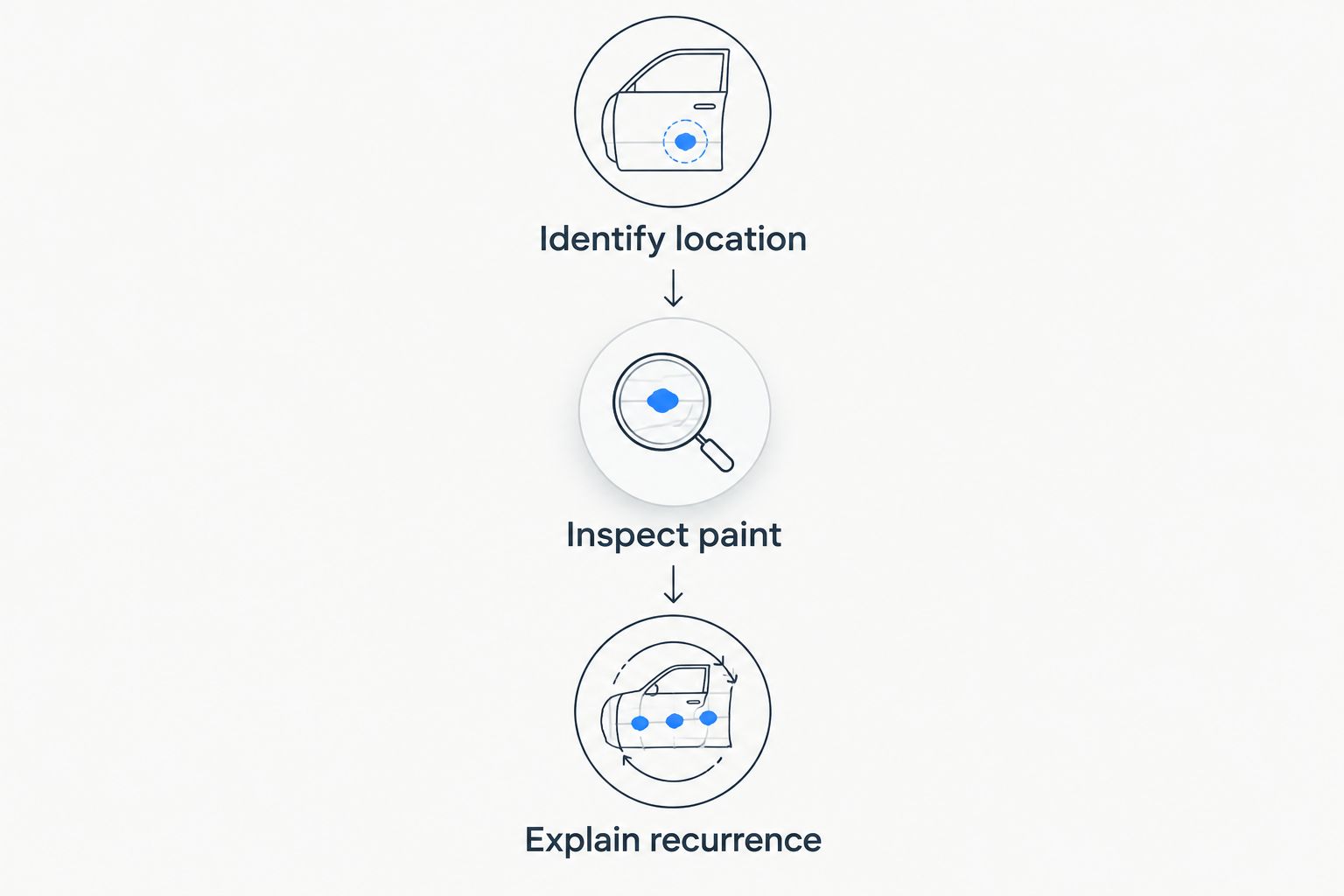
Use 3 checks to organize the conversation: identify the spot's location, inspect the surrounding paint, and explain whether it returned after cleaning. These checks help describe the problem; they do not replace a diagnosis.
What should you do before booking ceramic coating?
Start with the condition of the vehicle, not a coating name. A useful quote separates preparation from protection and makes clear whether another specialist must address damage first.
- Describe the concern. Say whether you see orange dots, exposed metal, bubbling paint, or underbody corrosion. Do not label every orange mark as panel rust.
- Send useful photographs. Include the whole panel, a close-up of the defect, an angled view of the paint, and a wider view showing its location. These 4 photos give context, although an in-person inspection can still be necessary.
- Disclose previous work. Mention known repainting, touch-ups, existing film, or earlier coating applications. Ask how that history affects preparation.
- Separate the work. Treat rust repair and cosmetic protection as 2 separate jobs when corrosion is present. Confirm the repair requirements before arranging the coating stage.
- Confirm the written scope. Ask which surfaces are included, what preparation is proposed, what is excluded, and which aftercare instructions apply.
Spiffymeofficial is a fit for Orange County car owners seeking mobile detailing and ceramic coating, not a substitute for rust repair. Describe the vehicle and its condition through the contact page, then request a quote that distinguishes cleaning, preparation, and coating.
Request a ceramic coating quote
Describe your vehicle, paint condition, and concerns before choosing a service.
Can ceramic coating stop rust from spreading?
No. Ceramic coating does not stop established corrosion underneath paint or inside metal seams. Rust needs an appropriate repair assessment, including attention to any damaged finish or affected metal.
If staining returns in the same place after cleaning, have the source checked. Repeatedly covering the area with a surface product does not establish that the underlying problem has been treated.
Does ceramic coating protect the undercarriage?
Not simply because the exterior paint is coated. An exterior detailing service and an underbody corrosion treatment have different scopes, and coverage must be confirmed explicitly.
Ask which surfaces will actually receive treatment. Do not infer undercarriage protection from photographs of glossy body panels or strong water beading on the hood.
Is ceramic coating still useful if it does not rustproof a car?
Yes, when you want help maintaining an intact exterior finish rather than repairing corrosion. Easier cleaning is a valid reason to consider coating; rustproofing the entire vehicle is not a claim you should assume.
Spiffymeofficial provides mobile interior and exterior detailing and ceramic coatings in Orange County. Request the service that matches your vehicle's condition, and have unresolved corrosion assessed before arranging paint protection.
FAQ
Does ceramic coating prevent rust on a new car?
Ceramic coating does not make a new car rustproof. It supports maintenance of treated exterior surfaces but does not replace factory corrosion protection or prevent every future paint chip.
Can I put ceramic coating over a rusty paint chip?
Do not use ceramic coating as the repair for a rusty paint chip. Have the damaged area assessed and repaired appropriately before applying a finish-protection product.
Is ceramic coating better than paint protection film for preventing rust?
Neither ceramic coating nor paint protection film is a complete rust-prevention treatment. Film addresses impact exposure on covered panels, while ceramic coating supports surface maintenance; neither repairs existing corrosion.
Can orange dots appear on a ceramic-coated car?
Yes, orange dots can appear on a ceramic-coated car because surface contamination can still accumulate. Embedded iron and corrosion originating beneath paint require different responses, so identify the source before treating it.
Does water beading mean my car cannot rust?
No, water beading does not prove that a car is protected against rust. It describes water behavior on the visible surface, not the condition of exposed steel, seams, or hidden cavities.
Should I get rust repaired before ceramic coating in 2026?
Yes, resolve rust and damaged paint before ceramic coating in 2026. Confirm any repair and refinishing requirements first, then discuss coating preparation and timing with the relevant providers.
Can Spiffymeofficial quote mobile ceramic coating in Orange County?
Spiffymeofficial provides mobile detailing and ceramic coatings for Orange County car owners. Request a quote with your vehicle details and paint concerns, and confirm the proposed scope before booking.
One last thing
A clean-looking hood and an orange spot near a panel edge can tell different stories. Do not use gloss or water beading as a corrosion inspection. Check chips and recurring stains separately, even when the rest of the finish looks well maintained.
Before your 2026 coating appointment, write down the outcome you want: easier washing, protection for intact paint, or repair of a damaged area. That distinction helps you request the right work without paying for a surface treatment to solve a metal problem.


