Get your car detailed when routine washing and vacuuming no longer address the dirt, stains, or surface contamination you can see—not simply because a calendar reminder says it is time. Keep cleaning between detailing appointments, and assess the interior and exterior separately. For your 2026 maintenance plan, use the car’s condition, how you use it, and any existing protection instructions to decide what needs attention.
- How often should you get your car detailed? Use condition and cleaning results, not a universal calendar interval.
- Book interior detailing for accumulated cabin dirt; assess exterior detailing separately from paint correction.
- Ceramic coating does not replace washing or interior care; follow the installed coating’s maintenance instructions.
- Spiffy Me mobile auto detailing suits Orange County owners seeking interior, exterior, or ceramic coating services.
How often should you get your car detailed?
Get a detail when your regular cleaning no longer produces the result you need. Embedded pet hair, dirty carpet edges, lingering spills, or exterior contamination that remains after a proper wash are more useful booking signals than an arbitrary appointment date.
A clean cabin does not automatically need deep cleaning because the paint needs attention. The reverse is also true: a clean exterior does not tell you whether the seats and carpets need work.
Spiffy Me provides mobile auto detailing for Orange County car owners, including interior detailing, exterior detailing, and ceramic coatings. Describe the problem you want addressed before requesting a quote rather than assuming every visit needs every service.
| Service | Best for | Main benefit | Limitation to understand |
|---|---|---|---|
| Routine washing and vacuuming | Keeping manageable dirt from accumulating | Maintains cleanliness between deeper services | Does not address every stain or embedded contaminant |
| Interior detailing | Cabin buildup that ordinary cleaning leaves behind | Focuses attention on interior surfaces and problem areas | Results depend on the material and the cause of the problem |
| Exterior detailing | Exterior cleaning needs beyond your usual wash | Addresses the outside of the car according to the agreed scope | Does not automatically include polishing or paint correction |
| Ceramic coating | Owners considering an additional paint-protection service | Adds a protective coating to appropriately prepared surfaces | Still requires washing and care; it is not a cabin-cleaning service |
Why this matters
The wrong schedule creates the wrong purchase. You can book a large service that your car does not need while leaving a specific issue—such as a spill beneath a floor mat—poorly explained and unresolved.
A useful 2026 detailing plan separates routine care, deeper cleaning, and protective treatments. Those jobs have different purposes, so they should not share an automatic replacement schedule.
Match the service to the condition, then agree on the scope. That approach gives you a clearer quote and a practical way to judge the result afterward.
Interior detailing: let cabin condition set the timing
Interior detailing is the better starting point when the problem is inside the car. Check the areas your usual vacuuming and wiping miss, including carpet edges, seat seams, and the space beneath removable floor mats.
Look beyond whether the dashboard appears clean. A cabin can look tidy from the driver’s seat while dirt remains in passenger footwells or along the sides of the seats.
Book when ordinary cleaning stops solving the problem
Use these condition checks before requesting interior work:
- Embedded debris: Hair, crumbs, or grit remain after careful vacuuming.
- Visible stains: Spills leave marks that routine cleaning does not remove.
- Sticky surfaces: Touch points need more than a quick wipe.
- Persistent odor: A smell returns after rubbish and obvious debris are removed.
- Material concerns: You are unsure which cleaner is appropriate for a particular surface.
Tell the detailer what caused a stain when you know. Food, drinks, pet accidents, and moisture are different problems, and an accurate description helps define the work.
Do not treat every cabin issue as a detailing issue. Persistent dampness, a recurring leak, or an unexplained odor needs its cause investigated rather than repeatedly covered with fragrance.
Keep routine cabin care separate
Remove rubbish, clean up spills promptly, and vacuum loose debris between appointments. Follow the vehicle manufacturer’s care instructions, especially for displays, coated trim, leather, and other sensitive materials.
A car that stays clean does not need deep interior cleaning merely to satisfy a recurring booking. Reassess when the condition changes or your normal care stops being enough.
Exterior detailing: inspect the surface after washing
Judge exterior needs after a proper wash, not through a layer of road dirt. Loose dirt can hide the condition underneath, making it difficult to tell whether you need cleaning, contamination removal, or a separate paint assessment.
Inspect the car in good light. Explain where marks remain and whether the issue is bird droppings, tree residue, water spotting, or visible scratches; do not assume those problems all require the same treatment.
Do not wait for the next detail to remove contamination
Bird droppings and other potentially damaging deposits should receive prompt, appropriate cleaning. Leaving them in place until a scheduled detail turns a maintenance habit into a reason to delay care.
Use a method suitable for the surface and existing protection. Avoid aggressive scrubbing simply because a mark remains after the first attempt.
Do not confuse detailing with paint correction
A detailing appointment is not automatic authorization to polish the paint. Ask whether the quote covers washing, decontamination, protection, polishing, or another clearly defined task.
A visible scratch is not proof that more frequent detailing will remove it. Paint correction requires a separate assessment, and some defects extend beyond what polishing can safely address.
That distinction matters when choosing repeat services. Repeat the cleaning your car needs; do not repeat abrasive work just because it appeared on an earlier invoice.
Ceramic coating: follow its care instructions
A ceramic-coated car still needs washing, contamination removal when appropriate, and separate interior care. The coating does not keep crumbs out of the cabin or make exterior dirt disappear.
For a coated car, base your 2026 maintenance plan on the instructions for the coating actually installed. Ask the installer which cleaning methods are appropriate and whether an inspection or maintenance treatment is required.
Check the surface before assuming the coating has failed
A dirty surface and a worn protective treatment are not the same diagnosis. Describe what changed rather than deciding that the car automatically needs another coating application.
Ask for an assessment before approving replacement. Any proposed preparation, correction, maintenance treatment, or reapplication should have an explained purpose.
Keep coating decisions separate from cleaning decisions
Ceramic coating is a protection service, not a substitute for detailing. Choose it because you want that type of protection and understand its care requirements—not because you want to stop washing the car.
If you do not know what protection is already on the paint, say so. That is more useful than guessing at a product name or assuming the previous owner’s description is accurate.
Why your detailing frequency varies
The car’s actual use matters more than a universal interval. Use these factors to decide whether to inspect particular areas more closely or request help sooner:
- Parking exposure: Outdoor parking creates different cleaning concerns from covered storage. Check for deposits rather than assuming exposure always requires a full detail.
- Passengers and pets: Food, hair, and repeated passenger use change the cabin’s cleaning needs. Inspect the seats and footwells that receive that use.
- What you carry: Work materials, sports equipment, and beach gear leave different debris. Include the cargo area in your condition check.
- Routine care: Regular washing and vacuuming change what remains for a detailer to address. Explain what you already do.
- Existing protection: Follow the care instructions for any known coating or other treatment. Do not assume all protected surfaces need identical care.
- Specific incidents: A spill or fresh deposit needs attention on its own timeline. Do not wait solely because the next planned appointment is later.
These factors help you describe your car; they do not justify an automatic package upgrade. Ask how the recommended work addresses the condition you reported.
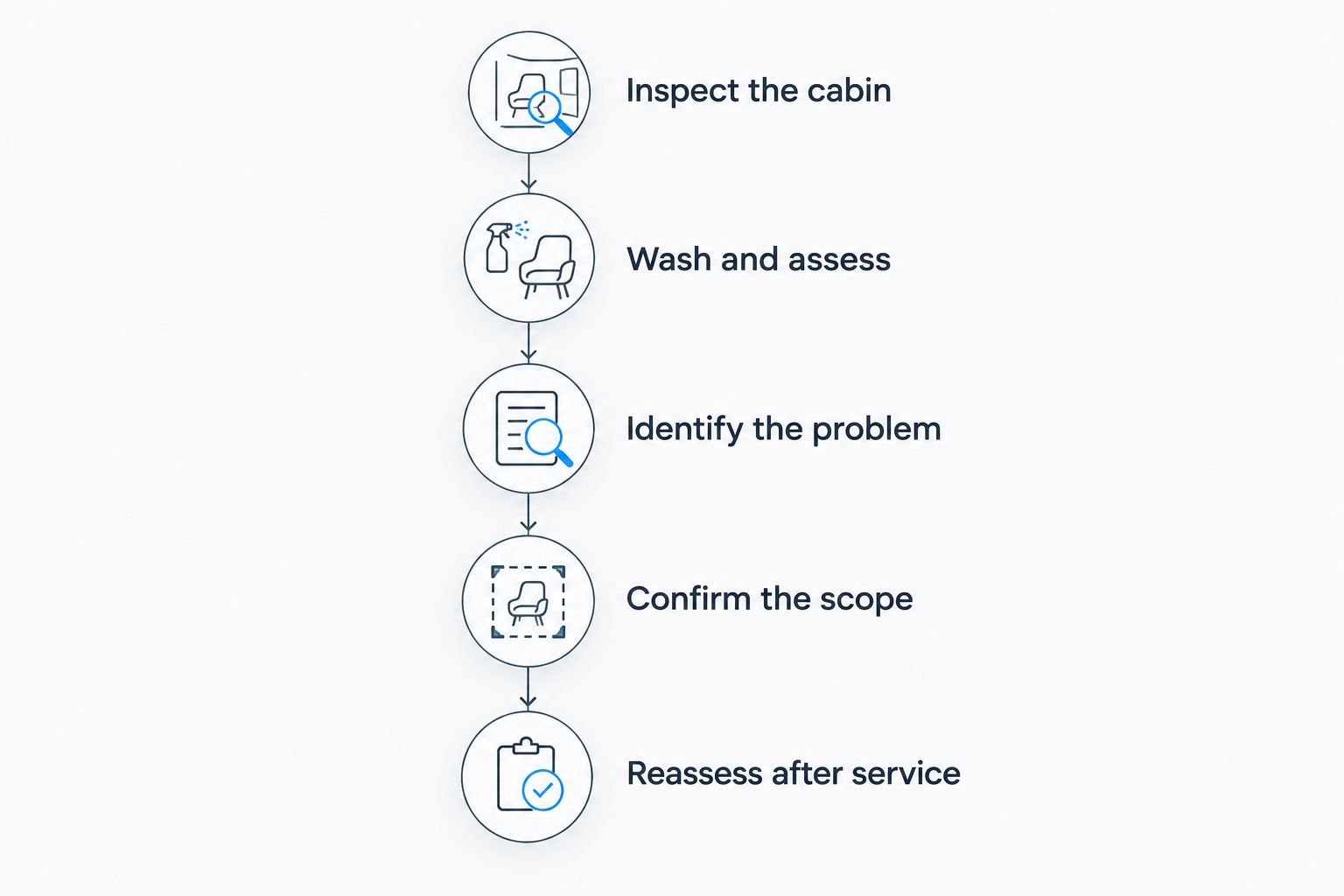
Build a condition-based detailing plan for 2026
Use the same inspection process each time so your decision stays consistent. The goal is to recognize a change in condition, not to find a reason to buy another service.
- Inspect the cabin. Check seating, carpet edges, mats, and cargo areas after removing personal belongings.
- Wash and assess. Review the exterior after suitable routine cleaning so loose dirt does not obscure the problem.
- Identify the problem. Separate ordinary dirt from stains, odor, surface contamination, and visible paint defects.
- Confirm the scope. Ask which tasks address those problems and which services are separate.
- Reassess after service. Use the result as your reference for future care and booking decisions.
A simple record helps: keep the service description and note any care instructions. You do not need a complicated maintenance system, but you should know what was done before authorizing it again.
What should you tell a mobile detailer before booking?
Give the detailer enough information to distinguish routine maintenance from a problem-focused visit. Your vehicle type, main concerns, and photographs of affected areas make the request more useful than simply asking for a full detail.
For mobile work, describe the proposed service location and ask whether it is suitable. Confirm access requirements and any site restrictions before agreeing to an appointment; do not assume every parking space works.
Ask for a written scope covering the areas to be cleaned, any proposed protective treatment, and exclusions. If you need help planning access to the vehicle, read how long mobile detailing takes before arranging your day.
Spiffy Me mobile auto detailing is best for Orange County car owners seeking interior, exterior, or ceramic coating services at a mobile appointment. The service format still requires confirming your location and the work needed before booking.
For your 2026 quote request, state your priority plainly: cabin buildup, exterior cleaning, or a ceramic coating assessment. Ask Spiffy Me to confirm the scope, quote, and booking arrangements rather than assuming a particular package or appointment is available.
Request a detailing quote
Describe your vehicle, Orange County location, and interior, exterior, or ceramic coating needs.
Should you detail your car if it still looks clean?
A clean-looking car does not automatically need a full detail. Check less visible areas and follow existing protection instructions before deciding whether additional work has a purpose.
If routine care is keeping the cabin and exterior in good condition, continue it. Book a targeted service when you identify a need rather than treating the largest service as the default.
Should interior and exterior detailing happen together?
Interior and exterior detailing do not need to happen together. Combine them when both areas need attention, but request separate scopes when only one has a problem.
A stained seat does not establish a need for paint polishing. Likewise, exterior contamination does not establish a need for deep carpet cleaning.
Does mobile detailing change how often your car needs care?
Mobile detailing changes where the work happens, not the condition that makes cleaning necessary. Your parking exposure, use, routine care, and specific problems still determine the next move.
Choose the mobile format for the service arrangement you prefer. Do not use convenience alone as a reason to repeat work your car does not need.
FAQ
How often should you get your car detailed in 2026?
Get your car detailed when routine care no longer addresses its cleaning needs. Assess cabin buildup, exterior contamination, and existing protection instructions instead of applying one interval to every car.
Can I get my car detailed too often?
The work performed matters more than the appointment count. Repeated abrasive polishing is different from routine cleaning, so confirm why each treatment is needed.
Does a ceramic-coated car still need detailing?
A ceramic-coated car still needs cleaning and appropriate maintenance. Follow the installed coating’s care instructions, and assess interior detailing separately.
Should I wait for a detail to clean bird droppings?
Do not wait for a detailing appointment to address bird droppings. Remove them promptly using a method appropriate for the surface and its protection.
Will an interior detail permanently remove every odor?
An interior detail cannot guarantee permanent removal of every odor. Recurring moisture, leaks, or another unresolved source requires attention to the cause.
Do I need a full detail when only my seats are dirty?
Dirty seats do not automatically justify a full interior-and-exterior service. Describe the affected materials and request a scope that addresses the actual problem.
How do I request a mobile detailing quote in Orange County?
Tell Spiffy Me your vehicle type, proposed location, and whether you need interior detailing, exterior detailing, or a ceramic coating assessment. Confirm the scope, quote, and booking arrangements before scheduling.
One last thing
A recurring appointment should be a reminder to assess your car, not automatic approval for the same work. Before the next visit, identify what has changed since the previous service and what routine care no longer resolves.
Keep that distinction in your 2026 maintenance plan. It helps you request useful work without confusing regular cleaning, deep cleaning, and paint correction.


