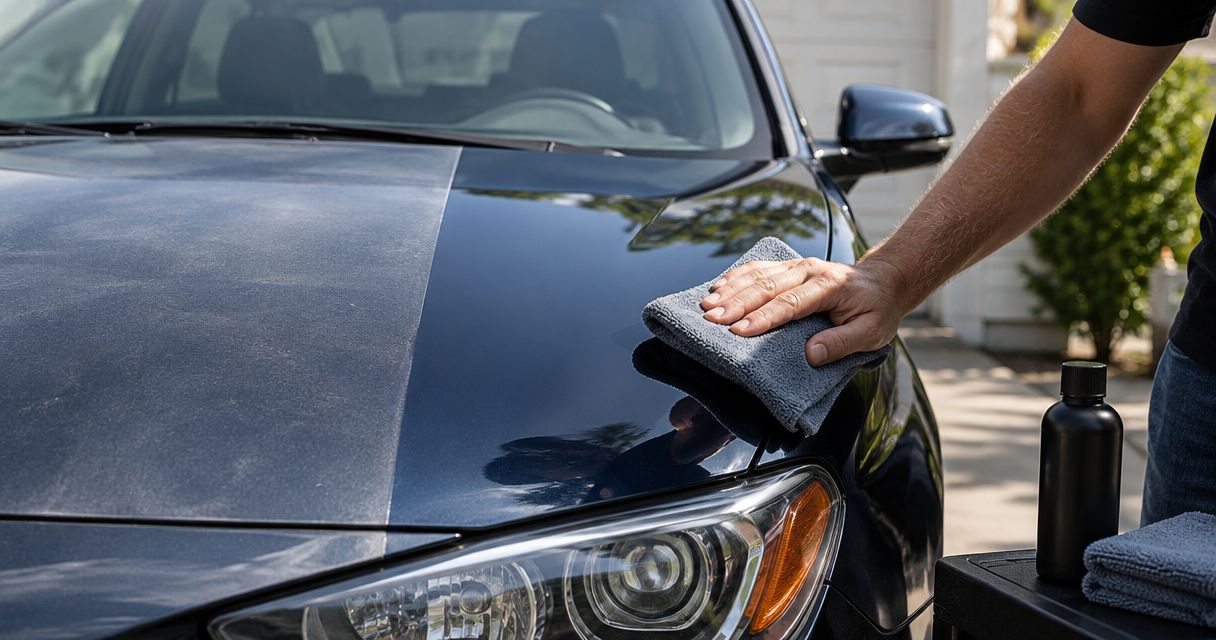
No—ceramic coating cannot fix faded paint, restore missing pigment, or repair peeling clear coat. It can add gloss to a sound, properly prepared surface, but any recoverable dullness needs cleaning or paint correction first. For a 2026 coating appointment, separate the work that improves the finish from the coating that protects the prepared surface.
- Can ceramic coating fix faded paint? No: it protects prepared paint rather than repairing damaged color or clear coat.
- Paint correction can improve recoverable dullness; peeling clear coat needs a refinishing assessment, not ceramic coating.
- Spiffy Me offers ceramic coating and mobile exterior detailing for Orange County car owners.
- Ask for a paint assessment before choosing a coating service.
Why this matters
A dull hood does not automatically need a coating—or a repaint. Surface contamination, fine scratches, oxidation, and failing clear coat can all make paint look faded, but they need different responses.
Spiffy Me is best for Orange County car owners seeking mobile detailing and ceramic coating, not paint refinishing. You can start with Spiffy Me and ask whether your paint condition is suitable for the service you want.
The practical buying rule for 2026 is simple: establish what the paint needs before paying to protect it. A coating cannot compensate for damage underneath it.
Can ceramic coating fix faded paint?
Ceramic coating does not repair faded paint; preparation determines how much appearance can improve. A coating forms a protective layer over the prepared finish. It does not replace missing paint, rebuild clear coat, or remove scratches through polishing.
What looks like fading matters more than the word you use to describe it:
| Paint condition | Best for | Useful first step | Benefit and limitation |
|---|---|---|---|
| Dirt or bonded contamination | Cleaning and decontamination | Clean the surface and reassess | Can reveal the underlying finish; does not repair damaged paint |
| Fine scratches and surface haze | Paint correction assessment | Inspect and test a small area | Polishing can improve clarity; removes some existing finish |
| Oxidized single-stage paint | Careful restoration assessment | Identify the paint system and remaining condition | Some oxidation is removable; severely degraded paint has limits |
| Peeling or delaminating clear coat | Body-shop assessment | Evaluate refinishing | Addresses coating failure; detailing cannot rebuild the missing layer |
| Sound paint after preparation | Ceramic coating | Confirm the surface is clean and suitable | Adds protection and gloss; does not correct underlying defects |
These are condition-based routes, not interchangeable service packages. Your car can also have different problems on different panels, especially where previous repairs or exposure differ.
What if the paint looks darker after coating?
A change in gloss or light reflection is not the same as repaired paint. A coating can make a prepared surface look richer without restoring pigment that has degraded or replacing clear coat that has failed.
Judge the finish after preparation, before coating. That is the point when you can see which defects were actually removed and which remain.
Surface haze: assess cleaning and correction first
Fine wash marks scatter light and reduce the clarity of reflections. Dirt, residues, and bonded contamination can also hide the finish beneath them. Neither problem proves that the underlying color has faded.
Start with cleaning appropriate to the surface, then inspect the dry paint under useful lighting. If haze remains, a detailer can assess whether polishing is appropriate and demonstrate the result on a small area.
Best for: intact paint with recoverable surface defects. The advantage is a clearer finish without immediately moving to refinishing. The limitation is that polishing removes material, so repeated or aggressive correction is not an unlimited option.
Do not approve the most aggressive treatment simply because it sounds more thorough. Ask what improvement is realistic and what defects should remain to preserve the finish.
Oxidized paint: identify the paint system first
Single-stage paint contains color in the exposed paint layer rather than beneath a separate clear coat. Surface oxidation on this type of finish can sometimes be removed through suitable polishing, revealing better color and gloss underneath.
Basecoat-and-clear-coat finishes need a different assessment. A cloudy appearance in the clear coat does not establish whether the problem is removable surface damage or deeper deterioration.
Best for: paint that responds safely to a controlled test area. The benefit of an assessment is knowing whether improvement is achievable before committing to the whole car. The limitation is that oxidation removal cannot restore material already lost or make severely degraded paint sound again.
Tell the detailer about previous repainting or polishing if you know the history. Do not assume every panel has the same paint system or the same remaining correction allowance.
Peeling clear coat: seek a refinishing assessment
Flaking edges, lifting transparent patches, and exposed areas beneath a separating top layer are reasons to stop treating the problem as ordinary dullness. Ceramic coating cannot bond failed paint layers back together.
Best for: a body-shop assessment when clear coat is separating. Refinishing addresses the damaged paint system; a protective coating does not. The trade-off is that refinishing is a different job from detailing and requires its own scope and preparation.
Avoid polishing loose edges to chase an even shine. Ask a refinishing professional to evaluate the affected panel before authorizing coating work there.
You can still discuss care for sound panels separately. Just keep cosmetic improvement on intact paint distinct from repairing a failing finish.
Why results on faded paint vary
The same coating cannot produce the same result on every dull vehicle. The condition beneath it controls what you see.
- Paint system: Single-stage paint and clear-coated paint expose different layers to weathering and polishing.
- Damage depth: Surface haze is different from deterioration within or beneath the clear coat.
- Remaining finish: Previous correction, thin areas, and worn edges limit safe polishing.
- Repair history: Repainted panels can differ from adjacent factory-painted panels in condition and response.
- Surface contamination: Residue can disguise the actual finish until cleaning and decontamination are complete.
- Preparation quality: A coating preserves the prepared appearance; skipped defect removal remains visible afterward.
For a 2026 quote, ask the provider to describe your paint condition rather than promise a generic transformation. A useful explanation identifies the affected panels, the proposed preparation, and the defects expected to remain.
How should you assess faded paint before coating?
Use this sequence to keep diagnosis separate from protection. Do not start with a coating choice and work backward to justify it.
- Clean the surface. Remove loose dirt using paint-safe methods before judging the finish. Avoid rubbing a dirty panel to test whether it shines.
- Inspect dry paint. Look for haze, fine scratches, peeling edges, and uneven patches. Check more than the most visible panel.
- Test correction. Ask a qualified detailer whether a small test area is appropriate. Compare the result in consistent lighting, without relying on a temporarily wet surface.
- Choose the repair. Decide whether the result supports correction and protection or whether the panel needs a refinishing assessment.
- Confirm protection. Discuss coating only after agreeing on the prepared finish and its remaining defects.
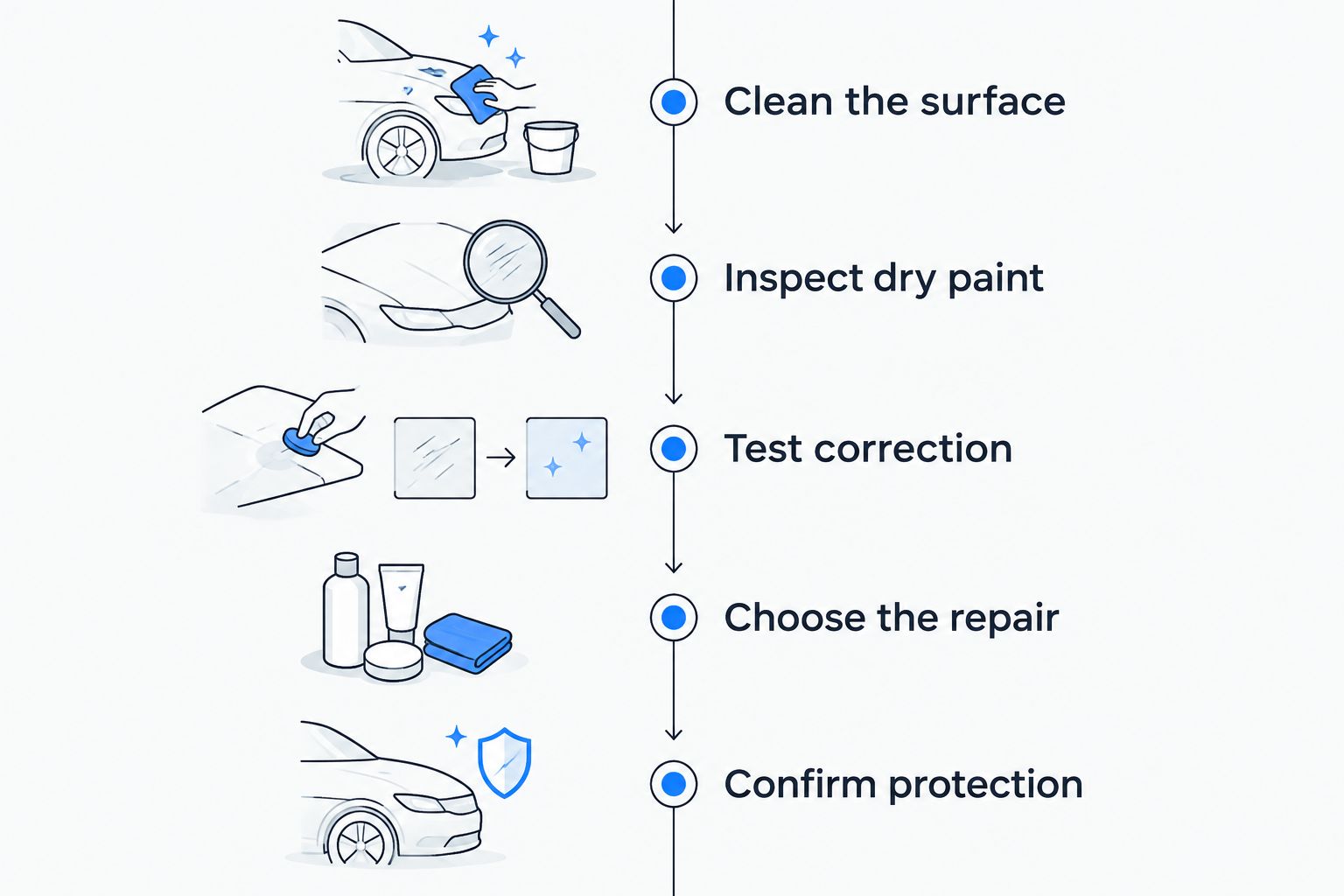
A test area is useful because it replaces a vague promise with a visible result. It is not permission to remove every defect: deep scratches and thin areas still require restraint.
For more detail on that decision, read whether paint correction is necessary before ceramic coating. Ask the provider to explain the distinction on your own vehicle rather than assume a package name includes correction.
Will polishing restore the color of faded paint?
Polishing can improve recoverable surface dullness, but it cannot replace lost pigment or rebuild missing clear coat. On suitable paint, removing shallow surface damage improves how light reflects from the finish.
The useful question is not whether polishing always works. Ask whether your particular paint responds safely, how much improvement the test area shows, and what remains afterward.
Can I put ceramic coating over peeling clear coat?
Ceramic coating cannot repair peeling clear coat, so it is not a substitute for refinishing. A coating needs a suitable, stable surface; it does not stop an already separating paint layer from being a repair problem.
Have the affected panel assessed before coating it. Protecting nearby intact paint is a separate decision from repairing the damaged area.
Should I correct the paint before ceramic coating?
Correct visible defects before ceramic coating if you want those defects reduced and correction is safe. Coating does not perform that removal step for you.
Not every car needs aggressive polishing. If the clean finish already meets your expectations, ask what preparation is necessary for coating adhesion rather than requesting extra abrasion for its own sake.
What should you ask before requesting a quote?
For your 2026 appointment, describe the problem and the result you want—not just the product you have decided to buy. Send clear photos of the affected panels and identify peeling, previous repairs, or areas that have already been polished.
Spiffy Me provides mobile exterior detailing and ceramic coatings in Orange County. Ask whether the proposed work suits your paint condition and confirm the exact preparation before booking; do not assume paint repair or correction is included.
Use this short request checklist:
- Condition: Explain whether the paint is dull, scratched, chalky, or peeling.
- Scope: Ask which panels and preparation steps the quote covers.
- Expectations: Ask which visible defects will remain after preparation.
- Location: Confirm your address and whether the proposed work area is suitable.
- Aftercare: Request the coating-specific curing and washing instructions before choosing an appointment.
A quote should distinguish preparation from protection. Review the written scope and total before approving work, and ask whether any change in condition found during inspection requires a revised quote.
Request a detailing quote
Describe your paint condition and ask which preparation steps your coating quote includes.
FAQ
Can ceramic coating fix faded paint without polishing?
No—ceramic coating cannot repair faded paint with or without polishing. Cleaning or suitable correction must address recoverable dullness before coating; failed paint needs a repair assessment.
Will ceramic coating make my faded hood look new?
Ceramic coating cannot guarantee a like-new hood because it does not repair damaged color or clear coat. Judge the hood after preparation and before coating to understand the achievable result.
How can I tell oxidation from peeling clear coat?
Peeling clear coat shows separation such as lifting edges or flaking transparent patches, while oxidation can appear as dullness or chalkiness. Appearance alone does not establish repairability, so ask for a paint assessment before polishing or coating.
Is ceramic coating or paint correction better for dull paint?
Paint correction addresses suitable surface defects; ceramic coating protects the prepared finish. They perform different jobs, and neither replaces refinishing when the paint system has failed.
Can ceramic coating hide scratches in faded paint?
Ceramic coating does not remove scratches and should not be purchased as a scratch repair. Ask which defects can be safely reduced during preparation and which will remain visible.
Should I repaint my car before ceramic coating?
Repainting is not automatically necessary before ceramic coating; it depends on the paint condition. If refinishing is required, follow the refinisher's and coating manufacturer's requirements before applying protection.
Can Spiffy Me help with ceramic coating in Orange County?
Spiffy Me provides mobile detailing and ceramic coatings for Orange County car owners. Describe the affected paint and request confirmation of suitable preparation, service scope, location requirements, and booking details.
One last thing
Do not judge paint restoration while the panel is wet. Water changes how the surface reflects light and can temporarily disguise fine defects; it does not demonstrate that polishing or coating has repaired them.
Before approving your 2026 coating service, ask to see the prepared paint clean and dry under consistent lighting. Approve the finish you can actually see—not an expectation that the coating will repair what remains.


