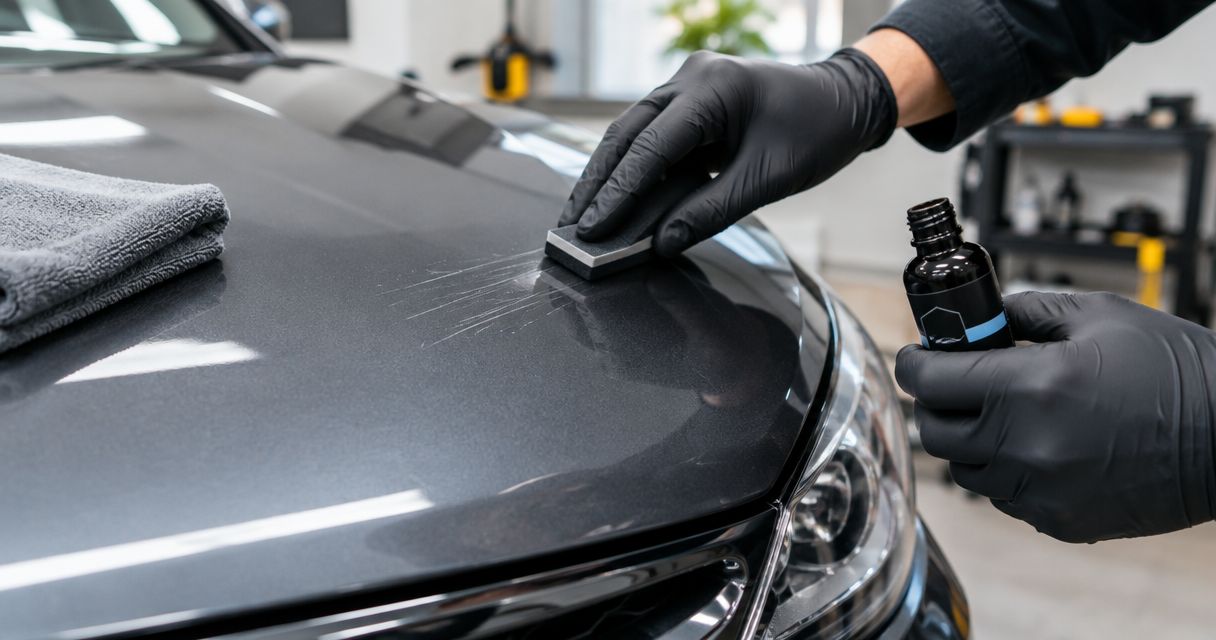
Yes, ceramic coating can be applied over scratches when the paint is sound and properly prepared, but it does not remove scratches or replace missing paint. Correct the defects you want improved before coating; otherwise, those defects remain beneath the protective layer.
- Can ceramic coating be applied over scratches? Yes, but coating protects paint rather than removing scratches.
- Paint correction can improve shallow clear-coat defects; deeper damage needs a repair assessment before coating.
- Spiffy Me provides mobile ceramic coating for Orange County car owners who want professional service.
- Approve the remaining scratches before coating, not after the protective layer is applied.
Can ceramic coating be applied over scratches?
Ceramic coating can go over stable, scratched paint, but protection and scratch correction are different jobs. Coating changes the surface properties of prepared paint. Polishing improves suitable defects by removing a controlled amount of clear coat; neither process replaces paint that is missing.
For an Orange County coating appointment in 2026, start with the paint condition, not the coating name. You can request a quote from Spiffy Me and ask how existing scratches affect the proposed work.
| Approach | Best for | Main benefit | Main limitation |
|---|---|---|---|
| Coating without correction | Sound paint with defects you accept | Adds protection without pursuing cosmetic correction | Existing scratches remain |
| Paint correction before coating | Shallow defects suitable for polishing | Improves the finish before protection | Removes clear coat and cannot safely eliminate every defect |
| Repair assessment before coating | Missing paint, exposed metal, peeling, or deep damage | Addresses damage that coating cannot repair | Adds a separate repair process before coating |
Do not treat every visible line as the same problem. A mark can be surface contamination, transferred material, a clear-coat scratch, or damage through the color layer. The correct sequence depends on identifying what is actually on or in the paint.
Why this matters
Coating over a scratch is not automatically a mistake. Coating over a scratch you expected the service to remove is a mismatch between the work and the result you wanted.
Decide whether your priority is paint protection, appearance improvement, or repair. Those goals can belong in the same project, but they require separate decisions. A coating quote for 2026 should make clear which preparation and correction work is included, rather than leaving you to interpret the word detailing.
Approve the paint's appearance before the coating goes on. That gives you a clear point to discuss remaining defects while correction decisions are still open.
Light swirl marks: assess correction before coating
Fine swirls and light wash marks often affect the clear coat. Appropriate machine polishing can reduce suitable defects, but the safe result depends on the paint's condition and the material available for correction.
The benefit of correction is straightforward: you protect a finish that looks closer to your goal. The trade-off is equally important. Abrasive correction removes material, so chasing every mark is not always the right decision.
Ask for a test area when deciding how much improvement to pursue. Inspect it under lighting that reveals the original marks, rather than judging only from a glossy reflection in shade.
For a daily driver, accepting some remaining defects can be the sensible choice. Set that expectation before work begins; do not assume a coating application includes extensive polishing.
Deep scratches: get a repair assessment first
A scratch that passes through the clear coat into the color layer needs a different assessment from a shallow swirl. Polishing cannot replace missing color, and ceramic coating is not touch-up paint.
The practical benefit of repair is that it addresses the damaged finish rather than simply covering it with protection. The limitation is that the repair becomes its own project, with its own preparation and coating instructions.
A fingernail catching in a scratch is a reason for closer inspection, not a reliable measurement of its depth. Do not keep rubbing or polishing a damaged spot to see whether it disappears.
Exposed metal, lifting paint, and peeling clear coat need repair evaluation before coating. Ask the repair provider when the repaired surface is ready for protection. Do not apply a generic waiting period to every paint system.
Scratches you accept: coating can still make sense
You do not need a flawless finish to choose ceramic coating. If the paint is stable, properly cleaned, and suitable for the selected product, cosmetic defects you accept do not automatically rule it out.
This route fits an owner who wants protection without pursuing a near-perfect appearance. Its limitation is simple: coating does not turn an accepted scratch into a repaired scratch.
Make the acceptance specific. Walk around the car and identify the marks that will remain, especially on the hood, doors, and other areas you notice regularly. A general promise of better gloss is not a substitute for that discussion.
For your 2026 decision, separate acceptable cosmetic wear from damage requiring repair. The distinction matters more than whether the car is new or used.
Why the right preparation varies
The same coating process is not the right starting point for every scratched vehicle. These factors determine what needs attention before application:
- Scratch depth: A shallow clear-coat defect and missing color require different treatment. Coating does not bridge that difference.
- Paint condition: Previous polishing, repairs, and deterioration affect how aggressively a finish can be corrected.
- Contamination: Bonded material and transferred paint can resemble damage. Cleaning and inspection help distinguish them from scratches.
- Your finish goal: Protecting a daily driver and pursuing a highly corrected appearance are different scopes of work.
- Repair history: Repainted panels and touch-up areas need instructions appropriate to the repair and coating products.
- Application conditions: Preparation, working conditions, and curing requirements must match the selected coating's instructions.
A useful assessment explains both what can improve and what should remain. A promise to remove every scratch without inspecting the paint skips the decision that matters most.
How should you prepare scratched paint for ceramic coating?
Use this sequence to discuss the work with a detailer. It is a decision checklist, not a substitute for product instructions or hands-on paint assessment.
- Clean the paint. Remove ordinary dirt so it does not hide defects. Avoid judging scratch depth through a dirty surface.
- Inspect the damage. Identify swirls, isolated scratches, transferred material, chips, and failing paint. Record the areas that concern you.
- Choose correction. Discuss which defects are suitable for polishing and which require repair. Agree on appearance goals without demanding unnecessary material removal.
- Review the finish. Inspect the prepared paint before coating. Confirm which scratches remain and whether you accept them.
- Apply protection. Complete the coating process and follow the selected product's curing and maintenance instructions.
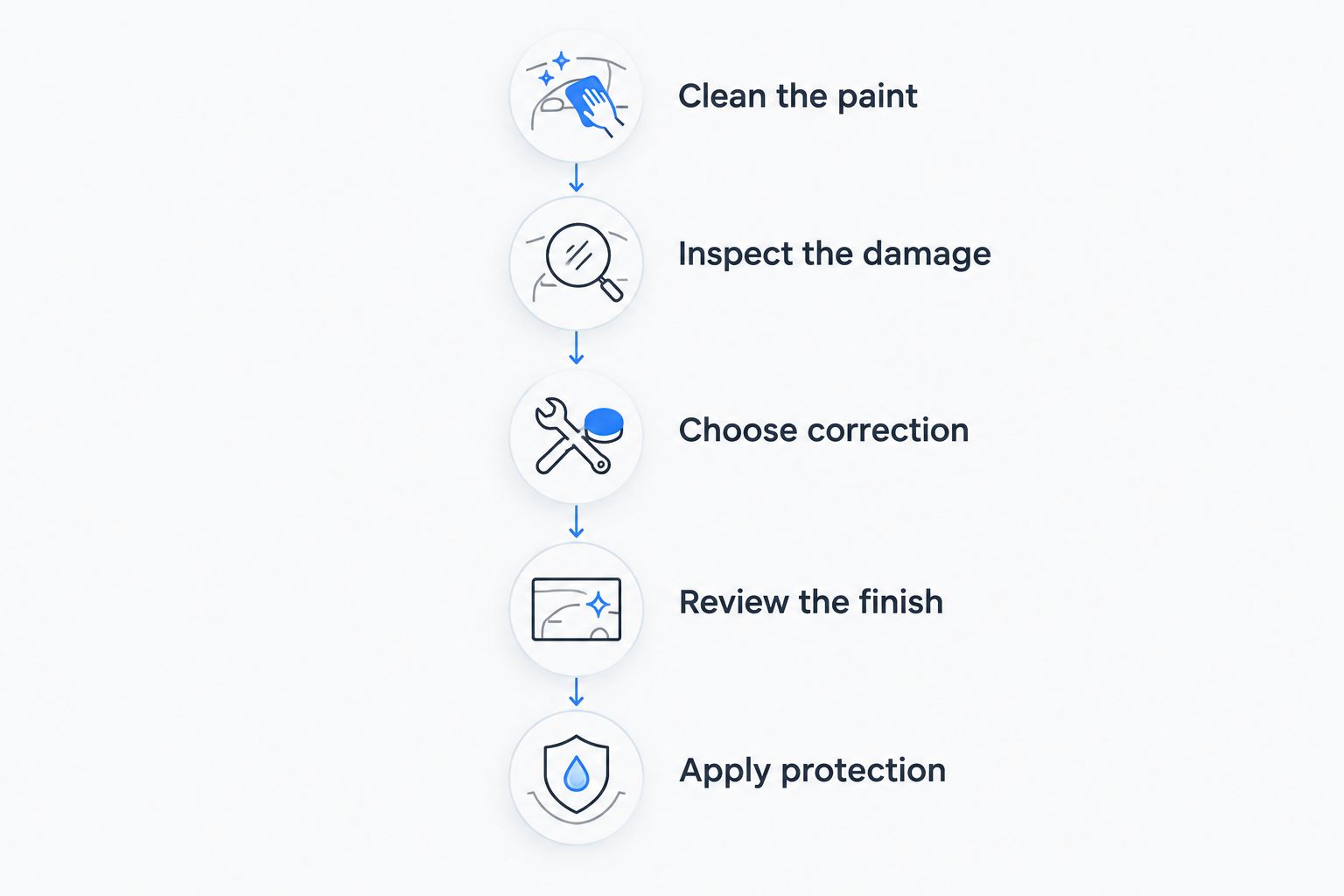
The review step is easy to skip when you are focused on completing the appointment. Keep it. A scratch noticed before application gives you a clear choice; a scratch noticed afterward creates a separate discussion about removing protection and correcting the area.
What should you ask before requesting a quote?
Send clear photos of the affected panels along with your vehicle details and Orange County location. Include an overall view and close views that show the marks without hiding them in glare. Photos support the conversation, but they do not replace inspection.
For a 2026 quote, ask for the scope in plain language:
- Does the proposed work include paint correction, or only preparation for coating?
- Which scratches are expected to improve, and which will remain?
- Does any area need a paint-repair assessment first?
- How will you review the finish before application?
- What access and working conditions does the mobile appointment require?
- What curing and washing instructions apply to the coating selected?
Spiffy Me is best suited to Orange County car owners who want mobile ceramic coating service. Confirm the work location, requested preparation, and appointment arrangements directly before booking. Mobile service does not remove the need for suitable application conditions.
Request a ceramic coating quote
Describe your vehicle, existing scratches, and Orange County location when requesting a quote.
Will ceramic coating hide scratches?
Ceramic coating does not reliably hide scratches. A glossier surface can change how a defect looks under particular lighting, but that is not the same as removing the defect.
Do not approve scratched paint on the assumption that the coating will conceal it later. Judge the prepared finish first, under lighting that lets you see the areas you care about.
Can you polish scratches after ceramic coating?
Polishing a coated area abrades the coating as well as the surface being corrected. Treat post-coating scratch correction as a protection-repair job, not a way to improve the finish while leaving the coating untouched.
Ask how the corrected area will be prepared and protected afterward. The appropriate process depends on the existing coating, the damage, and the product instructions.
Will ceramic coating prevent new scratches?
Ceramic coating does not make paint scratch-proof. Contact with grit, contaminated wash tools, branches, or other abrasive material can still mark the surface.
Keep that limit in mind when choosing protection in 2026. Coating supports easier maintenance, but careful washing and drying remain necessary; protection does not cancel the effects of abrasive contact.
FAQ
Can ceramic coating be applied over scratches without polishing?
Yes, ceramic coating can be applied without polishing when the paint is sound, properly prepared, and suitable for the product. Scratches that are not corrected remain, so approve their appearance before application.
Does ceramic coating fill deep scratches?
Ceramic coating is not a repair filler for deep scratches. Damage involving missing paint or exposed metal needs a repair assessment rather than an expectation that coating will level it.
Should every scratch be removed before ceramic coating?
No, every scratch does not need to be removed before ceramic coating. Some defects are safer to leave, and others require repair rather than further polishing; agree on the remaining marks before application.
Can a new car need paint correction before coating?
Yes, a new car can need paint correction before coating if inspection reveals suitable defects. Vehicle age alone does not establish paint condition or determine whether polishing is necessary.
How do I request a ceramic coating quote from Spiffy Me?
Request a quote through Spiffy Me's website and describe your vehicle, Orange County location, and existing scratches. Ask whether the proposed work includes correction, what defects will remain, and how to arrange the appointment.
Can I coat over peeling clear coat?
Peeling clear coat needs a repair assessment before ceramic coating. A coating does not restore adhesion to failing paint or replace the damaged finish.
Can ceramic coating be applied after scratch touch-up?
Ceramic coating can follow a suitable touch-up repair once the repair is ready for protection. Follow the repair material's and coating manufacturer's instructions rather than using a universal waiting period.
One last thing
Ask to see the scratch, not just the shine. At the pre-coating review, point out the exact marks that prompted your appointment and inspect those areas again. That keeps the decision tied to the result you wanted rather than the overall gloss of a freshly prepared car.
For your 2026 appointment, make the final approval simple: identify what improved, what remains, and what protection will do next. A sound finish with accepted imperfections is a clearer outcome than a coating applied over unresolved expectations.


