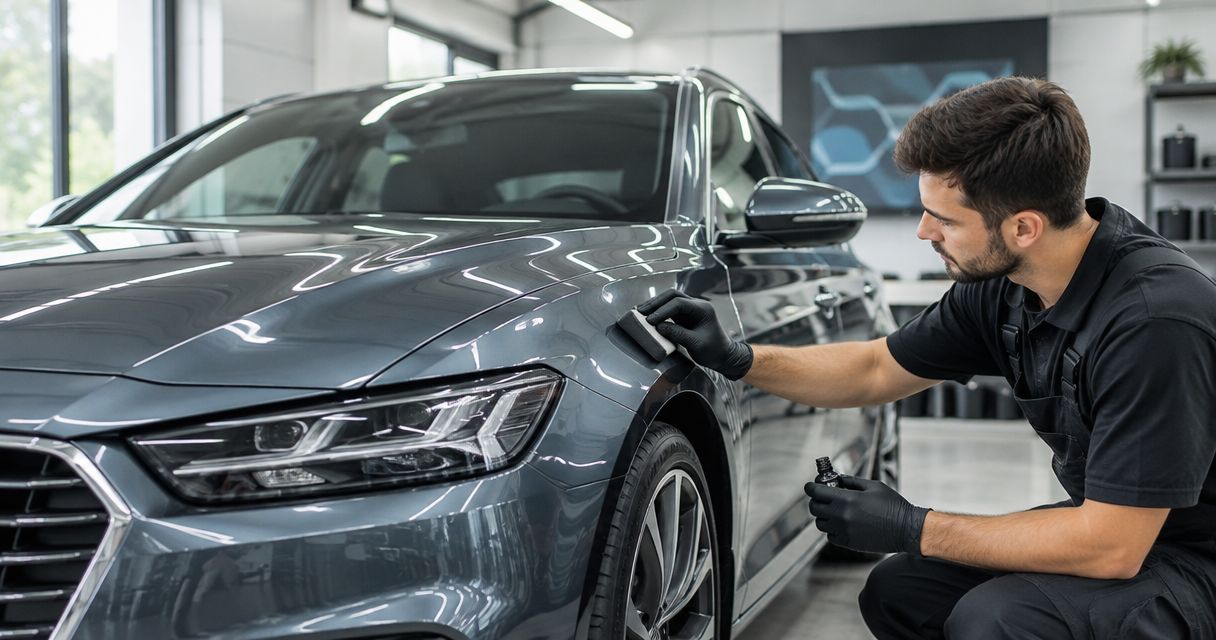
Yes, you can apply ceramic coating to a brand-new car once the paint is suitable for coating and properly prepared; factory-finished paint does not need an arbitrary waiting period just because the vehicle is new. The main caveat is preparation: delivery mileage does not prove the paint is free of contamination, scratches, dealer-applied products, or recent repairs.
- Ceramic coating on brand new car paint starts with inspection, not an automatic polishing package.
- Factory paint and recently repainted panels require different readiness checks before ceramic coating.
- Ceramic coating helps with cleaning; it does not prevent stone chips or eliminate washing.
- Spiffymeofficial provides mobile ceramic coating services for Orange County car owners; confirm preparation and curing arrangements before booking.
Can ceramic coating be applied to a brand-new car?
Yes. The condition and finish of the paint determine readiness—not the date you collected the keys. A new vehicle with sound factory paint can receive ceramic coating after appropriate cleaning, surface preparation, and inspection.
Do not approve machine polishing solely because it appears in a coating package. Read the guide to paint correction before ceramic coating, then ask the installer to explain which visible defects require correction on your vehicle.
| Paint condition | Best for | Recommended next step | Benefit | Limitation |
|---|---|---|---|---|
| Clean factory finish without objectionable defects | Owners satisfied with the existing finish | Prepare the surface and apply a compatible coating | Avoids correction that the finish does not need | Inspection must still check for contamination and residue |
| Factory finish with visible swirls or haze | Owners who want those defects reduced | Assess correction before coating | Improves the finish before adding protection | Polishing removes some clear coat and needs a defined goal |
| Recently repainted panel | Owners with transport or delivery repairs | Obtain the refinisher's coating instructions | Respects the repair system's requirements | The repair can change the application schedule |
| Matte paint, film, or a wrap | Owners with a nonstandard surface | Confirm surface-specific coating compatibility | Matches the treatment to the actual finish | A generic gloss-paint process is not suitable for every surface |
Why this matters
A new-car purchase in 2026 is not proof of untouched paint. Transport, storage, delivery preparation, and washing can leave contamination or visible marks before you take ownership.
Coating adds a protective surface treatment; it does not repair the finish underneath. Inspect first, correct only what needs correction, and coat the finish you want to maintain.
The practical goal is straightforward: start ownership with clean, properly prepared paint and clear aftercare instructions. Avoid buying a promise that the vehicle will become scratch-proof or maintenance-free.
What should happen before coating a new car?
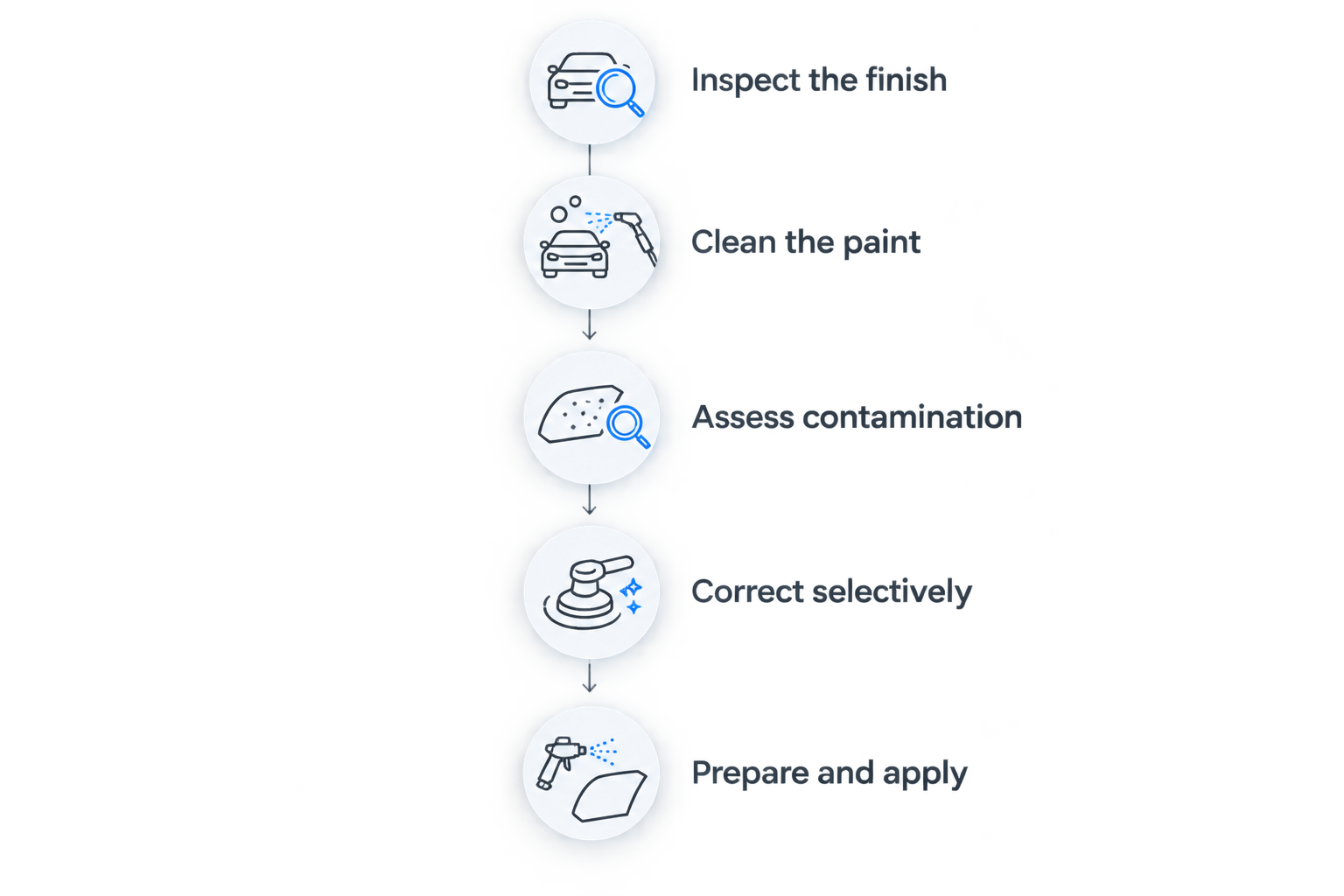
A useful preparation plan has 5 steps. The precise chemicals, tools, and application conditions depend on the paint and the selected coating, so the installer should explain the process rather than apply the same correction routine to every vehicle.
1. Inspect the finish
Check the car in lighting that reveals swirls, haze, water spots, and uneven gloss. Include the hood, roof, trunk, doors, bumpers, and areas around badges rather than judging the finish from a single reflection.
Tell the installer about any disclosed delivery damage or refinishing. Photograph concerns before work starts so you can distinguish existing defects from the agreed result.
2. Clean the paint
Wash away loose dirt using a paint-safe process. A clean-looking vehicle still needs preparation because dust, road film, and residues interfere with assessing the actual surface.
Ask the dealer what was applied during delivery preparation. Wax, sealant, or another treatment changes what the installer needs to remove or evaluate before coating.
3. Assess contamination
Check for bonded contamination after washing. Use chemical or mechanical decontamination only as the surface requires, with methods appropriate to the finish.
Mechanical decontamination can introduce light marring. That is a reason to assess the paint carefully, not a reason to clay every new vehicle automatically.
4. Correct selectively
If the paint has defects you want reduced, agree on the correction goal before polishing. Ask which marks are removable, which should remain, and whether pursuing a deeper defect would require excessive material removal.
Polishing removes material from the finish. A new vehicle does not need aggressive correction simply to qualify for ceramic coating.
5. Prepare and apply
Complete the surface preparation required by the coating manufacturer, then apply and level the coating according to its instructions. Temperature, humidity, surface condition, and working time affect application.
Arrange a suitable place for the initial curing period before work begins. The coating instructions—not a generic promise—should determine when the vehicle can encounter water, be driven, and receive its first wash.
Does a new car need paint correction before ceramic coating?
A new car needs paint correction only when its finish has defects that justify correction. Ceramic coating is not a reason, by itself, to remove clear coat from an otherwise satisfactory surface.
Ask the installer to show you the problem under suitable lighting. Swirls, polishing haze, and deeper scratches are different defects, and they do not all justify the same treatment.
For your 2026 new-car appointment, define the result in plain language: which marks should improve, what will remain, and whether the preparation includes polishing. An itemized scope is more useful than an unexplained correction label.
Declining unnecessary polishing does not mean skipping preparation. Washing, contamination assessment, and the coating manufacturer's surface-preparation requirements still apply.
Why preparation and timing vary
The right coating appointment depends on the vehicle in front of the installer. These factors explain why two new cars do not always need identical work:
- Paint condition: Visible swirls, haze, spots, or scratches change the preparation discussion.
- Existing surface products: Dealer-applied wax, sealant, or coating requires identification and an appropriate preparation plan.
- Repair history: Recently refinished panels need instructions from the repairer and paint-system manufacturer.
- Surface type: Gloss paint, matte paint, paint protection film, and vinyl wraps require compatible products and methods.
- Application environment: The selected coating's temperature, humidity, and exposure requirements affect where work can take place.
- Your schedule: Driving, outdoor parking, and the first wash must fit the coating's curing instructions.
None of these factors supports a blanket rule that every new car needs the same wait, polish, or application setting. Ask for the reason behind each recommended step.
Should you coat the car immediately after delivery?
You can arrange ceramic coating soon after delivery if the factory finish is ready and the application conditions are suitable. There is no need to wait for the car to become dirty or scratched first.
Before accepting a 2026 delivery appointment, ask the dealer to disclose any paint repairs and identify any protection products already applied. Request that information before the coating visit, not while the installer is preparing the car.
Do not rush the job to fit a handover deadline. If you cannot provide the required curing conditions afterward, schedule the coating when you can follow the instructions.
Is factory paint different from a freshly repainted panel?
Factory-finished paint and recently refinished paint require different readiness checks. Do not apply a universal waiting period to both.
For a repaired panel, obtain the refinisher's instructions and confirm compatibility with the selected coating. The repair system and its curing requirements determine the next step, even when the vehicle itself is brand new.
This distinction matters after transport damage or a delivery repair. Ask about repairs directly; the odometer does not establish whether every panel still has its original finish.
Will ceramic coating stop scratches and stone chips?
Ceramic coating does not make new-car paint scratch-proof, and it is not an impact barrier for stone chips. Its practical role includes creating a treated surface that repels water and helps contaminants release during appropriate cleaning.
You still need careful washing. Dirty wash tools, abrasive contact, and aggressive cleaning can mark coated paint, while bird droppings and other contamination still need prompt attention.
Choose ceramic coating for its surface-care benefits, not as a substitute for impact protection or regular maintenance. If stone chips are your main concern, discuss that goal explicitly before choosing a protection service.
How do you arrange mobile coating in Orange County?
Spiffymeofficial provides mobile ceramic coating services for Orange County car owners. Mobile service brings the work to an agreed location, but the site still needs to meet the selected coating's application and curing requirements.
Spiffymeofficial is for Orange County car owners seeking mobile detailing and ceramic coating. The service format does not remove the need to confirm workspace suitability, preparation, or aftercare before booking.
Use the contact page to request a quote and ask how to arrange an appointment. Include your vehicle details, location, paint concerns, and intended timing; confirm service for your address rather than assuming coverage of a particular city.
Before booking with Spiffymeofficial, ask these 4 questions:
- What cleaning, decontamination, and surface preparation does the quote include?
- Does the paint need polishing, and which defects justify it?
- Is the proposed location suitable for application and initial curing?
- What written instructions will cover driving, water exposure, and washing?
For a 2026 quote, request the scope in writing. Confirm whether preparation and any proposed correction are included or separately itemized, and do not assume that wheels, glass, trim, or interior surfaces are part of a paint-coating service.
What should you do after the coating appointment?
Follow the instructions for the exact coating applied to your car. There is no single curing schedule that covers every ceramic coating, application environment, and vehicle-use situation.
Before the installer leaves, confirm the earliest permitted driving, water exposure, and wash conditions. Ask what to do if rain, sprinklers, bird droppings, or another contaminant reaches the surface during the initial curing period.
Keep a record of the coating used and the aftercare guidance. If you receive warranty terms, read the maintenance obligations and exclusions rather than treating a warranty as permission to stop caring for the paint.
Water beading alone does not tell you everything about coating condition. Surface contamination and maintenance products affect water behavior, so ask for an assessment before deciding the coating needs replacement.
FAQ
Can I put ceramic coating on a brand-new car right away?
Yes, ceramic coating can be applied to a brand-new car once its paint is suitable and properly prepared. Confirm any repair history, remove incompatible surface products, and arrange the required curing conditions.
Do I have to wait for new factory paint to cure before ceramic coating?
Factory-finished paint does not require an arbitrary waiting period simply because you just bought the car. Recently repainted panels require separate guidance from the refinisher and the coating manufacturer.
Does every new car need polishing before ceramic coating?
No, every new car does not need polishing before ceramic coating. Inspect the finish and approve correction only for defects that justify removing material from the paint.
Can ceramic coating hide scratches already on my new car?
Ceramic coating is not a reliable way to hide or remove scratches. Assess any correction before coating, and agree on which defects will remain.
Can ceramic coating be applied over a dealer's paint protection product?
Do not assume a ceramic coating can be applied over an unidentified dealer product. Identify the existing treatment and follow the selected coating manufacturer's preparation and compatibility instructions.
Will ceramic coating mean I never have to wash my new car?
No, a ceramic-coated car still needs washing and prompt contaminant removal. Use paint-safe methods and follow the coating's aftercare instructions.
Can I book mobile ceramic coating for my new car in Orange County?
Yes, Spiffymeofficial provides mobile ceramic coating services for Orange County car owners. Request a quote and confirm your address, workspace, preparation scope, and curing arrangements before booking.
One last thing
A new car can need careful preparation without needing paint correction. Those are different decisions, and separating them helps you approve the work your finish actually needs.
Before your 2026 appointment, request 3 written confirmations: the preparation scope, the correction goal if polishing is proposed, and the curing instructions. That gives you a clear basis for booking without relying on the word new as a paint-condition assessment.


