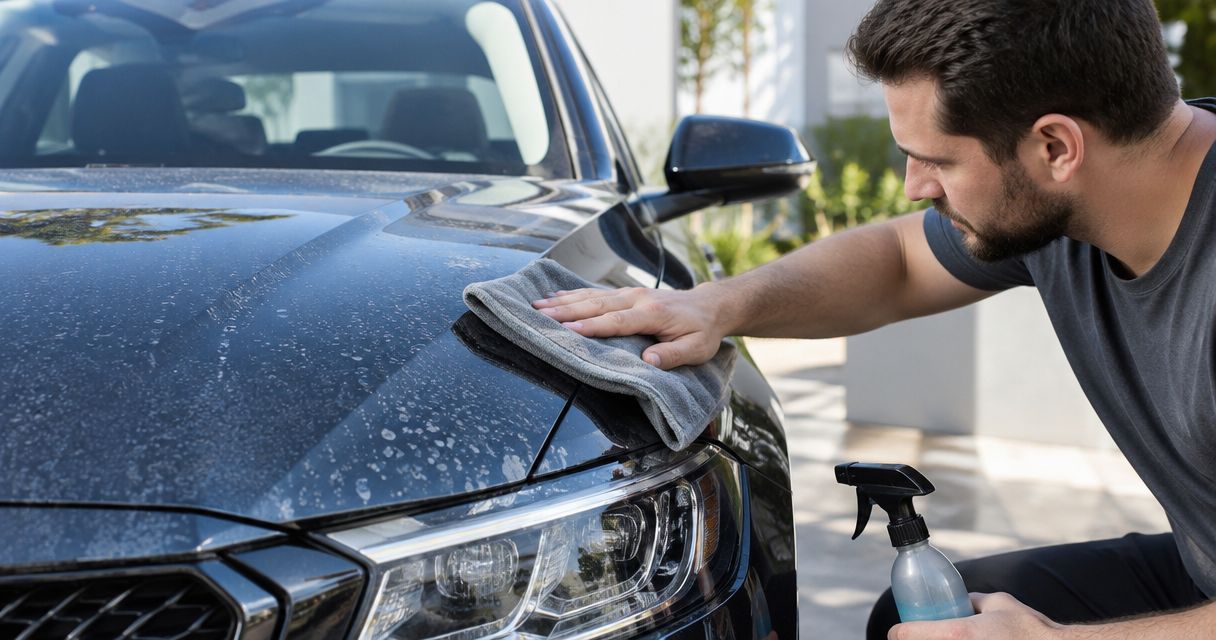
The cost to remove hard water spots from a car depends on whether the marks are mineral deposits on the surface or etching that needs paint correction. Get a quote that separates deposit removal, polishing, and any protection applied afterward; an exterior wash alone does not establish what correcting the spots will involve.
- The cost to remove hard water spots from car paint depends on deposits versus etching and the affected area.
- Compare removal methods and exclusions, not just the quoted total for exterior detailing.
- Spiffy Me provides Orange County mobile detailing; confirm hard water spot treatment when requesting a quote.
- Ceramic coating does not make a car immune to water spots or replace removal of existing marks.
How much does it cost to remove hard water spots from a car?
Your quote should match the surface, the affected area, and the treatment needed. Removing mineral residue is a different job from polishing clear coat to reduce an etched outline, even when both problems look like pale rings from a distance.
For a 2026 quote, send the vehicle details, photographs, and a description of where the spotting appears. Use the contact page to ask whether an assessment and treatment of those specific surfaces can be included.
The comparison below explains what you are comparing when estimates describe different approaches. These are treatment categories, not verified service packages or promises about your vehicle.
| Approach | Best for | Main benefit | Main limitation | What the quote should clarify |
|---|---|---|---|---|
| Exterior wash | Loose dirt and initial cleaning | Reveals the surface more clearly | Does not establish that persistent mineral deposits or etching will disappear | Whether spot treatment is separate |
| Surface-compatible mineral treatment | Deposits remaining on the finish | Targets residue without automatically requiring polishing | Does not repair damage below the residue | Treated surfaces and compatibility checks |
| Paint polishing | Etching remaining after deposits are removed | Can improve defects within the clear coat | Removes some clear coat; complete removal is not always appropriate | Test-area result and correction limits |
| Glass-specific treatment | Spots on automotive glass | Uses an approach suited to glass | Glass, adjacent trim, and coatings need separate consideration | Which windows and treatments are included |
Compare the agreed result, not just the service name. Two estimates labeled water spot removal are not equivalent if one addresses deposits and the other includes paint correction.
Why this matters
Water evaporates, but dissolved minerals can remain behind. Those deposits can leave visible marks, and persistent spotting can also involve damage to the surface rather than residue sitting on it.
That distinction determines the next move. Buying a more extensive treatment before establishing the problem adds work without establishing that the work is necessary; assuming every mark will wash away creates the opposite problem.
For Orange County owners comparing mobile appointments in 2026, convenience is only part of the decision. You also need a clear treatment scope and permission to approve any additional work before it starts.
Surface deposits: ask for targeted removal first
Best for: mineral residue sitting on an otherwise sound finish. Start by asking whether a surface-compatible deposit treatment is appropriate before authorizing abrasive correction.
A dedicated automotive water spot treatment addresses mineral contamination. Compatibility matters: a product intended for one surface is not automatically suitable for paint, glass, plastic trim, protective film, or an existing coating.
The benefit is a targeted approach that does not automatically move into polishing. The limitation is equally important: removing residue does not restore a surface that has already been etched.
Ask the detailer to explain the result after cleaning a test area. A ring that remains after the mineral residue is removed needs a different assessment from a deposit that has not yet been treated.
Do not interpret a stronger cleaner as a better result. The appropriate treatment is the least aggressive compatible method that addresses the actual defect.
Etched paint: separate correction from cleaning
Best for: marks that remain in the paint finish after deposits are removed. Paint correction uses abrasive polishing to improve defects in the clear coat; it is not another name for washing.
Polishing can improve etched marks, but it removes material. The depth of the defect and the condition of the finish determine how much improvement is appropriate, so a promise of complete removal before inspection is not a useful basis for choosing a service.
Your estimate should distinguish cleaning from correction. Ask which panels need polishing, what improvement the test area shows, and what marks the detailer recommends leaving rather than pursuing more aggressively.
A roof covered in marks and an isolated spot on a door need different scopes. Keep the quote tied to the actual affected panels instead of accepting whole-vehicle correction without an explanation.
The practical trade-off is appearance versus preserving the finish. A remaining mark is preferable to unnecessary removal of clear coat.
Glass spots: request a separate assessment
Best for: mineral marks on windows rather than painted panels. Tell the detailer which glass is affected and whether the marks interfere with your view.
Automotive glass requires its own treatment choice. Do not assume a paint-safe process is suitable for every glass surface, existing glass treatment, or adjacent trim.
The benefit of a separate glass assessment is a clear scope: windshield, side windows, and rear glass are not silently grouped with the painted body. The limitation is that removing deposits and correcting damaged glass are different tasks.
If visibility is impaired, address that concern directly instead of treating it as a cosmetic add-on. Ask what improvement is realistic and whether the work falls within the detailer's service scope.
Why hard water spot removal quotes vary
A useful 2026 estimate explains what changes the work rather than presenting an unexplained total. Compare these factors before deciding that one quote offers better value:
- Affected area: Identify individual panels or windows. Localized treatment and whole-vehicle treatment describe different amounts of work.
- Deposit or etching: Surface contamination calls for cleaning; damage remaining afterward requires a separate correction decision.
- Surface material: Paint, glass, trim, protective film, and coatings require compatible methods rather than a single universal treatment.
- Finish condition: Existing damage, repainted areas, and previous correction matter when deciding whether polishing is appropriate.
- Agreed endpoint: Deposit removal, visible improvement, and extensive correction are different outcomes. Have the estimate name the intended result.
- Protection afterward: Ask whether wax, sealant, or coating work is proposed separately, and why it is needed after treatment.
None of these factors justifies an unexplained addition to the bill. Approve a defined scope first, with further work subject to your permission.
How do I get a useful removal quote?
Give the detailer enough information to distinguish a small cosmetic concern from a broader correction job. Photos help start that conversation, but they do not replace inspecting the finish or checking a test area.
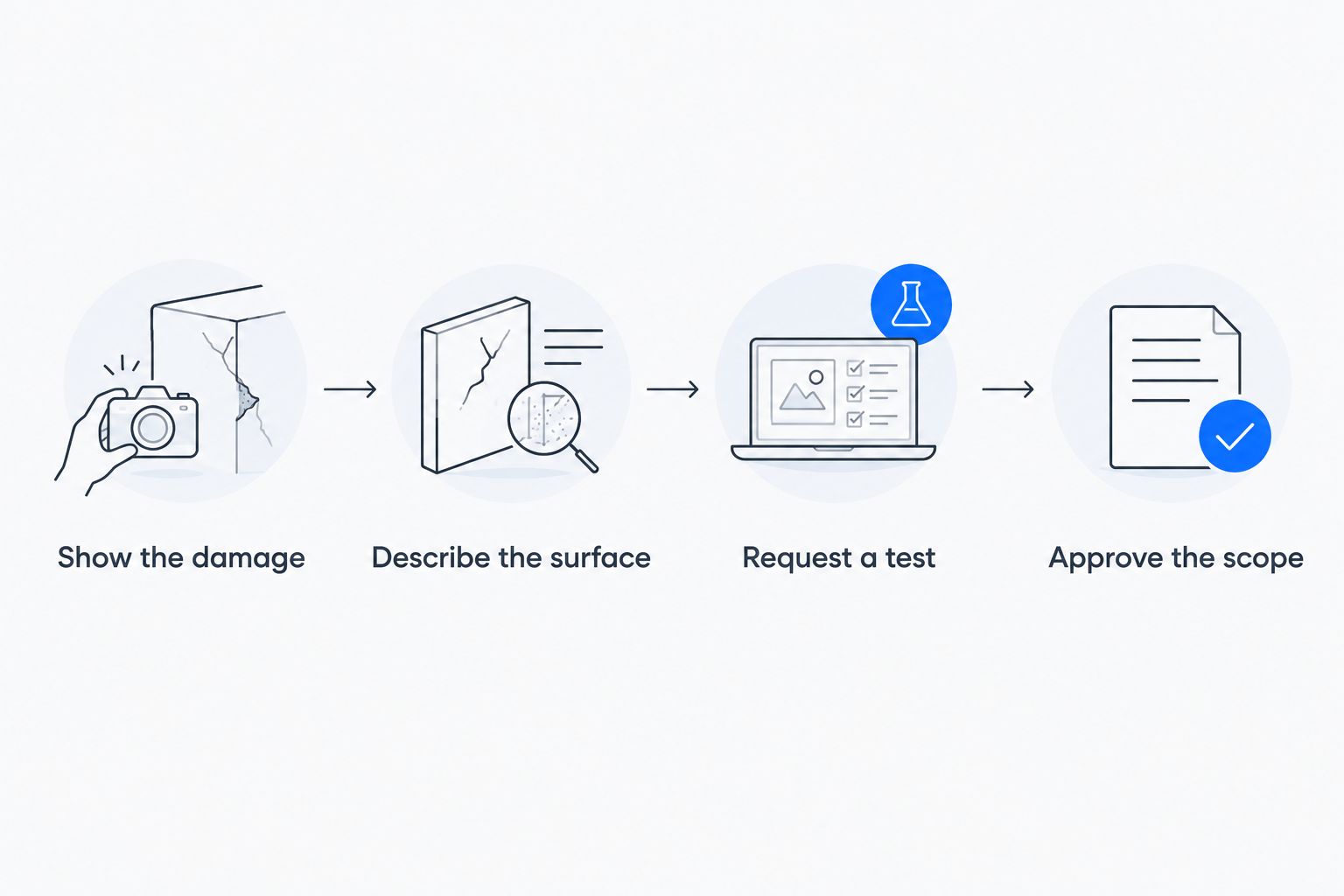
- Show the damage. Photograph the affected panels and windows in clear light. Include close views and wider views showing the spread.
- Describe the surface. Identify known ceramic coating, protective film, repainting, or previous polishing. State what you know without guessing.
- Request a test. Ask whether the detailer can evaluate a small area before recommending broader correction.
- Approve the scope. Confirm the included surfaces, intended improvement, exclusions, and process for authorizing additional work.
Also explain what has already been tried. Repeated use of household cleaners, abrasive pads, or unknown chemicals changes what the next person needs to inspect; do not keep experimenting to make the vehicle look better before assessment.
For the broader service question, read Can mobile detailing remove hard water spots?. Keep the appointment request specific to your vehicle rather than assuming every exterior detail includes this work.
Is water spot removal included in exterior detailing?
Water spot removal is not something you should assume from the words exterior detailing alone. Ask whether the estimate covers a wash, dedicated mineral treatment, polishing, or a combination.
Spiffy Me provides mobile exterior detailing in Orange County. Spiffy Me mobile detailing is best for Orange County car owners seeking service at their location. Confirm your address, work area, and requested spot treatment before booking; the service description alone does not establish the removal method or outcome.
The advantage is the mobile service format. The limitation is that convenience does not replace surface assessment, and you still need confirmation that the proposed work fits your vehicle and location.
Request a detailing quote
Describe the affected surfaces and ask what spot treatment your exterior detailing quote includes.
Should I add ceramic coating after spot removal?
Ceramic coating is a separate protection decision, not a substitute for removing existing deposits or assessing etching. Applying protection over an unresolved defect does not make that defect disappear.
A coating can make routine cleaning easier, but it does not prevent minerals from remaining when water dries. You still need washing and drying practices that address standing water and repeated sprinkler exposure.
When comparing a combined removal-and-coating proposal in 2026, request separate descriptions of preparation, correction, and protection. This makes it clear which work addresses the current damage and which work concerns future maintenance.
Do not add coating solely because the car has water spots. First resolve the current treatment decision, then decide whether the maintenance requirements suit how you use and care for the vehicle.
FAQ
How much does professional hard water spot removal cost in 2026?
The cost depends on the affected surfaces, coverage, and whether the job requires deposit removal or paint correction. Request an itemized quote that separates cleaning, polishing, and any protection afterward.
Will a regular car wash remove hard water spots?
A regular wash does not reliably remove persistent mineral deposits or etched marks. Cleaning the vehicle helps reveal what remains, after which a surface-compatible treatment can be assessed.
Can hard water spots permanently damage car paint?
Hard water spotting can involve etching as well as surface deposits. Removing the minerals does not repair damage already present in the finish, and complete correction is not always appropriate.
Is it safe to use vinegar on my car's water spots?
Do not assume household vinegar is suitable for every automotive surface or existing protection. Use a treatment approved for the specific surface and follow its directions rather than improvising a mixture.
Does ceramic coating stop hard water spots?
Ceramic coating does not make a vehicle immune to hard water spots. Minerals can remain when water evaporates, so washing, drying, and avoiding repeated sprinkler exposure still matter.
Can I get just one spotted panel treated?
Ask for a localized assessment if the marks affect only one panel. Confirm whether targeted treatment is appropriate and whether adjacent areas need attention before approving a larger scope.
What should I send when requesting a mobile detailing quote?
Send your vehicle details, location, photos of the affected areas, and information about known coatings or protective film. Ask which surfaces are included and whether additional correction requires your approval.
Does Spiffy Me offer mobile exterior detailing in Orange County?
Spiffy Me provides mobile interior and exterior detailing and ceramic coatings in Orange County. Ask specifically about hard water spot assessment and treatment when requesting your quote.
One last thing
A car that beads water can still develop water spots. Beading shows how water behaves on the surface; it does not mean the dissolved minerals disappear when those droplets dry.
Before approving your 2026 removal appointment, identify the source of repeated wetting. Moving away from sprinkler overspray and drying the vehicle after washing addresses recurrence more directly than repeatedly correcting the same marks.
Your final question should be simple: what result does this quote include, and what happens if deposits come off but an etched outline remains? Get that answer before work starts.


