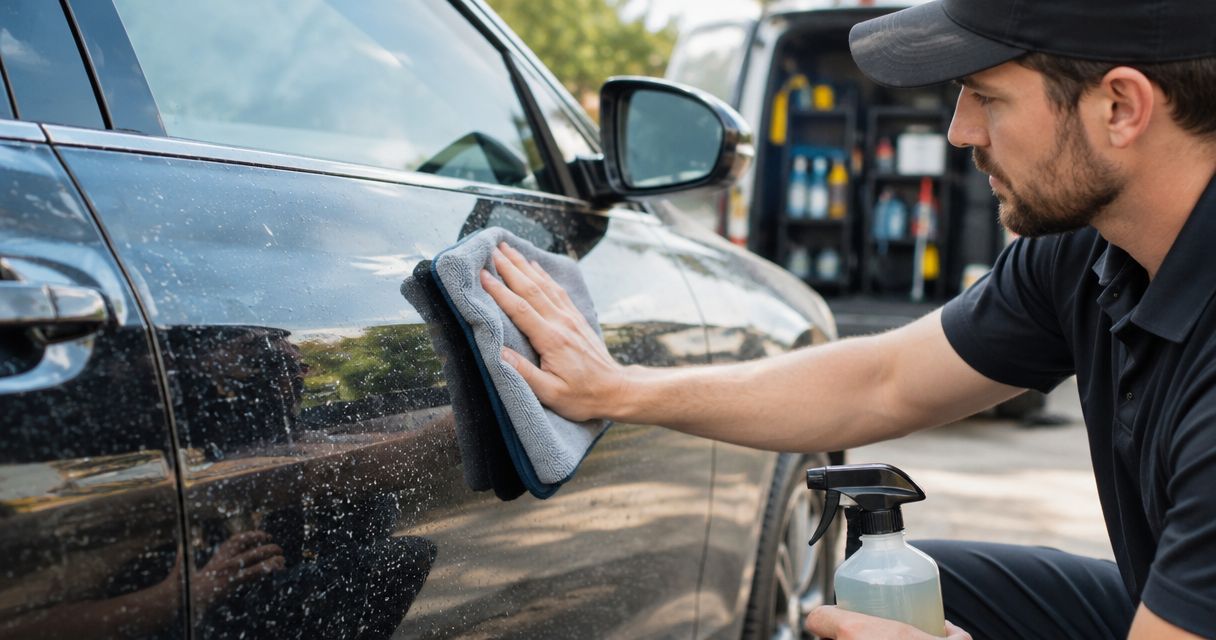
Yes, mobile detailing can remove hard water spots when the marks are mineral deposits sitting on the surface; etched paint requires a different assessment and sometimes polishing. The limit is the condition of the finish, not whether the detailer works at your location, so complete removal should not be promised before inspection.
- Can mobile detailing remove hard water spots? Yes for surface deposits; etched paint needs assessment before promising removal.
- Spiffy Me provides mobile detailing for Orange County owners; confirm water-spot treatment when requesting an exterior detailing quote.
- Mineral removal and paint correction solve different problems; ceramic coating does not erase existing etching.
- Inspect the cleaned surface after drying before approving stronger treatment.
Why this matters
A water spot can be residue on the finish or damage within it. Those problems can look similar, but they do not call for the same treatment. Repeated washing will not repair an etched clear coat, while unnecessary polishing removes finish that did not need to be removed.
For your 2026 detailing appointment, describe the spots rather than booking by a service name alone. Orange County owners can use the contact page to request a quote and ask whether the proposed work includes water-spot assessment and treatment.
Can mobile detailing remove hard water spots?
Mobile detailing can remove surface mineral deposits with an appropriate cleaning process. If minerals have left an etched outline in the finish, cleaning alone will not restore the original surface. A detailer needs to distinguish deposits from damage before choosing the next step.
Use this comparison to understand the proposed treatment. These are treatment categories, not verified packages offered by a particular business.
| Treatment | Best for | Main benefit | Main limitation |
|---|---|---|---|
| Careful washing | Loose dirt and fresh surface contamination | Cleans the area for inspection | Does not reliably remove bonded mineral deposits or etching |
| Surface-compatible mineral treatment | Mineral deposits remaining after washing | Targets deposits without starting with abrasive correction | Requires material compatibility checks and does not repair etched paint |
| Paint polishing | Suitable painted surfaces with remaining etched marks | Can improve defects within the clear coat | Removes some clear coat and cannot safely correct every defect |
The right sequence is inspection, cleaning, reassessment, then correction only when justified. Choosing the strongest treatment first adds risk without establishing what caused the mark.
What a detailer should check first
Show the detailer the affected panels, glass, and trim. Explain whether the marks appeared after sprinklers, washing, or another known exposure, and mention any coating, wrap, paint protection film, repainting, or previous correction.
Do not identify the stain solely by its circular shape. Dried cleaning residue and other contamination can resemble water spotting. A photograph helps communicate the problem, but it does not establish the depth of damage or the safest treatment.
Surface mineral deposits: removal without unnecessary polishing
When water evaporates, dissolved minerals can remain on the vehicle. A normal wash removes loose dirt but does not necessarily dissolve those remaining deposits. The next step is a cleaner intended for the affected automotive surface, used according to its instructions.
For surface deposits, chemical cleaning should be assessed before abrasive correction. The benefit is targeted removal without automatically polishing the paint. The limitation is that a cleaner cannot reverse damage already etched into the finish.
Avoid treating household vinegar, bathroom descaler, and automotive water-spot products as interchangeable. Their compatibility and directions differ. Paint, glass, plastic trim, protective film, and coated surfaces also require different checks.
Ask the detailer to assess a small, inconspicuous area before treating the entire affected surface. A successful test should leave the area cleaner without new haze, discoloration, or visible damage. Stop treatment if the surface reacts unexpectedly.
Etched paint: assessment before correction
Etching is a change to the finish, not simply material resting on top of it. If a ring remains after the deposits are removed, polishing becomes a separate decision rather than an automatic extension of washing.
Polishing works by abrading the surface. That can improve suitable clear-coat defects, but there is a limit to how much finish can safely be removed. Deep marks, thin paint, previous repairs, and uncertain paint history require particular caution.
A remaining mark is not permission to keep polishing. Ask what improvement is realistic and what condition would make the detailer stop. A safe outcome can include visible improvement with some deeper marks left in place.
If you are also considering protection, read about paint correction before ceramic coating. Correcting a defect and protecting the finish are separate decisions; applying protection does not make the defect disappear.
Glass and trim: match treatment to the material
Water spots on windows do not justify using the same process on every nearby surface. Glass, painted panels, unpainted trim, and protective films have different care requirements. Products and tools should match the material being treated.
On glass, mineral deposits and etched marks also need to be distinguished. A product intended to remove deposits does not guarantee restoration of damaged glass. If visibility remains affected, have the glass assessed rather than repeatedly scrubbing it.
Trim deserves equal attention because an unsuitable chemical can leave discoloration or staining. Point out aftermarket films and treatments before work begins. Do not assume a detailer can identify every previously applied product by looking at the vehicle.
Why water-spot removal results vary
The visible size of a spot does not establish how difficult it will be to treat. The condition underneath matters more than the outline you can see.
- Deposit or etching: Surface residue calls for cleaning; damage within the finish requires a correction assessment.
- Affected material: Paint, glass, trim, wraps, and protective films do not share identical treatment instructions.
- Exposure history: Repeated wetting and drying can leave additional deposits, complicating assessment of the original marks.
- Existing protection: A ceramic coating or other treatment affects which cleaners and procedures are appropriate.
- Paint condition: Prior polishing, repairs, and compromised clear coat can limit safe correction.
- Working conditions: Surface temperature, shade, and product instructions determine whether treatment is appropriate at the location.
These factors explain why a photo-based quote needs a clearly stated scope. Ask whether the quote covers deposit removal, polishing, or both, and how approval works if inspection changes the recommendation.
A practical inspection checklist for 2026
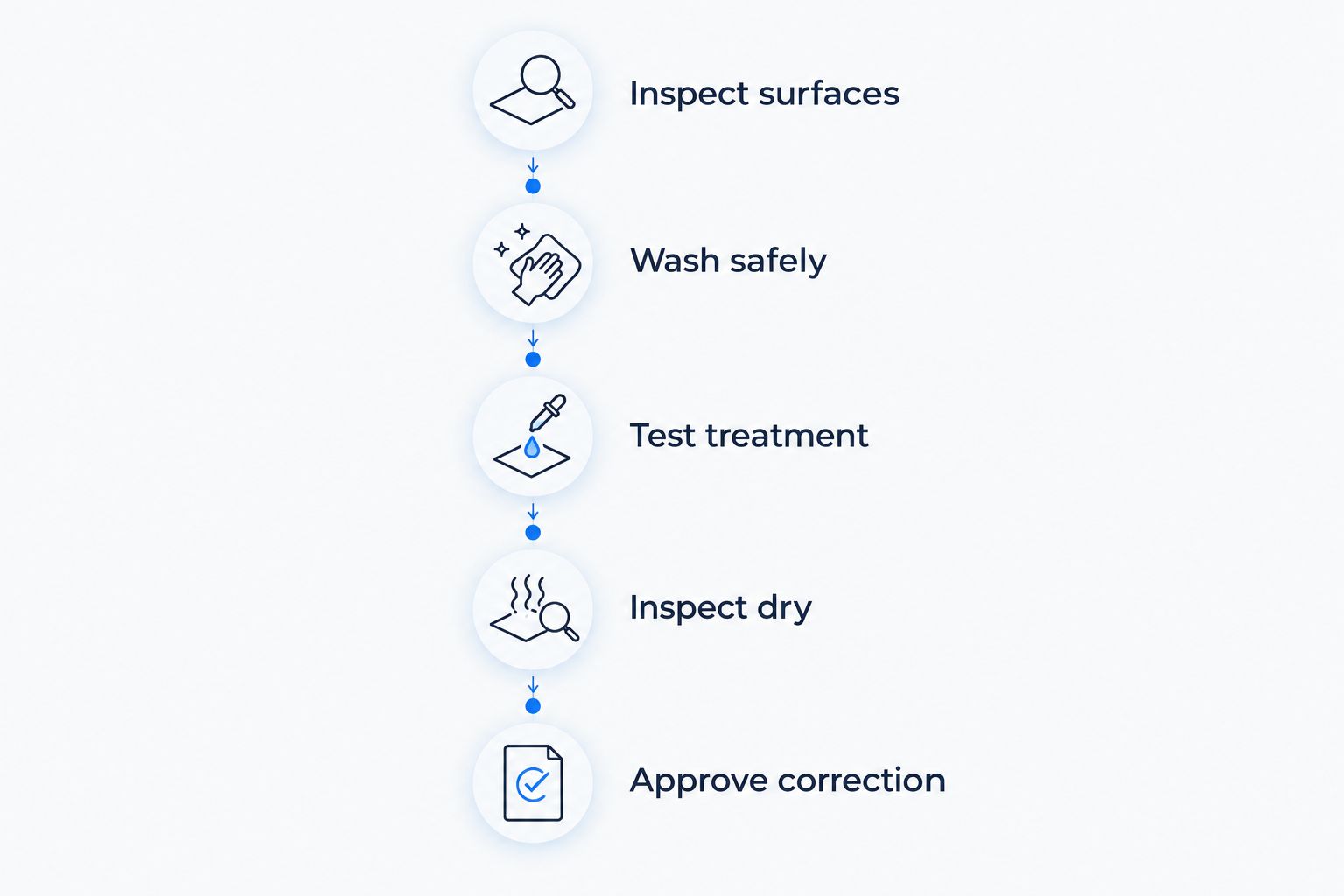
Ask for a staged approach rather than a promise that every mark will disappear. Each stage should answer a specific question before the next treatment begins.
- Inspect surfaces. Identify the affected materials and discuss known coatings, repairs, and previous treatment attempts.
- Wash safely. Remove loose dirt so it does not interfere with inspection or get rubbed across the finish.
- Test treatment. Check a compatible method on a small area instead of treating the entire vehicle immediately.
- Inspect dry. Assess the cleaned surface after drying, using lighting that makes the remaining marks visible.
- Approve correction. Discuss polishing only if marks remain and the finish is suitable for further work.
This sequence separates cleaning from repair. It also gives you a clear point to approve or decline additional work instead of discovering later that the service expanded beyond the original request.
A useful completion check is simple: look at the same affected area before and after treatment under comparable lighting. Wet paint can hide defects, so a wet panel is not sufficient evidence that an etched mark has been removed.
What should you send when requesting a quote?
Spiffy Me mobile detailing is a fit for Orange County car owners seeking interior or exterior detailing at their location. For water spots, ask specifically whether the proposed exterior work addresses mineral deposits and whether any correction requires separate approval.
A useful 2026 quote request includes the following information:
- Your vehicle and the surfaces showing spots, such as the hood, windows, or trim.
- Your location and any access or parking restrictions that affect on-site work.
- Clear photos showing both the overall affected area and close-up marks.
- The known source of the spots and any cleaning products already used.
- Any known ceramic coating, wrap, protective film, or paint repairs.
- Whether your priority is removing deposits, improving appearance, or preparing for protection.
Ask for written confirmation of the included work, exclusions, and approval process for additional treatment. Mobile service saves a trip, but the location still needs to suit the work; confirm site requirements rather than assuming water, power, or shade arrangements.
Request a detailing quote
Describe the affected surfaces and ask whether water-spot treatment is included.
Will a regular exterior detail remove every spot?
A regular exterior detail does not guarantee removal of every water spot. Service names alone do not establish whether specialized mineral treatment or polishing is included. Confirm the scope before booking, especially if the marks survived previous washes.
Request a distinction between cleaning the vehicle and correcting the finish. That wording helps you compare quotes without assuming that similarly named services include identical work.
Does ceramic coating prevent water spots completely?
Ceramic coating does not make your car immune to water spots. Water can bead on a coated surface and still leave dissolved minerals behind when it evaporates. Protection does not replace washing and drying.
If you are considering ceramic coating in 2026, first establish whether the existing marks are deposits or etching. Then discuss surface preparation and maintenance instructions rather than treating coating as a way to conceal unresolved damage.
Can you try removing the spots yourself first?
Start with a careful wash and dry, not aggressive scrubbing. If spots remain, use only a product explicitly suitable for the affected surface and follow its directions, including any temperature and dwell-time restrictions.
Avoid mixing chemicals, using abrasive household pads, or repeating a treatment that changes the finish. If you do not know whether the surface is coated, wrapped, repainted, or damaged, get an assessment before escalating treatment.
FAQ
Can mobile detailing remove hard water spots completely?
Mobile detailing can remove surface mineral deposits, but complete removal of etched marks depends on the finish and the depth of damage. Cleaning and paint correction are different tasks, so ask for an assessment before accepting a removal guarantee.
Will a normal car wash get rid of hard water spots?
A normal car wash does not reliably remove bonded mineral deposits or etched marks. Washing is still the starting point because it removes loose contamination and allows a clearer inspection.
How do I know whether a water spot is etched into the paint?
A mark remaining after appropriate deposit removal needs assessment for etching or another defect. Appearance in a photograph alone cannot establish its depth or whether polishing is safe.
Is vinegar safe for removing water spots from my car?
Do not assume household vinegar is suitable for every automotive surface. Use material-specific care instructions and avoid applying an unverified cleaner to coatings, trim, wraps, or protective films.
Can water spots come back after detailing?
Water spots can return when mineral-containing water dries on the surface again. Reducing sprinkler exposure and drying the vehicle after washing addresses the source rather than repeatedly treating the result.
Does ceramic coating remove existing water spots?
Ceramic coating does not remove existing mineral deposits or repair etched paint. Assess and address those conditions before deciding whether to apply protection.
How should I request water-spot removal from Spiffy Me?
Contact Spiffy Me with your location, vehicle details, photos, and the affected surfaces. Ask whether the quote includes mineral-deposit treatment, whether polishing is being proposed, and what requires additional approval.
One last thing
Check where your car gets wet while parked. If sprinklers repeatedly reach the same panels, removing the current spots without changing that exposure leaves the source in place. Moving the vehicle out of the spray is more useful than repeatedly treating the same marks.
For your next 2026 appointment, ask to inspect the vehicle dry before discussing extra correction. The strongest result is not the most aggressive treatment; it is the least aggressive suitable process with a clear stopping point.


