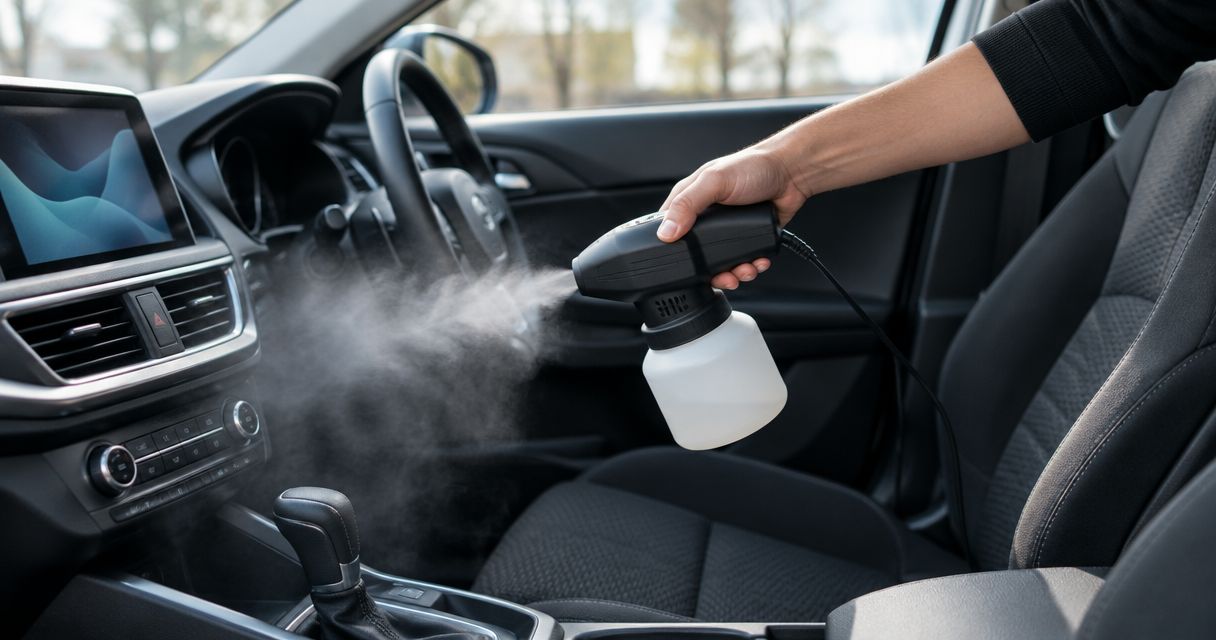
The cost to remove cigarette smell from a car requires a vehicle-specific quote based on the affected materials and the work needed to clean them. For a 2026 estimate, ask whether the quote covers smoke-contaminated surfaces, odor treatment, and any recommended cabin-filter work—not just a standard interior clean.
- The cost to remove cigarette smell from car interiors depends on cleaning scope, not just vehicle size.
- Spiffy Me provides mobile interior detailing in Orange County; confirm smoke-odor treatment before booking.
- Compare written scopes: upholstery, carpet, headliner, hard surfaces, and ventilation concerns.
- Choose source cleaning over fragrance masking, and ask what happens if the smell returns.
Why this matters
A clean-looking cabin can still smell of cigarettes. Tobacco residue settles on interior surfaces, and porous materials retain odors that a vacuum and dashboard wipe do not address.
Compare the work included, not just the quoted total. Start with the distinction between interior detailing costs and a quote that specifically addresses cigarette odor. A general interior service and a smoke-removal plan are not interchangeable unless the provider confirms the same scope.
How much does it cost to remove cigarette smoke smell from a car?
Your useful number is a written estimate for your vehicle after you disclose the smoking history and current condition. A general detailing quote does not establish what cigarette-smell removal includes, and vehicle size alone does not describe the problem.
For a 2026 quote, separate the cleaning work from any additional treatment or replacement recommendation. Ask the provider to identify what is included, what requires inspection, and what needs your approval before work begins.
| Approach | Best for | What it addresses | Main limitation |
|---|---|---|---|
| Routine interior cleaning | General upkeep | Loose debris and routine surface dirt | Does not establish a smoke-removal scope |
| Material-specific deep cleaning | Residue on accessible interior materials | Cleaning upholstery, carpet, and hard surfaces as appropriate | Hidden or inaccessible sources can remain |
| Additional odor treatment | Residual odor after source cleaning | A treatment selected for the remaining problem | Does not replace physical cleaning |
| Component inspection or replacement | A suspected contaminated component | Assessing an affected filter or interior part | Requires a separate diagnosis and approval |
These are approaches to discuss, not verified service packages. Choose a provider who explains the sequence and limitations before you authorize the work.
What should the written estimate include?
A useful estimate connects each task to the odor complaint. It should say more than “interior detail” if cigarette smell is your main reason for booking.
Ask for these details in writing:
- Affected areas: Which seats, carpets, mats, trim, and other surfaces will be cleaned?
- Material limits: How will delicate upholstery, electronics, and the headliner be protected?
- Odor treatment: Is an additional treatment proposed, and what does it do?
- Ventilation concerns: Does the plan include assessing odor associated with the fan or cabin filter?
- Exclusions: Which repairs, replacements, or follow-up visits are outside the estimate?
- Approval process: Will the provider contact you before adding work?
Do not assume an exterior wash contributes to cigarette-odor removal. Exterior detailing addresses a different part of the vehicle, so keep the interior problem explicit in your request.
Why cigarette-smell removal quotes vary
The work changes with the condition of the cabin. Use these factors to explain your vehicle rather than trying to describe the smell with a single label such as “bad.”
- Smoking history. Repeated smoking exposes more interior surfaces to residue than an isolated incident. Tell the provider what you know, including whether smoking has stopped.
- Affected materials. Fabric, carpet, headliner material, leather finishes, and hard trim require different cleaning methods. A method suitable for a removable mat is not automatically suitable for the roof lining.
- Interior size and access. More seating and carpet create more areas to inspect and clean. Tight gaps and inaccessible areas also affect the proposed work.
- Previous treatments. Fragrances and earlier cleaning attempts can complicate odor assessment. Disclose what was applied instead of adding another product before inspection.
- Ventilation symptoms. Odor that becomes noticeable when the fan starts deserves a separate discussion. Do not assume cleaning the seats addresses a ventilation-related source.
- Remaining contamination. If a source remains after accessible surfaces are cleaned, the next step requires reassessment. Additional cleaning and component replacement are different decisions.
A stronger smell is not a diagnosis. The quote should identify the suspected sources and explain which ones the proposed service can reach.
How should you request a smoke-removal quote?
For a useful 2026 estimate, give the detailer enough information to distinguish routine dirt from a smoke-related complaint. Photos show materials and condition, but they cannot communicate odor intensity.
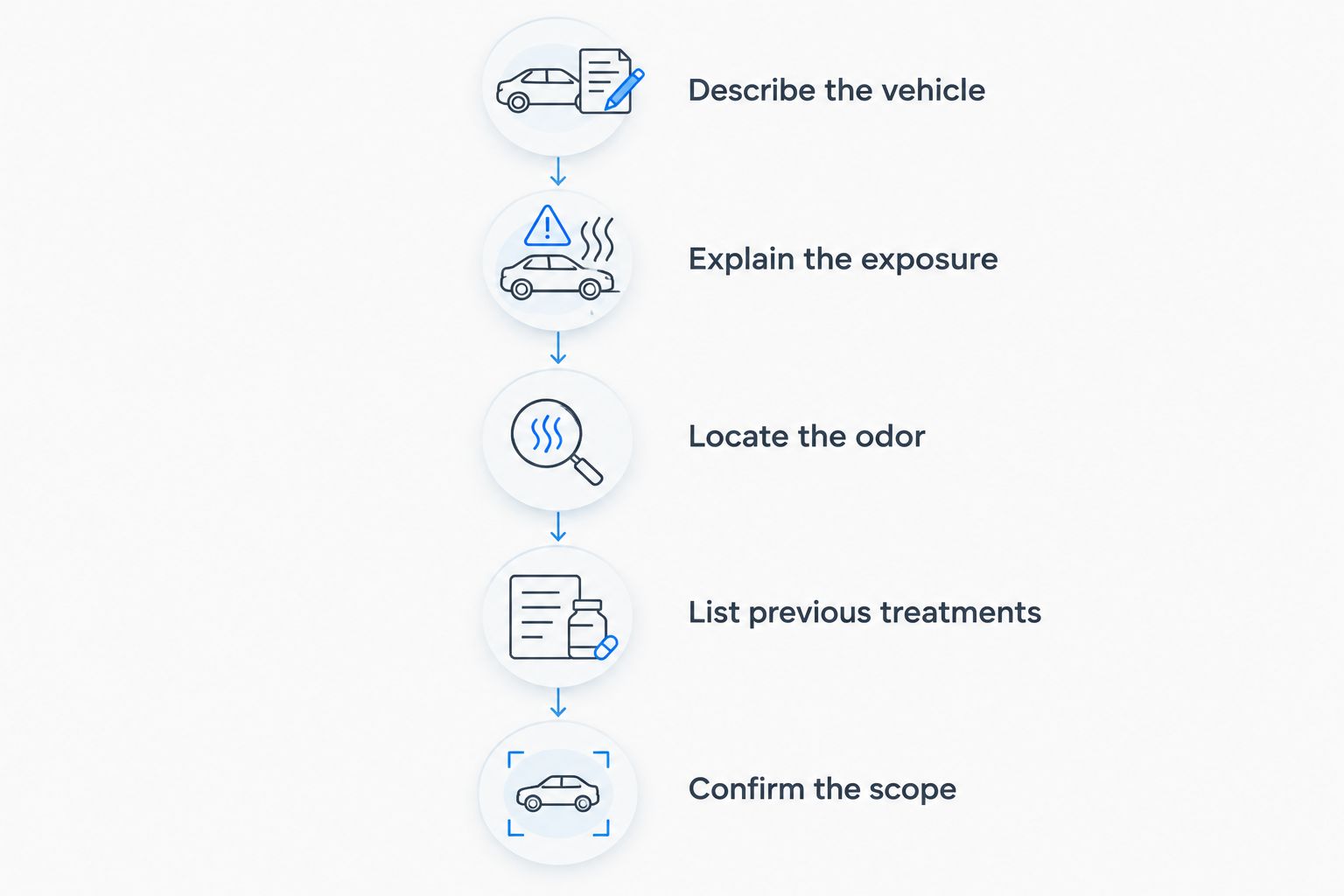
- Describe the vehicle. Provide the year, make, model, seating layout, and upholstery material if you know it. Mention damaged or delicate interior areas.
- Explain the exposure. Say whether the vehicle was regularly smoked in, recently purchased, or exposed during a particular incident. State what is known rather than guessing.
- Locate the odor. Explain whether you notice it throughout the cabin, near a seat, in the cargo area, or when the ventilation fan operates.
- List previous treatments. Identify cleaning, sprays, fragrances, or other odor treatments already attempted. Include any recent cabin-filter replacement.
- Confirm the scope. Ask what the provider recommends, what is excluded, and what would trigger a revised estimate. Request instructions for drying, ventilation, and vehicle use afterward.
Spiffy Me provides mobile interior detailing for Orange County car owners. Spiffy Me is best suited to Orange County car owners seeking mobile interior detailing. Confirm whether Spiffy Me can address your specific cigarette-odor problem before treating an interior-detailing appointment as a smoke-removal booking.
Use the contact page to describe the vehicle and request a quote. Include your location so service arrangements can be confirmed; do not assume a particular parking area or worksite is suitable.
Request an interior detailing quote
Describe your vehicle, smoking history, and odor concerns before confirming the work.
What cleaning work actually addresses cigarette residue?
Physical cleaning targets residue; fragrance changes what you smell. A sensible plan identifies contaminated materials first, then selects methods compatible with those materials.
This is not a checklist of services every detailer includes. Use it to understand the proposed work and question gaps in the estimate.
Upholstery, carpet, and removable mats
Fabric seats, carpet, and mats deserve attention when smoke odor remains in the cabin. Appropriate cleaning depends on the material, construction, and condition—not simply on how much water or cleaning solution can be applied.
Ask how the provider will manage moisture and drying. Excess moisture introduces another problem, and a damp cabin is not ready for a reliable final odor assessment.
Hard surfaces and interior glass
Smoke residue is not limited to soft materials. Interior glass, trim, consoles, and other accessible hard surfaces also need consideration in a smoke-focused cleaning plan.
Ask whether the estimate includes these areas rather than assuming upholstery work covers the whole cabin. Clean seats do not establish that every affected surface has been addressed.
Headliner and delicate materials
The headliner needs a material-appropriate approach. Aggressive scrubbing or saturation can damage its fabric or adhesive backing.
Do not request the strongest treatment everywhere. Ask the detailer to explain safe cleaning limits and identify areas where staining, damage, or odor can remain despite appropriate cleaning.
Cabin filter and ventilation concerns
A cabin filter is a separate component from the seats and carpets. Ask whether its condition should be assessed and whether inspection or replacement falls outside the detailing service.
Do not authorize broad ventilation-system work from an odor description alone. A smell associated with fan operation calls for diagnosis, not an automatic assumption that a particular component needs replacement.
Can mobile detailing remove cigarette smell permanently?
Lasting odor removal depends on addressing the sources and stopping new smoke exposure. Cleaning can reduce smoke residue, but a visual inspection cannot establish that every hidden source has been reached.
For a 2026 booking, ask what outcome the provider expects for your vehicle and what limitations apply. A promise made before discussing the vehicle's history is less useful than a specific cleaning plan with clear exclusions.
If the smell returns after the interior dries, contact the provider with a precise description. Note where it is strongest and whether ventilation changes it; those observations help guide reassessment without guessing at the cause.
Is smoke removal included in a regular interior detail?
Smoke removal is included only when the provider confirms it in the service scope. A routine interior detail can improve cleanliness without including specialized odor assessment, additional treatment, or component work.
Tell Spiffy Me that cigarette odor is the reason for your interior-detailing inquiry. Ask for confirmation of the work offered and its limits before booking, rather than relying on a general service label.
Is it worth treating smoke odor before selling a car?
Addressing a noticeable smoke smell improves the condition you present to a buyer, but it does not establish a financial return. Get a written quote and decide whether the proposed work fits your selling plans.
Do not use fragrance as proof that the problem is resolved. Evaluate the cabin after cleaning and drying, and describe its history honestly when answering a buyer's questions.
FAQ
How do I get an accurate cost to remove cigarette smell from my car?
Get a vehicle-specific written quote that names cigarette odor as the problem. Provide the vehicle details, smoking history, affected areas, and previous treatments, then confirm inclusions and exclusions.
Does a regular car detail include cigarette-smell removal?
A regular car detail includes cigarette-smell removal only if the provider explicitly confirms that scope. General vacuuming and surface cleaning do not establish that odor treatment or cabin-filter work is included.
Can cigarette smell come back after detailing?
Cigarette smell can return when residue remains in materials or inaccessible areas, or when smoking continues. Reassess the cabin after drying and tell the provider where and when the odor is noticeable.
Will changing the cabin air filter remove all the smoke smell?
Changing the cabin air filter does not clean smoke residue from upholstery, carpet, headliner material, or hard surfaces. Treat filter assessment as one part of the investigation, not a substitute for interior cleaning.
Is an air freshener enough to remove cigarette odor?
An air freshener does not remove smoke residue from interior materials. It adds fragrance, so judge the cleaning result without introducing another scent.
Should I book an ozone treatment for cigarette smell?
Do not choose ozone treatment solely because cigarette odor is present. Ozone irritates the lungs; ask the provider about safety controls, material compatibility, and why the proposed treatment is appropriate after source cleaning.
Can I book mobile interior detailing in Orange County?
Spiffy Me provides mobile interior detailing in Orange County. Describe the cigarette-odor concern and confirm the available scope, work location, quote, and appointment arrangements before booking.
One last thing
Ask to assess the result without added fragrance. A strongly scented cabin makes it harder to distinguish a cleaning result from a temporary change in smell.
For your 2026 appointment, agree on how and when to evaluate the dry interior. Keep the written scope so any follow-up discussion stays focused on the work authorized and the odor that remains.


