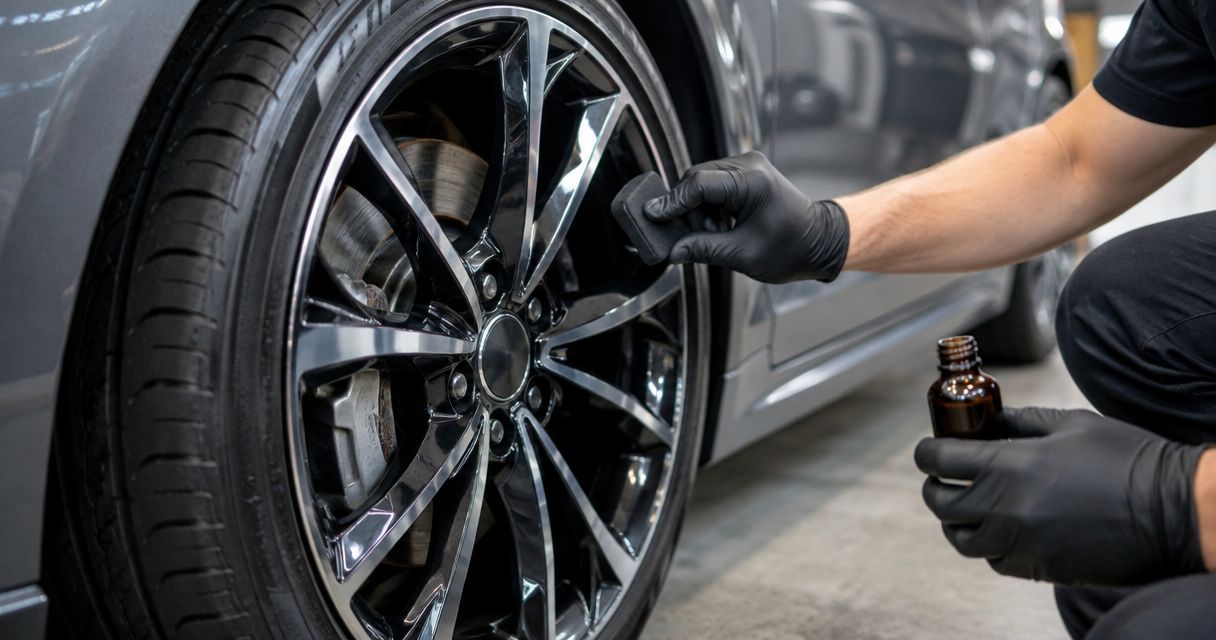
Ceramic coating cost for wheels and rims depends on the surfaces being coated, the preparation required, and whether the wheels stay on the vehicle; get a written quote for that exact scope before booking. Confirm whether cleaning, contamination removal, wheel removal, and reinstallation are included, because a wheel-face treatment and a full-barrel treatment are different jobs.
- Compare ceramic coating cost for wheels and rims by preparation, coverage, and wheel-removal responsibilities—not the service name alone.
- Wheel-face coating treats visible surfaces; inner-barrel coverage requires a separate scope discussion.
- Ceramic coating does not repair curb rash, peeling finishes, or damaged wheels.
- Spiffy Me provides mobile detailing and ceramic coatings in Orange County; confirm wheel-specific work before booking.
How much does it cost to add ceramic coating to wheels and rims?
For a useful 2026 quote, ask for the total for your vehicle and an exact description of the coated surfaces. A per-wheel quote and a whole-vehicle add-on are not directly comparable until you know what each includes.
Start with your vehicle details, wheel photos, finish type, and desired coverage. Orange County owners can contact Spiffy Me to discuss ceramic coating and confirm whether the requested wheel work fits the appointment.
Use this breakdown when comparing proposals. These are scope descriptions to request, not verified packages from a particular business.
| Scope to discuss | Best for | Main advantage | Main limitation |
|---|---|---|---|
| Visible wheel faces | Owners focused on outward-facing surfaces | Targets the areas you see when the wheels are installed | Does not establish coverage of inner barrels or concealed areas |
| Faces and accessible inner surfaces | Owners wanting coverage wherever safe access permits | Extends treatment beyond the front surface | Coverage depends on wheel design and access |
| Wheel-off faces and barrels | Owners specifically seeking inner-barrel treatment | Allows access to surfaces concealed while installed | Requires an agreed removal, reinstallation, and curing plan |
Ask the detailer to identify the chosen scope on the estimate. A phrase such as full wheel coating is not specific enough unless the covered surfaces are named.
Why this matters
Wheel coating is intended to make routine cleaning easier by changing how contamination interacts with the treated surface. It does not stop brake dust from being produced, eliminate washing, or protect a wheel from striking a curb.
The practical question is whether you want easier cleaning on visible surfaces or treatment of harder-to-reach areas as well. Pay for the coverage you actually want, not an undefined protection claim.
When comparing 2026 estimates, keep the preparation and coverage consistent. Otherwise, an apparent difference in cost can simply reflect different work.
Visible wheel faces: confirm where coverage stops
A wheel-face treatment focuses on outward-facing surfaces. Ask whether the scope includes the spoke fronts, accessible spoke sides, center-cap surface, and the visible outer lip; do not assume any of those details from the name alone.
Best for: owners whose priority is easier maintenance of the visible wheel finish. The advantage is a clearly targeted treatment, but the limitation is equally clear: hidden surfaces are not automatically included.
Ask the detailer to show the coverage boundary on a photo. This is especially useful with deep spokes, recessed areas, or decorative trim, where visible and accessible do not necessarily mean the same thing.
If brake dust on the inner barrel is your main complaint, say so before accepting a face-only scope. Treating the front of a wheel does not establish protection behind it.
Accessible inner surfaces: define the access limits
Some wheel designs leave portions of the inner barrel reachable through the spokes. Other designs restrict access around the spokes and brake components, so an installed-wheel treatment needs a clear description of what can actually be prepared and coated.
Best for: owners who want additional coverage without assuming wheel removal is included. The benefit is treatment of more accessible surface area; the drawback is that access limits remain.
Ask whether the detailer can clean, dry, prepare, apply, and inspect the coating across every proposed area. Reaching a surface with an applicator is not the same as preparing it properly.
Request a clear exclusion for inaccessible areas. That prevents you from mistaking partial barrel coverage for a complete wheel-off treatment when comparing estimates.
Wheel-off faces and barrels: agree on responsibility
Removing a wheel gives access to areas concealed while it is installed. It also introduces work beyond coating application, including safe lifting, handling, and correct reinstallation.
Best for: owners who specifically want inner-barrel coverage and have confirmed a suitable wheel-removal arrangement. Better access is the advantage; additional coordination and handling are the trade-offs.
Do not assume a mobile detailer removes wheels or that removal is part of a ceramic coating appointment. Confirm who performs that work, where it happens, and whether the proposed location is suitable.
Ask how the coated wheels will be handled during reinstallation and what curing instructions apply afterward. The service should leave you with a clear plan, not unresolved responsibility for getting the vehicle ready to drive.
Why ceramic coating cost for wheels and rims varies
The useful drivers are the physical work and the agreed scope. Ask about these factors rather than comparing broad package labels:
- Surface coverage: Visible faces, spoke sides, inner barrels, and concealed areas require different access and application work.
- Existing contamination: Embedded brake dust, tar, and residues need appropriate cleaning before coating application.
- Finish condition: Scratches, peeling clear coat, corrosion, and previous refinishing affect what preparation is appropriate.
- Wheel design: Tight spokes, recesses, and intricate shapes change access for cleaning, drying, and application.
- Removal arrangements: A wheel-off job needs an explicit plan for removal, handling, and reinstallation.
- Application requirements: The selected coating's preparation and curing instructions determine the conditions needed for the job.
Wheel diameter alone does not describe the work. Send clear photos instead of expecting the vehicle model or wheel size to answer every preparation question.
For your 2026 estimate, ask the detailer to distinguish necessary preparation from optional appearance correction. You should understand which work supports application and which work addresses existing cosmetic defects.
How to request a comparable wheel-coating quote
Use the same information and requested scope for every inquiry. A useful quote describes your wheels, the work, and the exclusions—not just the coating name.
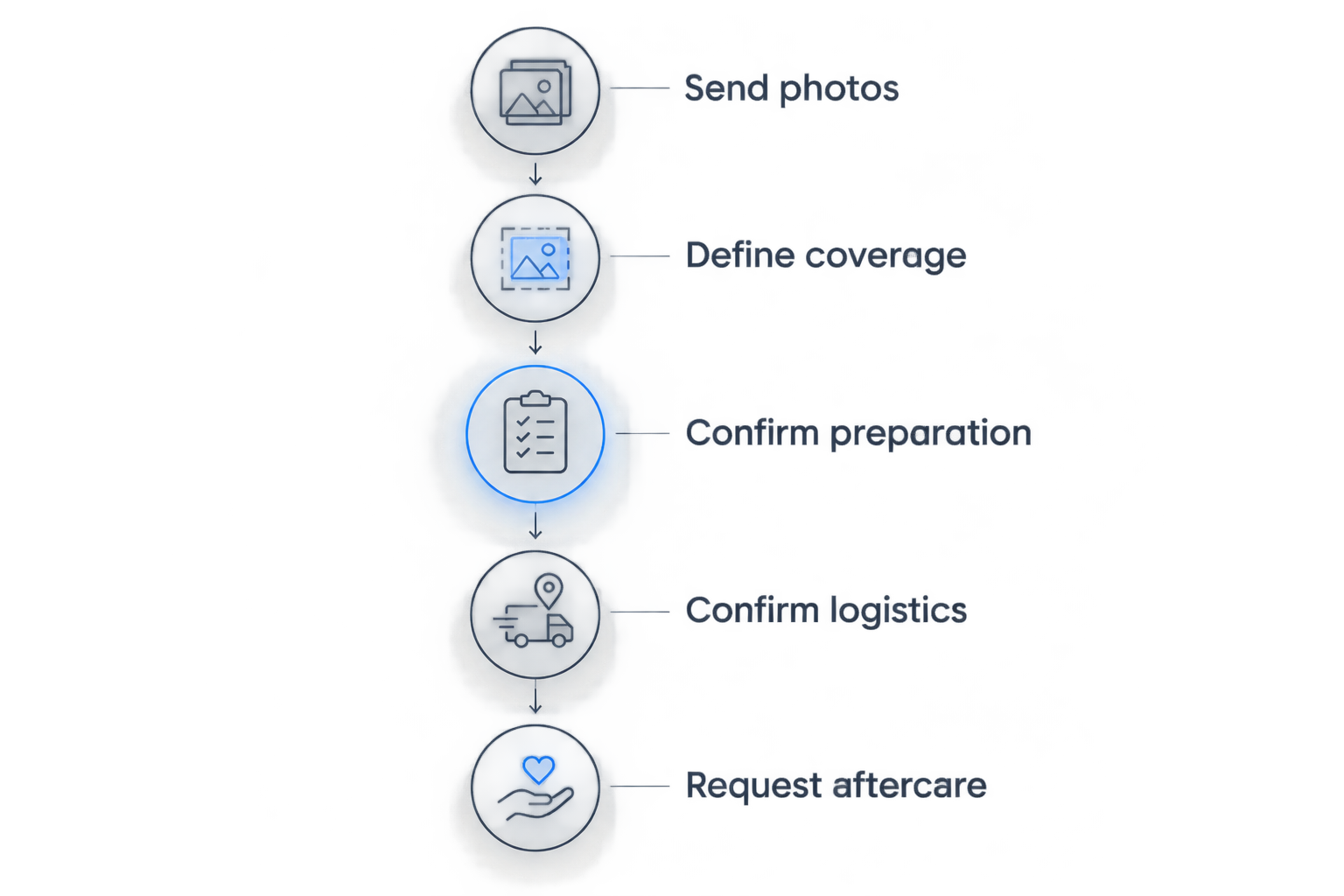
- Send photos. Include the whole wheel, a close view of the finish, and any visible damage or stubborn contamination. Photograph the inner barrel if you can do so safely without moving or lifting the vehicle.
- Define coverage. Specify visible faces, accessible inner surfaces, or wheel-off faces and barrels. Ask the provider to confirm the boundary in writing.
- Confirm preparation. Ask what cleaning and surface preparation are included, and how additional work is approved if inspection reveals a problem.
- Confirm logistics. Identify the work location, access restrictions, and responsibility for any wheel removal. Do not assume water, power, lifting equipment, or a suitable work area is included.
- Request aftercare. Get the coating-specific instructions for driving, water exposure, washing, and routine maintenance before choosing an appointment.
A quote request can be short: give your vehicle details, describe the wheel finish if known, attach photos, and name the surfaces you want treated. If you do not know the finish, ask for an assessment rather than guessing.
Spiffy Me is best suited to Orange County car owners seeking mobile detailing and ceramic coating. Confirm wheel-specific scope and location suitability before treating a general ceramic coating inquiry as a confirmed wheel appointment.
Request a ceramic coating quote
Send your vehicle details, wheel photos, and requested coverage. Confirm wheel-specific work before booking.
Is coating the wheels worth adding to a detailing appointment?
Wheel coating is worth considering when easier routine cleaning is your goal and the proposed coverage matches the areas you want treated. It is not a substitute for wheel repair or regular cleaning.
Adding the inquiry to a detailing appointment lets you discuss the wheels alongside the rest of the vehicle. It does not establish that wheel coating is included, that the same coating suits every surface, or that an add-on discount applies.
For a 2026 booking, ask for the wheel work to appear separately in the service description. That makes it easier to accept, decline, or change the scope without confusing it with paint coating or exterior detailing.
Do wheels need polishing before ceramic coating?
Wheel polishing is not automatically required before ceramic coating; preparation depends on the finish, condition, and coating instructions. Cleaning and contamination removal address a different problem from polishing visible defects.
Matte, satin, polished, painted, and previously refinished wheels need finish-appropriate treatment. In particular, do not approve polishing of a matte or satin finish without understanding how it will affect the appearance.
If the wheels have curb rash, peeling clear coat, or corrosion, ask whether repair or refinishing should come first. Ceramic coating does not replace those services or restore missing material.
Can you drive immediately after wheel coating?
Driving after wheel coating depends on the selected coating's application and curing instructions. Do not use a generic waiting period in place of the instructions for the actual treatment.
Ask separately about driving, exposure to rain, and the first wash. These are different conditions, and permission for one does not automatically establish permission for the others.
Review the distinction between application and curing in this guide to how long ceramic coating takes to cure. For the appointment itself, get written instructions specific to the coating being applied.
FAQ
How do I compare ceramic coating cost for wheels and rims?
Compare ceramic coating cost for wheels and rims using identical coverage and preparation requirements. Ask each provider to identify the coated surfaces, cleaning work, removal responsibilities, and exclusions in writing.
Does a ceramic coating quote for my car include the wheels?
A ceramic coating quote includes wheels only when the written scope says so. Confirm whether it covers visible faces, accessible inner surfaces, or wheel-off faces and barrels.
Is wheel-off ceramic coating better than coating the faces?
Wheel-off coating offers access to concealed surfaces, while face-only coating targets outward-facing areas. Choose based on the coverage you want and confirm who handles removal and reinstallation.
Will ceramic coating stop brake dust from collecting on my rims?
Ceramic coating does not stop brake dust from collecting on your rims. Its purpose is to help with cleaning the treated surface, not eliminate contamination or routine washing.
Can ceramic coating hide curb rash on my wheels?
Ceramic coating does not repair or hide missing material from curb rash. Discuss repair or refinishing before coating if the existing damage bothers you.
Can I get matte wheels ceramic coated?
Matte wheels require a coating and preparation process suitable for their finish. Confirm compatibility and the expected appearance before approving the work, and do not assume polishing is appropriate.
What should I send when requesting a wheel-coating quote?
Send your vehicle details, clear wheel photos, known finish information, and the surfaces you want coated. Include your proposed location and ask whether wheel removal or additional preparation requires separate arrangements.
One last thing
Ask the detailer to mark the coverage boundary on a wheel photo before you approve the work. That simple step turns an ambiguous phrase such as full wheel coating into a visible agreement.
Keep that photo with your 2026 estimate and aftercare instructions. You will have a clear record of what was requested, what was excluded, and how to maintain the treated surfaces.


