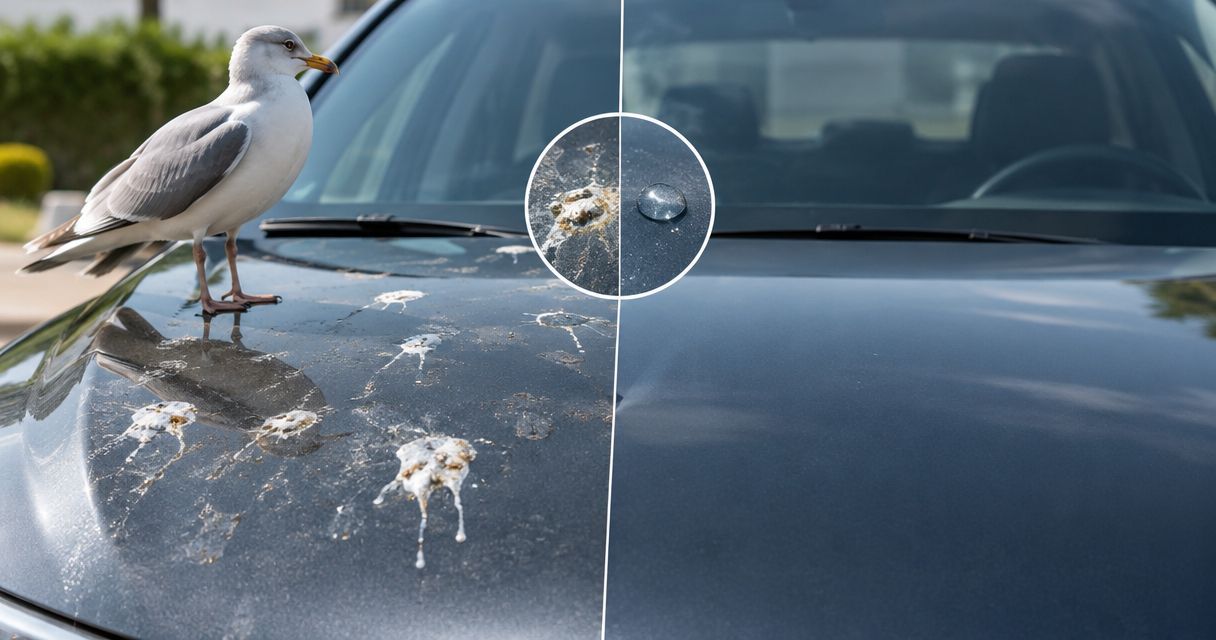
No—ceramic coating does not stop bird droppings from etching paint; it adds a protective layer that can make contamination easier to remove, but it does not make the finish damage-proof. Prompt, gentle removal still matters because dried droppings can damage the surface, and scrubbing them off can scratch it.
- Does ceramic coating stop bird droppings from etching paint? No—protection is not a guarantee against clear-coat damage.
- Soften bird droppings before removal; never scrape or scrub dried contamination from automotive paint.
- A mark remaining after cleaning needs assessment, not another layer of ceramic coating.
- Spiffy Me provides mobile detailing and ceramic coatings for Orange County car owners.
Does ceramic coating stop bird droppings from etching paint?
Ceramic coating adds a layer over the painted finish, but bird droppings still need prompt removal. Chemical resistance and easier cleaning are useful benefits—not permission to leave contamination sitting on your car.
For your 2026 paint-care routine, separate protection from damage repair. A coating helps maintain the surface; it does not restore clear coat that has already been etched.
| Paint condition | Useful protection | Main limitation | Best for |
|---|---|---|---|
| Uncoated paint | Cleaning removes droppings directly from the exposed finish | No ceramic coating layer separates contamination from the clear coat | Owners prepared to maintain another suitable protection routine |
| Ceramic-coated paint | The coating provides a protective surface that can make cleaning easier | Droppings can still leave marks; cleaning remains necessary | Owners seeking easier exterior maintenance who will still remove contamination promptly |
Choose ceramic coating for maintenance benefits, not guaranteed immunity from bird droppings. If you need local help with exterior care, Spiffy Me provides mobile detailing and ceramic coating services in Orange County.
Why this matters
A dried white deposit and an etched patch are different problems. The deposit sits on the surface; etching describes damage that remains after contamination has been removed.
Treating both problems with harder rubbing creates another risk: scratches. The practical goal is to remove the material without grinding it into the finish, then assess what remains.
When comparing ceramic coating services in 2026, ask about preparation, maintenance instructions, and the limits of protection. A useful explanation covers what the coating does and what you must still do yourself.
What ceramic coating helps with—and what it cannot fix
Ceramic coating helps with surface maintenance
Ceramic coatings form a protective layer on a properly prepared surface. Their water-repellent characteristics can make routine cleaning easier, although performance depends on the coating and its condition.
That benefit has a limit. Easier removal does not mean every dropping will rinse away without washing, and water beading does not prove the paint underneath is undamaged.
Keep the cleaning routine even when the coating looks healthy. Bird droppings, road film, and other contamination still belong off the surface.
Ceramic coating does not repair existing etching
Applying coating over an etched area does not rebuild the damaged clear coat. Surface preparation and any suitable correction need assessment before coating application.
Do not buy a coating application expecting an existing stain, rough patch, or dull ring to disappear automatically. Ask the detailer to distinguish removable residue from damage and explain what correction would involve.
Correction also has limits. Polishing removes material, so repeated or aggressive attempts to erase a mark are not a harmless maintenance step.
Why damage from bird droppings varies
There is no universal safe waiting period for bird droppings on ceramic-coated paint. These factors explain why one deposit comes away cleanly while another leaves a visible mark:
- Contact time: Leaving contamination in place extends its contact with the protective surface. Remove it when you notice it rather than waiting for a scheduled wash.
- Surface temperature: A hot panel makes controlled cleaning harder because water and cleaning solution dry faster. Move into shade and let the panel cool before working.
- Coating condition: A worn, contaminated, or poorly maintained surface does not behave like a freshly prepared coating. Follow the instructions for the coating actually installed.
- Dropping condition: Fresh material and hardened deposits require different handling. Dried contamination needs softening before you attempt removal.
- Removal technique: Scraping, dry wiping, and forceful rubbing can add scratches even if the original deposit has not etched the paint.
- Existing paint condition: Previously damaged or corrected paint needs individual assessment before further polishing. Appearance alone does not establish how much correction is safe.
None of these factors gives you a reliable countdown. Clean promptly, but never trade speed for dry scrubbing.
How do you remove bird droppings from ceramic-coated paint?
Use a gentle cleaning sequence rather than trying to wipe the entire deposit away in one pass. Follow your coating manufacturer's care instructions, especially if the coating was recently applied and remains subject to curing restrictions.
For routine care in 2026, keep suitable wash supplies accessible so you do not have to improvise with paper towels or household cleaners. A clean microfiber towel and a coating-compatible cleaning product are more useful than an aggressive stain remover.
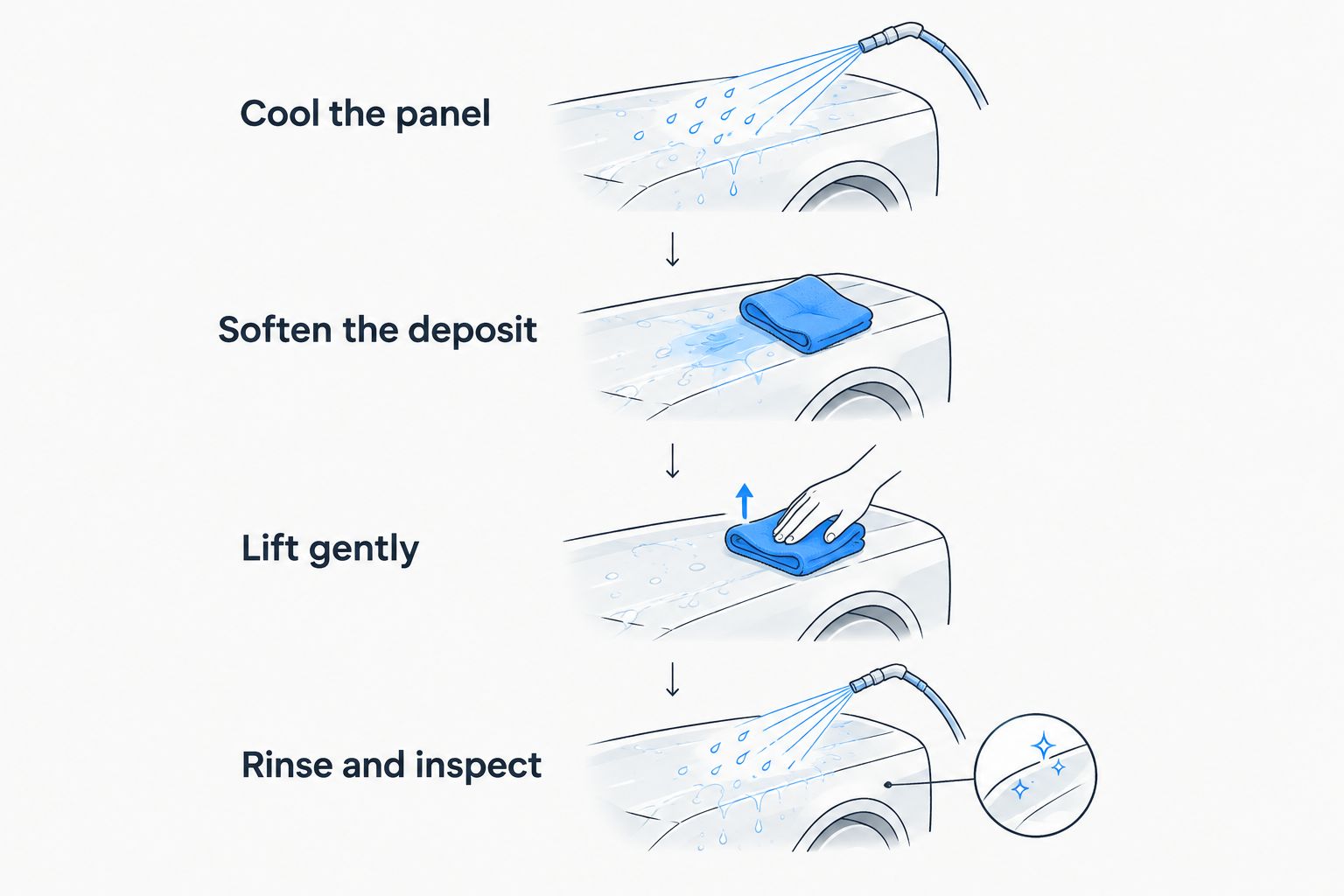
- Cool the panel. Move out of direct sun when practical and let a hot surface cool. Do not work while your cleaning solution is drying on contact.
- Soften the deposit. Wet the affected area with water or a suitable cleaning solution. Follow the product directions and allow the hardened material to soften without letting the solution dry.
- Lift gently. Use a clean, wet microfiber towel with minimal pressure. Lift loosened material rather than repeatedly dragging it across the paint.
- Rinse and inspect. Rinse away remaining contamination, then dry gently with a clean towel. Check the area under good lighting before deciding whether further treatment is needed.
If material remains stuck, repeat the gentle softening process rather than increasing pressure. Stop if the surface is clean but a mark remains; more wiping is not a repair method.
For ongoing upkeep, use the ceramic coating maintenance products guide to frame questions about product compatibility. Confirm suitability against the instructions for your installed coating before applying anything new.
What should you avoid using?
Avoid fingernails, blades, abrasive pads, dry paper towels, and household cleaning chemicals not approved for automotive finishes. Do not use a strong solvent simply because a deposit resists the first cleaning attempt.
Also avoid polishing a coated panel casually. Abrasive correction can remove or alter the coating, so the repair plan needs to address protection afterward.
Is the remaining mark residue or etched paint?
A visible outline after cleaning does not automatically establish how deeply the finish is affected. Remaining contamination, changes in the coating, and clear-coat damage can look similar without inspection.
Start with observation, not another chemical. Check the clean, dry area from different angles under good lighting and note whether the mark is visible, feels raised, or appears as a dull patch.
| What you notice | What it tells you | Practical next move |
|---|---|---|
| Material remains raised above the surface | Contamination is still present | Continue compatible, gentle cleaning without scraping |
| A flat outline remains after washing | Cleaning alone has not resolved the appearance | Ask for assessment before stronger chemicals or polishing |
| Scratches appear around the original spot | The removal process has introduced or exposed another issue | Stop rubbing and discuss suitable correction |
| A deep-looking defect or damaged finish remains | Routine maintenance is not enough to establish a repair | Request a professional assessment of repair limits |
Do not diagnose repair depth from a photograph alone. Photos help explain the concern, but an inspection is needed before promising that polishing will remove the mark.
Can you leave bird droppings until your next wash?
No—remove bird droppings when you notice them rather than using the next wash as a deadline. Ceramic coating does not establish a guaranteed safe exposure period.
If you cannot clean safely immediately, avoid touching the deposit with a dry cloth. Arrange proper removal instead of scraping it away simply to make the panel look clean.
Your 2026 maintenance schedule should include spot cleaning between full washes. A regular detailing appointment does not replace attention to fresh contamination.
Will ceramic coating hide a bird-dropping stain?
No—ceramic coating is not a dependable way to hide or repair an existing bird-dropping stain. The surface needs cleaning and assessment before anyone decides whether correction is appropriate.
Ask the detailer to explain whether the mark sits above the surface or remains after cleaning. That distinction determines whether the next step is more cleaning, controlled correction, or a different repair discussion.
Do you need to recoat the whole car after one mark?
No—a single mark does not automatically mean the whole vehicle needs recoating. The decision depends on the affected area, the coating system, and whether repair removes protection from the panel.
Ask what will be corrected and how protection will be restored afterward. Do not authorize a full-vehicle application solely because one spot needs inspection.
What should you ask before booking mobile detailing?
Describe the problem before asking for a coating recommendation. State where the mark is, whether you have already cleaned it, and which products or tools you used.
Include clear photos if the business accepts them, but treat any initial discussion as preparation for assessment—not a guaranteed repair outcome. Share the coating name and application information if you have them.
For a quote request, ask:
- Does the proposed work cover contamination removal, paint correction, coating application, or separate stages?
- Which existing marks need inspection before a repair recommendation?
- What preparation does the coating application include?
- What maintenance and curing instructions will you receive?
- Does the proposed work require access or working conditions you should arrange beforehand?
Spiffy Me is best for Orange County car owners seeking mobile detailing and ceramic coating services. Confirm your location, vehicle condition, requested work, and appointment arrangements directly with the business; do not assume a named package includes stain correction.
Request a detailing quote
Describe the bird-dropping mark, your vehicle, and the exterior work you need.
FAQ
Does ceramic coating stop bird droppings from etching paint?
No—ceramic coating does not guarantee protection against bird-dropping etching. It adds a protective surface that can make cleaning easier, but prompt removal remains necessary.
How long can bird droppings stay on a ceramic-coated car?
There is no universal safe waiting period for bird droppings on ceramic-coated paint. Remove them when you notice them, using a gentle method that does not scrape dried contamination across the finish.
Can I wipe bird droppings off with a dry towel?
No—dry wiping can drag hardened material across the finish and cause scratches. Soften the deposit first, then use a clean, wet microfiber towel with minimal pressure.
Will a car wash remove bird-dropping etching?
A car wash removes contamination, not clear-coat damage. If a mark remains after proper cleaning, have it assessed before using stronger chemicals or abrasive correction.
Can polishing remove ceramic coating around an etched spot?
Yes—abrasive polishing can remove or alter ceramic coating in the treated area. Ask how the detailer will restore protection after any correction.
Does water beading mean bird droppings cannot damage my paint?
No—water beading does not prove that paint is immune to bird-dropping damage. Keep removing contamination promptly even when the coating still repels water.
Can Spiffy Me help with ceramic coating in Orange County?
Spiffy Me provides mobile detailing and ceramic coating services for Orange County car owners. Describe the mark and request an assessment of the appropriate exterior work before booking.
One last thing
The mistake to avoid is polishing before you know what remains on the surface. A stubborn deposit needs cleaning; damaged clear coat needs a separate repair decision. Treating both with abrasives risks removing protection without solving the underlying problem.
For 2026, make your rule simple: soften, remove gently, inspect, and stop when cleaning no longer changes the mark. Better protection starts with the right response—not harder rubbing.


