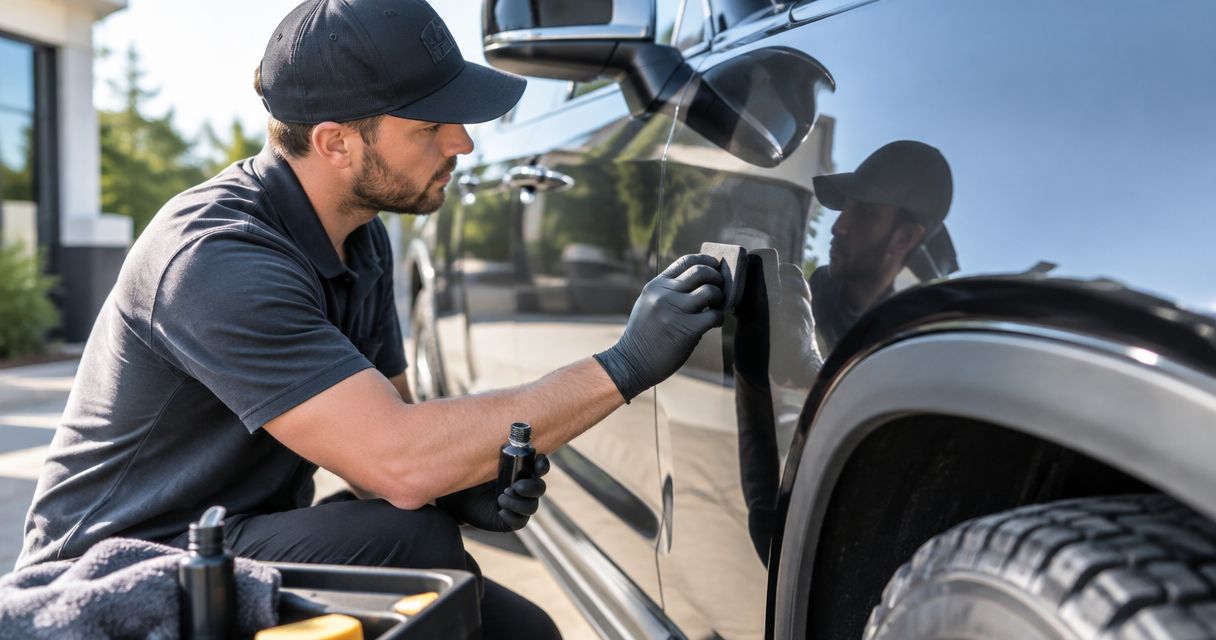
Contractors’ ceramic coating is a protective treatment for vehicle paint aimed at making routine exterior maintenance easier between jobs. This guide to ceramic coating for contractors explains how to assess a work vehicle, choose protection, and plan an application in 2026 without confusing a coating with protection against tool damage or stone chips.
- Ceramic coating for contractors supports easier exterior cleaning; it does not make a work truck scratch-proof.
- Spiffy Me offers mobile ceramic coating and interior/exterior detailing for Orange County car owners.
- Choose paint protection around your vehicle’s actual exposure, not a durability claim alone.
- Confirm preparation, application conditions, aftercare, and return-to-work instructions before booking.
Why ceramic coating matters for contractors
A contractor’s vehicle serves a different purpose from a weekend car. If yours carries equipment, visits job sites, and meets customers, you need to separate appearance maintenance from protection against physical damage. A ceramic coating addresses the first problem; it does not replace careful loading or protective barriers.
Choose ceramic coating to support cleaning and paint maintenance, not to prevent every kind of work-related damage. Dirt still needs removal, and grit can scratch paint when you wipe it across the surface. Concrete residue, paint overspray, and other job-site contaminants require assessment rather than an aggressive scrub.
For Orange County car owners, Spiffy Me provides mobile interior/exterior detailing and ceramic coatings. Confirm your address, vehicle condition, and proposed work location when requesting a quote. Mobile service does not mean every driveway or job site is suitable for coating application.
Your 2026 decision should start with the vehicle’s condition and how you use it. A coating is not a repair for peeling paint, deep scratches, or damaged panels, and it does not clean a dirty interior.
How to choose ceramic coating for a contractor’s vehicle
1. Separate cleaning needs from damage risks
Start with a walk around your vehicle in daylight. Inspect the hood, roof, doors, lower panels, and areas around handles or storage access. Note whether the problem is loose dirt, bonded contamination, existing scratches, or repeated contact with equipment.
You can perform this initial inspection yourself. Do not polish, scrape, or use a strong chemical simply to make the vehicle look better before an assessment; that can obscure the original problem or create another one.
Write down 3 priorities for the vehicle, such as easier washing, improving its appearance, or protecting a particular surface. Keep these separate from damage risks. A truck that gets scraped by ladders needs a loading change, not a stronger coating claim.
- Inspect painted panels separately from glass, trim, and storage accessories.
- Record scratches, chips, peeling finishes, and existing repairs.
- Identify where tools, straps, boots, or materials contact the vehicle.
- Describe any concrete residue, overspray, adhesive, or stubborn deposits.
- Rank cleaning needs separately from impact and abrasion risks.
2. Establish a safe cleaning baseline
Before deciding on protection, find out what the paint looks like when clean. If you wash the vehicle yourself, follow the instructions for the cleaning products and vehicle surfaces involved. Use clean wash materials and avoid wiping dusty paint with a dry towel.
A clean surface helps distinguish dirt from damage. It also gives you a clearer conversation with the detailer: a mark that remains after an appropriate wash needs assessment, not an assumption that ceramic coating will hide it.
Do not experiment with solvents on unfamiliar contamination. Construction materials and overspray present different removal problems, and the wrong approach can damage the finish. Describe the substance and when the exposure happened instead.
- Remove personal items and loose equipment before inspection.
- Wash only with products suitable for the surfaces involved.
- Keep dirty wheel-cleaning materials away from painted panels.
- Photograph marks that remain after cleaning.
- Leave uncertain contamination for professional assessment.
3. Request a quote that defines the work
You can prepare a useful quote request without specialist tools. Gather the vehicle details, describe its current condition, and explain how it is used. Send 4 photos as a starting point: the front, rear, one side, and the area causing the most concern. Add close-ups when a general view does not show the problem.
Spiffy Me ceramic coating is best for Orange County car owners who want mobile service instead of applying a coating themselves. Spiffy Me also provides interior/exterior detailing, so describe cabin cleaning needs separately from paint-protection needs.
The benefit of professional application is handing over the preparation and application work. The limitation is that you still need to agree on scope, provide a suitable location, and follow aftercare instructions. Do not assume interior cleaning, paint correction, glass treatment, or trim treatment is included.
For a 2026 quote, request a written description of the work before accepting an appointment. Confirm how the business handles booking and what information it needs from you.
- Provide the vehicle’s make, model, and current condition.
- Give the Orange County service address for confirmation.
- Describe job-site exposure and equipment-loading habits.
- Ask which preparation work the quote includes.
- Confirm exactly which surfaces will receive treatment.
- Request the total quote and booking instructions before agreeing.
4. Match protection to the actual problem
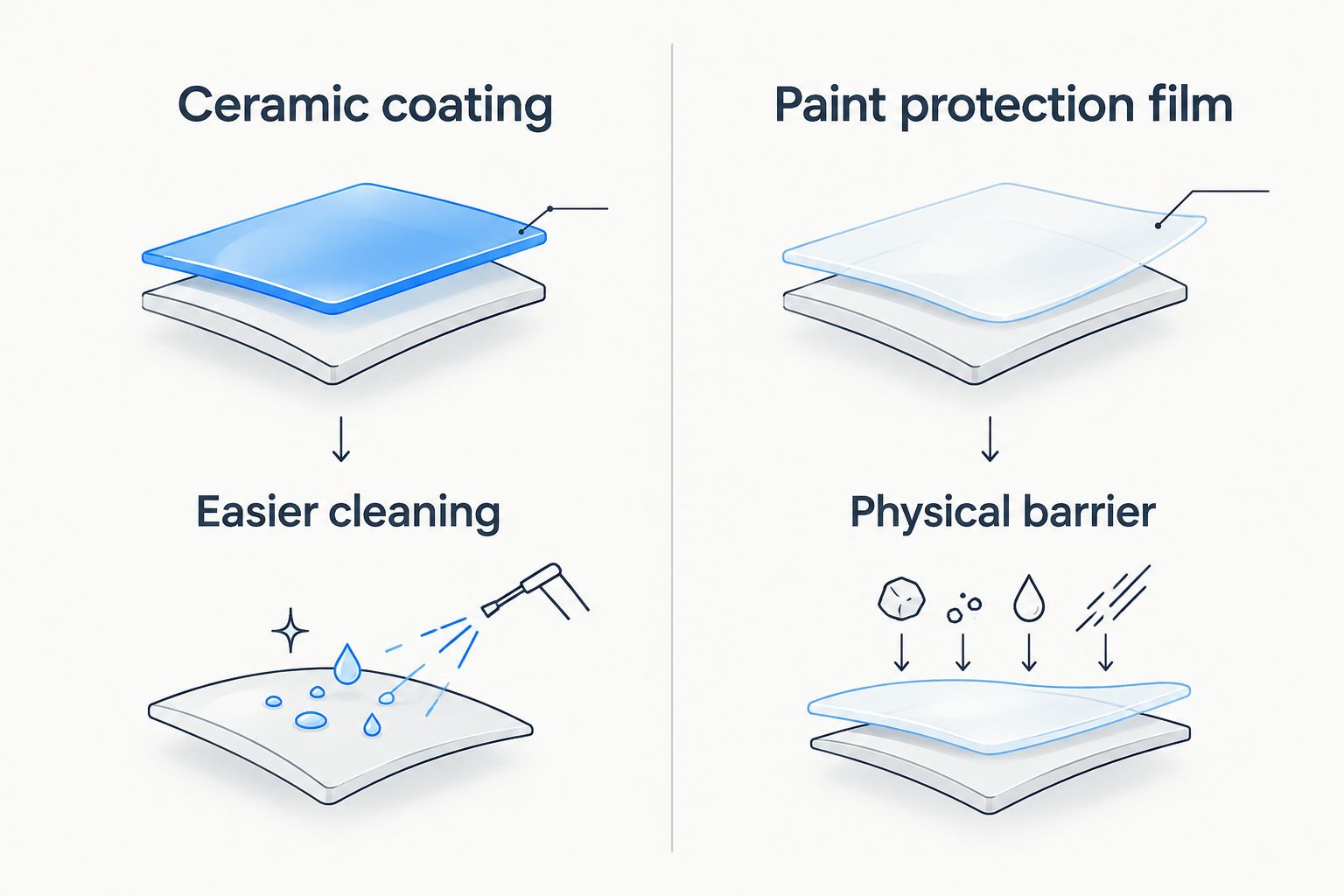
Compare protection methods by purpose rather than treating them as interchangeable upgrades. Ceramic coating is a surface treatment. Paint protection film is a physical film applied to selected surfaces. Wax or a paint sealant provides another route for routine exterior protection, with care and reapplication governed by the product used.
Professional application and DIY application also solve different scheduling problems. Doing the work yourself gives you control over the process, but you take responsibility for surface preparation, product selection, application conditions, and correcting mistakes.
The 2026 comparison below is a decision guide, not a list of services confirmed for this business. Only mobile detailing and ceramic coating are established offerings here; ask a provider directly about any other treatment.
| Option | Best for | Main advantage | Key limitation |
|---|---|---|---|
| Professional ceramic coating | Owners who want the preparation and application handled | Transfers application work to a service provider | Requires agreed scope, suitable conditions, and ongoing care |
| DIY ceramic coating | Owners prepared to follow product instructions themselves | Gives you direct control over the work | You are responsible for preparation and application errors |
| Wax or paint sealant | Owners comfortable with routine protection maintenance | Fits a regular cleaning and reapplication routine | Does not replace impact protection or paint repair |
| Paint protection film | Owners prioritizing a physical barrier on selected panels | Adds a sacrificial layer over the covered paint | Coverage, installation quality, and film care need separate assessment |
| Exterior detailing | Owners who need cleaning and condition assessment first | Addresses current exterior cleaning needs | Cleaning alone is not the same as applying lasting protection |
Before choosing, ask the provider to connect the proposed treatment to your stated priorities. If the recommendation does not address your main concern, clarify it before booking.
- Choose coating for paint maintenance rather than scratch-proofing.
- Discuss film separately when physical panel protection is the priority.
- Consider detailing first when the paint’s condition is unclear.
- Choose DIY only when you can follow the full application instructions.
- Keep cargo-area wear separate from exterior paint protection.
5. Plan the application around your work schedule
Start by identifying when the vehicle can be taken out of normal use. Check your job calendar, loading requirements, and parking arrangements before selecting an appointment. Do not schedule coating immediately before a task that exposes the vehicle to dust, water, or contact unless the applicator confirms it fits the product’s instructions.
Ask 2 scheduling questions: when can you drive the vehicle, and when can it return to its usual working conditions? Those are different questions. Driving permission does not automatically mean washing, outdoor exposure, or job-site use is appropriate.
Mobile application still needs conditions suitable for preparation and coating. Tell the provider whether the proposed location is exposed to wind, dust, direct sun, or nearby construction. Let the provider determine whether the site works; do not assume a shaded parking space settles every requirement.
- Describe the proposed parking and application area.
- Disclose nearby sanding, painting, cutting, or concrete work.
- Confirm access and any property-use permission needed.
- Request product-specific instructions for water exposure and washing.
- Agree on when normal vehicle use can resume.
6. Build maintenance into the vehicle routine
After application, use the care instructions supplied for the coating. Keep a copy with the vehicle’s maintenance records so anyone washing it follows the same process. A coating does not remove the need to wash, dry, or inspect the paint.
For a contractor, the critical habit is avoiding improvised cleanup at the job site. Brushing dust off a door with a sleeve or dragging a dirty towel across the hood can introduce scratches. Remove contamination using an appropriate method, not whatever cloth or chemical happens to be nearby.
Keep your 2026 service record specific: application date, treated surfaces, care instructions, and any follow-up requirements provided. Water beading alone does not identify every surface problem or establish that no maintenance is needed.
- Store the written aftercare instructions where you can find them.
- Keep clean vehicle-washing materials separate from job-site rags.
- Inspect painted loading-access areas for contact damage.
- Ask for advice before removing unfamiliar bonded contamination.
- Follow the stated wash and maintenance requirements.
- Update the care routine when your vehicle’s work changes.
Request a ceramic coating quote
Describe your vehicle, its condition, and your Orange County location to confirm the service scope.
Common mistakes contractors make
Treating coating as protection against equipment damage
Ceramic coating does not stop a ladder, tool, or unsecured load from damaging paint. Fix the contact point first. Change how you load, secure, and remove equipment before paying to improve the finish around it.
Combining cabin cleanup and paint protection into one assumption
Dusty seats, dirty floor coverings, and marked exterior paint are separate service needs. State each problem in the quote request and ask which work is included. Do not assume a ceramic coating appointment includes interior detailing.
Booking at an active job site without checking conditions
Convenient parking is not necessarily a suitable application area. Nearby cutting, sanding, or painting can conflict with clean preparation and application. Describe the location honestly and confirm the plan before the appointment.
Buying on a durability label alone
A durability claim does not tell you what preparation is included, which surfaces receive treatment, or what care is required. Compare the scope and instructions alongside the coating description. Keep the written terms for the treatment you actually receive.
Returning to work without reading aftercare instructions
A booked job does not change the coating’s application requirements. Confirm the return-to-use plan before booking, rather than discovering a conflict after the vehicle is treated. Use product-specific guidance instead of a generic online waiting period.
FAQ
Is ceramic coating worth it for a contractor’s work truck?
Ceramic coating suits a contractor’s work truck when easier exterior maintenance is the goal and the owner will follow the care instructions. It is not a substitute for protection against tool contact, stone chips, or damaged paint.
Will ceramic coating stop scratches from tools and ladders?
Ceramic coating does not make paint scratch-proof against tools and ladders. Prevent contact through careful loading, securing equipment, and protecting the areas where equipment touches the vehicle.
Is ceramic coating better than paint protection film for contractors?
Ceramic coating and paint protection film address different priorities. Coating supports surface maintenance, while film adds a physical barrier on covered panels; choose according to the damage or cleaning problem you need to address.
Can I get mobile ceramic coating in Orange County?
Spiffy Me provides mobile ceramic coating services for Orange County car owners. Give the business your address, vehicle condition, and proposed application location to confirm the service arrangements.
How much does ceramic coating for contractors cost?
Get a vehicle-specific quote that identifies preparation, treated surfaces, and any separately agreed work. Compare the total scope before booking rather than assuming different coating quotes cover the same service.
Can I drive straight to a job site after ceramic coating?
Follow the applicator’s product-specific return-to-use instructions before driving to a job site. Confirm driving, water exposure, and washing requirements separately, and describe the conditions the vehicle will encounter.
Does ceramic coating include interior detailing?
Ceramic coating does not automatically include interior detailing. Request cabin cleaning separately and confirm both services in the written scope if you want them performed together.
What should I send when requesting a ceramic coating quote?
Send your vehicle details, Orange County location, condition photos, and a description of its work use. Identify scratches, unusual contamination, loading contact, and scheduling constraints so the quote addresses the actual vehicle.
One last thing
Audit your loading routine before coating the vehicle. Look at the places your hands, straps, materials, and equipment touch every working day. Preventing repeated contact is a separate job from improving the paint’s surface protection.
For your 2026 maintenance plan, keep the quote, application instructions, and loading changes together. That gives you a practical record of what was treated, how to care for it, and which damage risks still need your attention.


