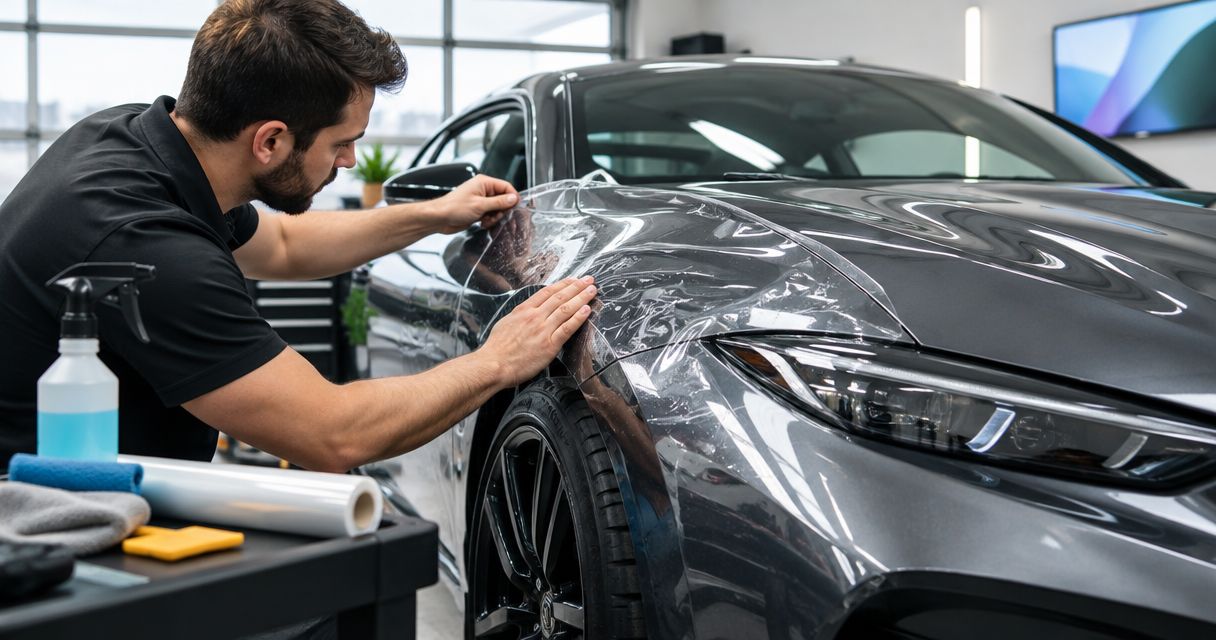
Best overall shortlist: XPEL. Best for gloss-versus-satin comparisons: LLumar. Best for hydrophobic-film shopping: SunTek. Best for documentation-focused buyers: 3M. Best for custom finishes: STEK. This 2026 guide compares paint protection film brands by buying priorities, then explains what to check before you choose an installer.
- Best paint protection film brands compared: start with XPEL, then match LLumar, SunTek, 3M, or STEK to your priorities.
- Paint protection film addresses road-debris damage; ceramic coating focuses on surface care and easier cleaning.
- Spiffymeofficial provides mobile detailing and ceramic coatings for Orange County car owners, not a verified film-installation service.
- Choose the exact film, coverage plan, and installer together; a brand name alone does not define the finished job.
Why this matters
Paint protection film, often called PPF, is a physical layer applied over automotive paint. It helps protect covered surfaces from stone chips and other surface damage. Ceramic coating is a different treatment: it adds a thin protective surface but does not replace the impact barrier of film.
Spiffymeofficial is a fit for Orange County car owners seeking mobile detailing or ceramic coating, not a substitute for a verified PPF installer. You can review Spiffymeofficial when your immediate need is interior detailing, exterior detailing, or ceramic coating.
For film, your decision includes more than the manufacturer. The exact product, paint preparation, panel coverage, edge treatment, and installation workmanship all affect what you receive. Compare those details before treating a familiar logo as the answer.
What makes the best paint protection film brand?
Use these criteria to evaluate your 2026 shortlist before you compare proposals:
- Protection goal: Decide whether you want a barrier against road debris, a different finish, or easier surface maintenance. These goals are not interchangeable.
- Exact film identity: Ask for the manufacturer and product line in writing. Brand-level descriptions do not establish a specific film's properties.
- Finish compatibility: Compare gloss, satin, matte, or colored options against the appearance you want. View a physical sample rather than relying on a screen.
- Coverage and edges: Specify panels, partial versus full coverage, visible seams, and edge treatment. A vague description leaves too much unresolved.
- Installer workmanship: Inspect completed work for alignment, trapped contamination, lifted edges, and clean trimming. Ask who performs the installation.
- Written support: Read the applicable warranty and care instructions. Separate material coverage from the installer's responsibility for workmanship.
A strong proposal answers all six questions without making you infer the scope. Reject brand-only comparisons that leave the actual film unnamed.
Paint protection film brands at a glance
These are buying-guide recommendations, not a measured performance ranking. The table assigns each brand a distinct starting point; individual product lines still need comparison.
| Brand | Best for | Standout consideration | Key limitation |
|---|---|---|---|
| XPEL | General shortlist | Established automotive PPF range with gloss and satin options | The name alone does not specify the film or installation scope |
| LLumar | Finish comparison | Gloss and matte-finish automotive PPF options | Appearance depends on the exact film and underlying paint |
| SunTek | Surface maintenance | Automotive PPF options with hydrophobic surface features | Water repellency does not eliminate washing or contamination |
| 3M | Documentation review | Manufacturer-issued automotive film information and care guidance | Material documentation does not establish installer workmanship |
| STEK | Custom appearance | Automotive protective films in different finishes and colors | Appearance-focused choices need sample checks and exact product identification |
Choose film for a physical barrier and ceramic coating for a surface-care goal. Neither treatment repairs existing paint defects. If scratches, chips, or damaged clear coat are your main concern, discuss those conditions before selecting protection.
1. XPEL: best paint protection film brand for a general shortlist
XPEL offers automotive paint protection films, including clear gloss and satin-finish options. It is a practical first brand to investigate when you want conventional paint protection without making a finish change the main objective.
For your 2026 comparison, start with the exact XPEL product proposed for your vehicle. Then check what the installer intends to cover and how the edges will be handled. The manufacturer name is the beginning of that conversation, not the complete specification.
XPEL pros:
- Offers automotive PPF options for different finish preferences.
- Gives you a clear manufacturer reference for product identification.
- Supports a comparison centered on film, coverage, and installation details.
XPEL cons:
- Different XPEL products should not be treated as identical.
- A recognized brand does not guarantee clean edges or correct installation.
Best for: Owners building a general-purpose shortlist for clear paint protection.
Ask the installer to show a finished vehicle with comparable panel shapes. Inspect curves, recesses, and exposed edges rather than only the broad center of the hood. Those details make the workmanship easier to evaluate.
Verdict: Buy only after the exact XPEL film and coverage plan are documented.
2. LLumar: best paint protection film brand for finish comparison
LLumar offers automotive PPF in gloss and matte-finish forms. It belongs on your shortlist when preserving a glossy appearance or changing the visual finish is a central part of the decision.
A finish sample helps you distinguish surface sheen from paint color. Look at the sample in daylight and shade, and ask how uncovered panels would look beside covered panels. Partial coverage deserves particular attention when the film changes the finish.
LLumar pros:
- Provides a useful starting point for gloss-versus-matte decisions.
- Lets you evaluate protection and appearance as separate requirements.
- Offers manufacturer product information for checking the proposed film.
LLumar cons:
- A sample on different paint does not show your exact finished appearance.
- Mixed covered and uncovered areas require a deliberate finish plan.
Best for: Owners who want to compare surface finishes before committing to coverage.
Do not choose a finish from a promotional photograph alone. Reflections, lighting, and image processing change how paint looks on a screen. Ask for a physical sample and examples of completed work.
Verdict: Buy LLumar when the finish sample and panel plan match your intended appearance.
3. SunTek: best paint protection film brand for surface maintenance
SunTek offers automotive PPF options with hydrophobic surface features. That makes it a relevant shortlist choice when you want physical paint protection and want to examine how the film's outer surface behaves during cleaning.
Hydrophobic means water-repelling. It does not mean dirt-proof, stain-proof, or maintenance-free. Ask which properties belong to the quoted SunTek film itself and which depend on a separate treatment applied over it.
SunTek pros:
- Includes options that combine protective film with hydrophobic surface features.
- Gives you a specific surface property to compare between product lines.
- Fits a discussion about washing, drying, and ongoing film care.
SunTek cons:
- Water repellency does not remove the need for regular cleaning.
- Brand-wide claims are insufficient when the quoted product remains unnamed.
Best for: Owners prioritizing the maintenance characteristics of their protective film.
Ask for the care instructions before installation. Confirm the recommended washing products, drying method, and restrictions on additional treatments. Keep that guidance with your installation records rather than relying on remembered advice.
Verdict: Buy SunTek when the exact film's care requirements match how you maintain your vehicle.
4. 3M: best paint protection film brand for documentation-focused buyers
3M manufactures automotive paint protection film and publishes product and care information. It is a sensible comparison candidate when you want to work through written specifications and responsibilities before authorizing installation.
Documentation matters most when it names the actual product. Ask the installer to connect the proposal to the applicable manufacturer information, then explain the separate workmanship terms. A material warranty and a promise to correct installation defects are different commitments.
3M pros:
- Provides a named manufacturer for verifying product information.
- Supports a document-led comparison of film properties and care requirements.
- Offers a clear basis for asking about applicable warranty terms.
3M cons:
- Manufacturer documents do not prove the quality of an individual installation.
- General brand literature cannot replace the exact product's terms.
Best for: Owners who want written specifications and support details before booking.
For a 2026 proposal, retain the product name, covered panels, installation record, and applicable care instructions together. Ask who handles a concern about the material and who handles a concern about an edge or seam.
Verdict: Buy 3M when the paperwork identifies both the film and the installer's responsibilities.
5. STEK: best paint protection film brand for custom finishes
STEK offers automotive protective films that include different finishes and colors. It belongs on the shortlist when you want protection and an appearance change rather than clear coverage alone.
First confirm that the proposed product is paint protection film. An appearance-changing wrap and a protective film are not interchangeable simply because both cover painted panels. Ask the installer to identify the material and explain its intended function.
STEK pros:
- Offers options for owners considering a different exterior appearance.
- Makes finish selection part of the protection conversation.
- Gives you a reason to compare physical samples before approving the work.
STEK cons:
- Finish changes make uncovered areas and seams more noticeable.
- Removal, care, and repair requirements need product-specific clarification.
Best for: Owners making a deliberate color or finish change alongside paint protection.
Inspect samples beside the vehicle's trim, wheels, and uncovered surfaces. Ask how a damaged panel would be handled later, including whether the replacement material would need an appearance check against the existing installation.
Verdict: Buy STEK only after confirming the material, finish, and repair approach.
How to compare installation proposals
Request 2 written quotes for the same coverage plan. This is a comparison step, not a requirement to choose the cheaper proposal. Different panel scopes make otherwise detailed quotes difficult to evaluate.
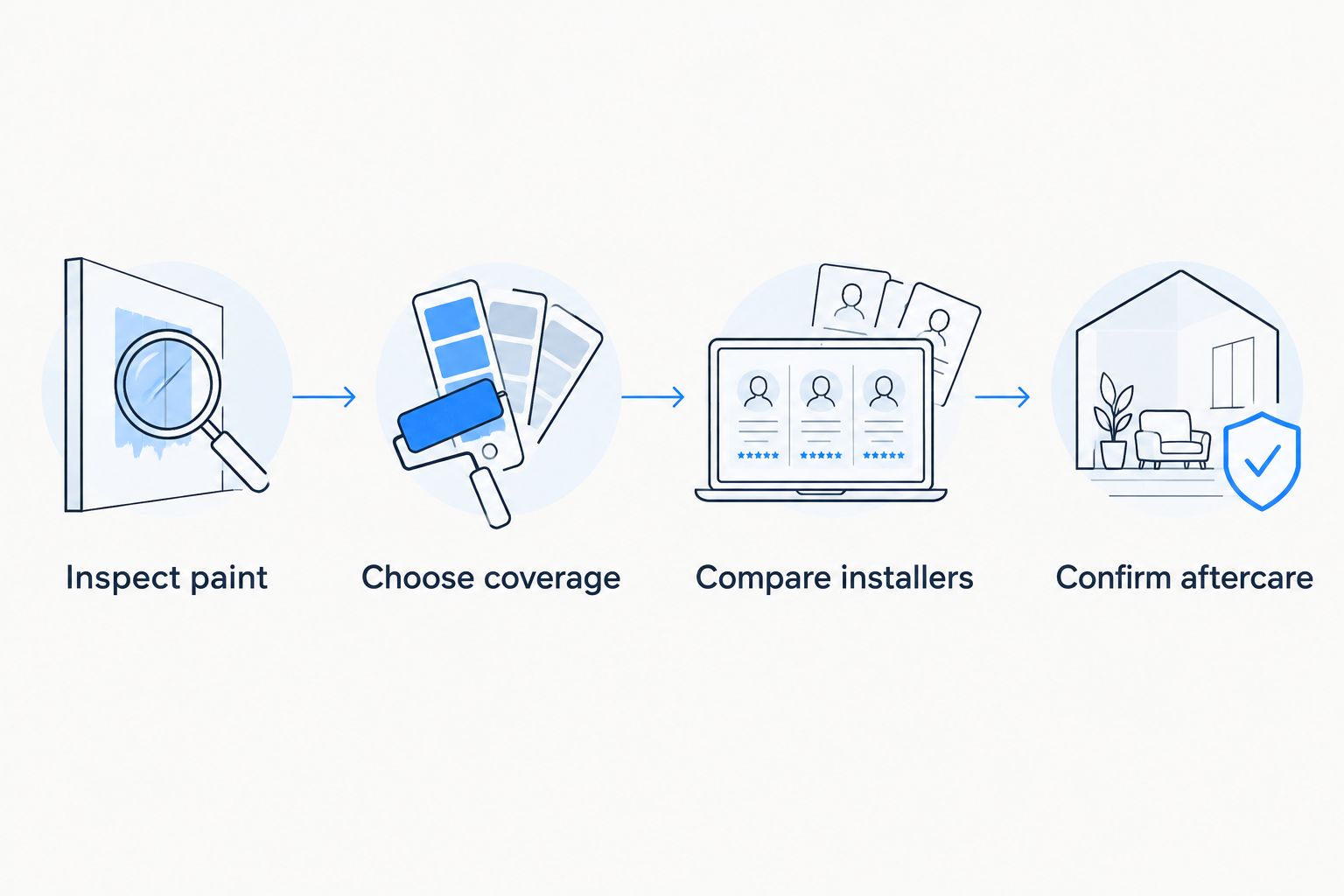
Use this sequence:
- Inspect paint: Send 3 photos showing the front end, a representative side panel, and the main area of concern. Describe existing chips, scratches, repainting, or repairs.
- Choose coverage: Identify the panels you want protected. Ask whether coverage is partial or full and where visible boundaries will sit.
- Compare installers: Review completed work and ask who prepares the paint, installs the film, and checks the result.
- Confirm aftercare: Get written washing instructions, inspection guidance, and the process for reporting a problem.
This sequence separates the vehicle's current condition from the product choice. It also keeps a ceramic-coating recommendation from being mistaken for an answer to a stone-chip concern.
Before you authorize work, ask how existing defects will be treated. Film covers a surface; it does not make damaged paint new. Any correction or repair should appear separately in the agreed scope.
Keep mobile detailing separate from film installation
Spiffymeofficial provides mobile interior and exterior detailing and ceramic coatings in Orange County. These services address cleaning and surface care. Do not interpret that service list as confirmation of PPF installation.
If detailing or ceramic coating matches your goal, request a quote with your vehicle details, current condition, desired service, and location. Confirm the proposed scope and booking arrangements directly before approving work.
Request a detailing quote
Describe your vehicle and ask about mobile detailing or ceramic coating in Orange County.
How these brands were ranked
This 2026 guide assigns brands to distinct buying priorities: general protection, finish selection, surface maintenance, documentation, and custom appearance. The recommendations use established product-category characteristics, not proprietary testing or an unsupported durability leaderboard.
The exact film and installation proposal matter more than a blanket brand ranking. Compare product-specific information against the criteria above, and do not transfer a feature from one product line to every film carrying the same logo.
Which paint protection film brand should you choose?
Start with XPEL if you are undecided about clear paint protection. Add LLumar when finish selection drives the decision, SunTek when surface maintenance is central, 3M when you want a document-led comparison, and STEK when changing appearance is part of the brief.
For your final 2026 decision, choose the proposal that identifies the film, addresses your paint's condition, specifies the panels, and explains aftercare. Hold any proposal that leaves those points unresolved.
FAQ
What's the best paint protection film brand for my car?
XPEL is the default shortlist recommendation in this guide, but the final choice depends on the exact film and installation plan. Compare LLumar, SunTek, 3M, and STEK when finish, maintenance, documentation, or custom appearance changes your priorities.
Is XPEL better than LLumar?
This guide does not establish a measured performance winner between XPEL and LLumar. Compare the specific films, physical finish samples, covered panels, and installer workmanship rather than the brand names alone.
Is paint protection film better than ceramic coating?
Paint protection film is the relevant choice for a physical barrier against stone chips; ceramic coating serves a different surface-care purpose. Choose according to the problem you want to address rather than treating the treatments as substitutes.
Does Spiffymeofficial install paint protection film?
PPF installation is not a verified Spiffymeofficial service in the supplied service information. The confirmed services are mobile interior and exterior detailing and ceramic coatings for Orange County car owners.
Will paint protection film hide existing scratches?
Paint protection film is not a repair for existing scratches, chips, or damaged clear coat. Have the paint assessed and agree on any preparation or repair before installation.
Should I protect the whole car or just the front?
Choose coverage according to the panels you want protected and whether the film changes the finish. Ask the installer to show the boundaries, seams, and uncovered areas before you approve partial coverage.
What should I ask a PPF installer before booking?
Ask for the exact film name, covered panels, preparation scope, edge treatment, care instructions, and written support terms. Review completed installations and confirm who handles material concerns versus workmanship concerns.
One last thing
Ask to see the edges, not just the reflections. A glossy hood photograph tells you little about seams, trimming, or coverage around complicated shapes. Make those details part of your inspection before you sign off.


