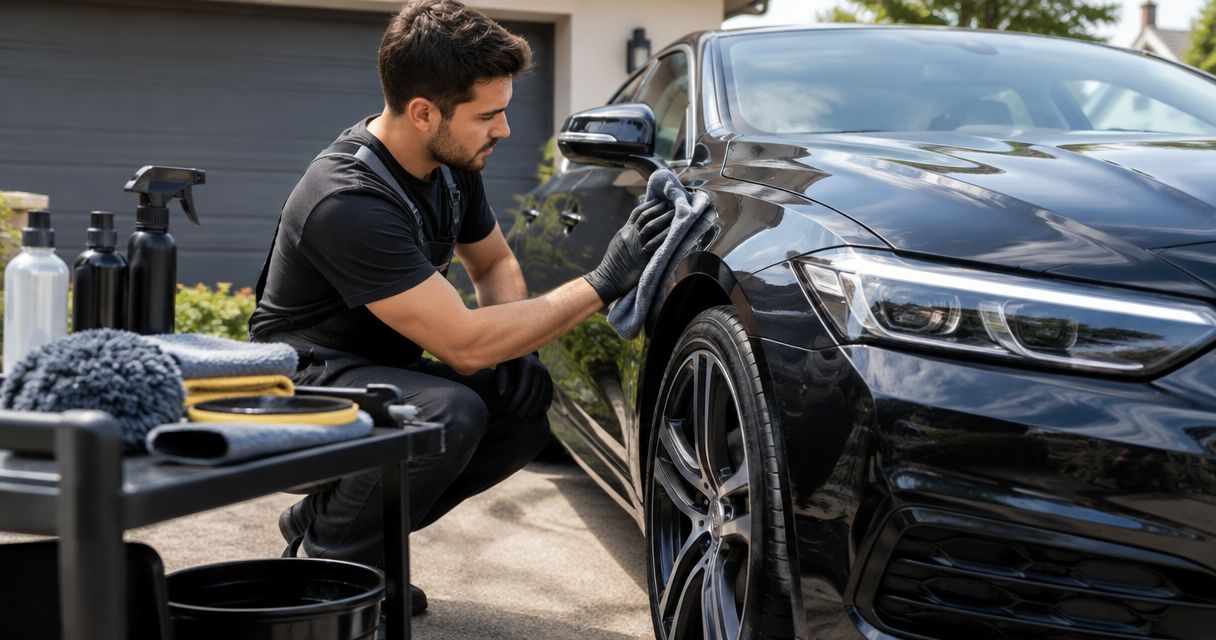
Private-seller car detailing is cleaning and preparing a vehicle with the aim of presenting its actual condition clearly to prospective buyers. Unlike routine maintenance detailing, sale preparation should focus on visible dirt, cabin cleanliness, and accurate listing photos—not treatments you cannot justify before handing over the keys.
- Car detailing for private car sellers should prioritize clean interiors, clear glass, and accurate listing photos.
- Spiffymeofficial mobile detailing fits Orange County private sellers seeking interior and exterior cleaning at their location.
- Choose presale detailing around the vehicle’s condition; ceramic coating is not a prerequisite for selling.
- Separate cosmetic cleaning from mechanical repairs, and disclose defects that remain after detailing.
Why car detailing matters for private sellers
When you sell privately, you manage the cleaning, listing, buyer questions, and vehicle handover yourself. A clean cabin and exterior let you show the vehicle without loose belongings, dirty glass, or road grime obscuring its condition.
Detailing prepares the presentation; it does not establish mechanical condition or guarantee a higher selling price. Keep service records and defect disclosures separate from the cleaning work. Buyers need both a clear view of the car and an honest account of its history.
For your 2026 sale, choose work around what the car needs now. If an animal regularly rides with you, the guide to interior detailing products for pet hair removal addresses a specific cabin-cleaning problem rather than a general upgrade.
Prepare your car for a private sale
Inspect the car before choosing services
Start with a manual inspection in daylight. Walk around the exterior, then sit in each seating area and check the trunk. Separate removable dirt from damage: a dirty door panel needs cleaning, while a torn seat needs disclosure or a separate repair decision.
Write a short condition list before requesting any work. This prevents a broad request to make the car look new from becoming an unclear scope. Photograph existing marks so you can distinguish what cleaning improved from what remains unchanged.
Build your inspection around 3 areas: cabin, exterior, and cargo space. Check concealed spaces too; a clean dashboard does not mean the seat rails or spare-wheel compartment are clean.
- Note stains, pet hair, debris, and noticeable odors.
- Check glass, mirrors, wheels, and visible paint contamination.
- Record scratches, chips, dents, tears, and worn trim separately.
- Identify belongings and documents that must leave the car.
- Flag leaks or warning lights for mechanical attention, not detailing.
Clear the cabin and remove loose dirt
The manual route comes first: empty the vehicle, remove the mats, collect rubbish, and vacuum accessible surfaces. Use attachments that suit the area, and avoid dragging hard edges across trim. Consult the vehicle manual before applying cleaners to screens or sensitive finishes.
Remove personal items before anyone begins cleaning. Check the glove compartment, console, seat-back pockets, and spaces beneath the seats. Separate records you intend to give the buyer from paperwork containing information you do not need to share.
Do not cover an odor with fragrance and assume the problem is solved. Look for its source. Damp upholstery, forgotten food, and spills need different responses; persistent moisture also calls for investigation beyond cosmetic cleaning.
- Empty door pockets, storage trays, and the cargo area.
- Vacuum seats, carpets, seams, and accessible seat tracks.
- Clean removable mats according to their material.
- Check child-seat areas and pet travel spaces.
- Keep necessary sale documents outside the cleaning area.
Match the detailing service to the actual condition
Continue yourself when the work is straightforward and you have suitable tools. For ingrained dirt, extensive pet hair, or a larger interior-and-exterior job, request professional help with a written scope rather than choosing by a service label alone.
Spiffymeofficial mobile detailing fits Orange County private sellers who want interior and exterior cleaning at their location. The business provides mobile interior detailing, exterior detailing, and ceramic coatings. That service range does not mean every seller needs every treatment.
Use Spiffymeofficial to start a quote inquiry. Describe the vehicle and its condition, then ask how to book once the scope is agreed. Confirm your address is covered; an Orange County service description is not confirmation of every individual appointment location.
For a 2026 listing, request sale-focused cleaning and ask which additional work addresses an identifiable problem. The limitation of professional detailing is simple: cleaning cannot substitute for repairs, and appointment timing still needs confirmation.
- Provide the vehicle type and clear condition photos.
- Name the problems: stains, hair, dirty wheels, or contaminated glass.
- Ask what the quoted interior and exterior work includes.
- Confirm location requirements and access before booking.
- Request approval before work outside the agreed scope.
Clean the exterior without concealing defects
If you wash the car yourself, use vehicle-appropriate products and follow their instructions. Work on a suitable surface with safe drainage, and check local or property rules before washing. Keep wheel-cleaning tools separate from tools used on painted panels.
Cleaning, polishing, and coating are different tasks. Washing removes dirt; polishing changes the paint surface through abrasion; a ceramic coating adds a protective treatment. Do not treat those services as interchangeable, or assume a coating repairs scratches.
For a car being sold in 2026, decide whether paint correction or coating has a clear purpose before authorizing it. A clean, accurately photographed finish is the priority; ceramic coating is optional. Ask a professional to assess unfamiliar paint defects rather than experimenting immediately before listing.
- Wash away loose dirt before addressing bonded contamination.
- Clean wheels with products suited to their finish.
- Clean exterior glass and mirrors without leaving residue.
- Inspect chips and scratches after the car is clean.
- Photograph remaining defects rather than hiding them with angles.
Check the cabin after it dries
Do a manual inspection once cleaned surfaces are dry. Look at seats, carpets, mats, glass, and touchpoints in normal daylight. Wet upholstery can look different from dry upholstery, so inspect the finished condition rather than approving the job mid-process.
Ask about drying and use instructions when booking any wet interior cleaning. Do not schedule buyer access around an assumed drying time. The material, cleaning method, and conditions determine when the vehicle is ready.
Use 2 inspection passes: daylight and interior lighting. Daylight helps reveal glass residue and visible stains; cabin lighting helps you inspect storage areas and lower surfaces. If you book Spiffymeofficial, confirm which areas the agreed service covers and how to raise a concern about the finished work.
- Check seats and mats for dampness before reinstalling or using them.
- Inspect interior glass from more than one viewing angle.
- Look beneath seats and along carpet edges.
- Check whether the original odor remains without added fragrance.
- Confirm controls and displays are free of cleaning residue.
Photograph the clean car honestly
Take listing photographs after cleaning and before ordinary use introduces fresh dirt. Use consistent daylight, avoid heavy filters, and include both the overall vehicle and visible defects. Cleaning should make the car easier to assess, not harder.
Prepare 6 photo groups: exterior, wheels, seats, dashboard, cargo area, and defects. These are a practical shooting checklist, not a requirement imposed by a marketplace. Add any images the platform requests, and inspect every photograph for reflections, unreadable details, or exposed personal information.
Your 2026 listing should distinguish maintenance, repairs, and detailing. Describe cleaning work accurately, but do not present a fresh detail as proof that the car has no mechanical problems. Keep supporting service documentation where buyers can review it.
- Photograph the exterior from several consistent angles.
- Show front and rear seating areas without hiding wear.
- Include the cargo area and relevant accessories being sold.
- Capture chips, scratches, tears, and other known defects clearly.
- Remove location-sensitive or personal details from the frame.
Maintain the presentation until handover
Once the car is ready, avoid starting another major cleaning project between buyer visits. Use simple upkeep: remove new rubbish, address fresh spills appropriately, and wipe glass with a suitable clean cloth. Keep the vehicle in its documented condition as far as practical.
Build a repeatable viewing routine rather than relying on memory. Check the cabin, exterior, and documents before each appointment. A buyer seeing the car after rain or normal driving should still be able to compare its condition with the listing.
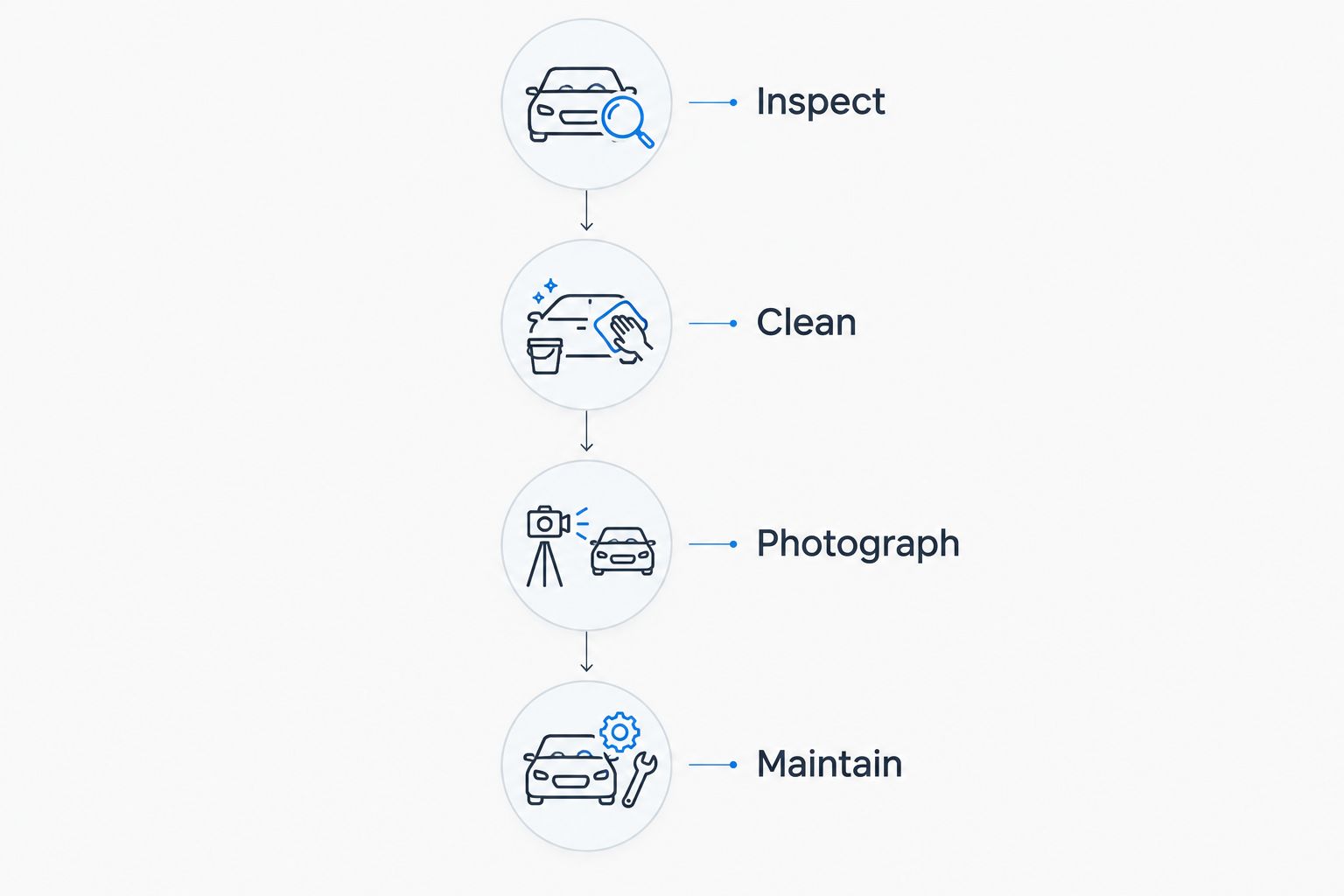
The sale-preparation sequence is Inspect, Clean, Photograph, Maintain. Finish the substantive cleaning before photographing; then maintain that presentation until the buyer takes possession.
Before handover, remove your belongings again. Keep records intended for the buyer separate from personal paperwork, and follow the vehicle manufacturer’s instructions for removing saved personal data.
- Remove fresh debris before each viewing.
- Check mats, glass, and visible exterior dirt.
- Keep listing photos consistent with the car’s current condition.
- Remove personal items and saved data before handover.
- Give the buyer agreed records without unrelated personal documents.
Compare detailing options for private sellers
Choose the option that solves the car’s actual cleaning problem. Comparing DIY cleaning, mobile detailing, and paint treatments only makes sense when their scope is clear. None is a substitute for mechanical inspection or honest disclosure.
| Option | Best for | Main benefit | Key limitation |
|---|---|---|---|
| DIY sale preparation | Sellers with manageable dirt and suitable tools | You control the sequence and inspect as you clean | Technique and material compatibility remain your responsibility |
| Mobile interior detailing | Sellers dealing with cabin dirt, stains, or pet hair | Professional attention focused on the passenger and cargo areas | Exterior cleaning is not implied; confirm the scope |
| Mobile interior and exterior detailing | Sellers needing both cabin and exterior cleaning | Covers both presentation areas when included in the agreement | Cleaning does not repair dents, tears, or mechanical faults |
| Paint correction | Sellers with paint defects requiring professional assessment | Addresses suitable surface defects through polishing | Not every defect is correctable, and abrasive work needs assessment |
| Ceramic coating | Sellers with a specific reason to add paint protection | Adds a protective treatment to a prepared surface | Does not replace cleaning, repair damage, or establish sale value |
Spiffymeofficial offers mobile interior and exterior detailing and ceramic coatings. For a private sale, ask for a quote based on the vehicle’s condition rather than requesting the broadest possible treatment. Confirm the total quote, inclusions, and booking arrangements before authorizing work.
Request a sale-preparation quote
Describe your vehicle, its condition, and the interior or exterior work you want assessed.
Common mistakes private sellers make
- Buying protection before addressing visible dirt. A coating does not solve a neglected cabin. Prioritize the areas buyers will inspect, then evaluate optional treatments separately.
- Treating detailing as a repair. Clean paint still has chips; clean upholstery still has tears. List remaining defects and arrange mechanical work separately when needed.
- Photographing before the work is finished. Wet seats, leftover belongings, and partly cleaned wheels create an inconsistent record. Finish, inspect, and then photograph.
- Requesting an undefined package. Ask what surfaces and tasks are included. A service name alone does not tell you whether pet hair, stain treatment, or cargo-area cleaning is covered.
- Assuming cleaning guarantees a better sale result. Detail for clear presentation, not an unsupported return. The car’s condition, documentation, and asking terms remain separate decisions.
FAQ
What's the best car detailing for private car sellers?
The best car detailing for private car sellers is the scope that addresses the vehicle’s actual dirt and presentation problems. Prioritize interior cleanliness, exterior washing, and clear glass before considering optional paint treatments.
Should I detail my car before taking listing photos?
Yes—finish cleaning and inspect the dry result before taking listing photos. Show the clean vehicle and include clear photographs of defects that remain.
Is mobile detailing suitable before a private car sale?
Mobile detailing suits sellers who want cleaning performed at their location. Confirm address coverage, access requirements, service scope, and booking arrangements with the provider.
Do I need ceramic coating before selling my car?
No, ceramic coating is not a prerequisite for a private sale. Consider it only when you have a specific reason for adding paint protection, not as a substitute for cleaning or repairs.
Can detailing remove every stain or scratch?
No, detailing cannot guarantee removal of every stain or scratch. Ask for an assessment and keep any remaining damage visible in your listing and disclosures.
How do I request a presale detailing quote?
Provide the vehicle type, location, condition photos, and a list of the cleaning problems you want addressed. Ask for the total quote, included work, additional-work approval process, and booking instructions.
What should I remove before an interior detail?
Remove personal belongings, rubbish, and documents that do not need to stay in the car. Check pockets, storage compartments, beneath seats, and the cargo area before work starts.
One last thing
A clean car can still contain your information. Before handing over the keys in 2026, check saved navigation destinations, paired phones, garage-door settings, and personal paperwork. Follow the manufacturer’s reset instructions, and avoid deleting maintenance records the buyer needs.
Finish the sale preparation with a privacy check, not another optional treatment. It is a separate task from detailing and belongs on your handover checklist.


