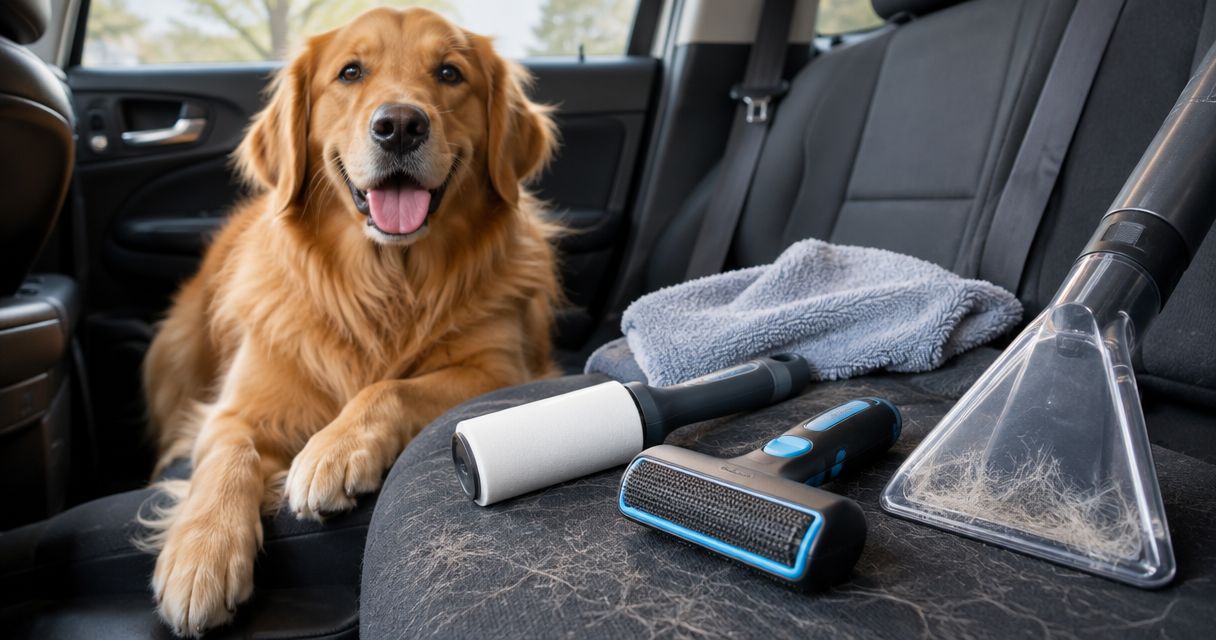
Best overall: a rubber pet-hair brush paired with a vacuum. Best for carpet edges: a vacuum crevice attachment. Best for loose hair on smooth seats: a microfiber cloth. This 2026 guide ranks the best interior detailing products for pet hair removal by surface, cleanup task, and risk of damage.
- The best interior detailing products for pet hair removal combine a rubber pet-hair brush with a vacuum.
- Choose upholstery brushes for carpet fibers, lint rollers for loose surface hair, and microfiber cloths for smooth seats.
- Test every contact tool on a hidden area before cleaning visible upholstery.
- Spiffy Me provides mobile interior detailing for Orange County car owners who prefer service over DIY cleaning.
Why this matters
Pet hair on top of a seat and pet hair caught in carpet fibers need different tools. A vacuum collects loose hair, but a contact tool helps gather strands caught in fabric. Pressing harder is not a substitute for choosing the right tool.
Start with the surface, not the product label. Carpet, woven upholstery, leather, and perforated seats require different handling. If you prefer professional help, Spiffy Me provides mobile interior detailing in Orange County; describe the affected surfaces when requesting a quote.
Spiffy Me is best for Orange County car owners who want mobile interior detailing rather than DIY cleanup. Confirm the pet-hair removal scope before booking instead of assuming every interior service includes the same work.
What makes the best pet-hair removal tools in 2026
Use these criteria to choose a tool that fits your interior:
- Surface fit: Choose tools intended for your upholstery material. A tool suited to carpet is not automatically suitable for leather or delicate trim.
- Hair release: Look for a contact tool that gathers embedded strands without requiring aggressive pressure.
- Hair collection: Pair a loosening tool with a vacuum so displaced hair leaves the car rather than moving elsewhere.
- Access: Use an attachment that reaches seat seams, carpet edges, and accessible gaps without forcing parts apart.
- Damage control: Favor gentle passes and a hidden-area test over stiff edges, abrasive scraping, or hard scrubbing.
- Repeat cleanup: Choose tools you can clear of collected hair during the job. A loaded brush or cloth needs cleaning before the next pass.
The practical starting setup is 2 tools: a surface-appropriate rubber brush and a vacuum. That is a recommended combination, not a claim that every car needs the same equipment. Smooth seats or delicate fabrics can change the choice.
Pet-hair removal tools at a glance: 2026 picks
These are tool categories, not named product endorsements. Choose the specific model according to its surface instructions and your vehicle's care guidance.
| Rank and tool | Best for | Standout function | Key limitation |
|---|---|---|---|
| 1. Rubber pet-hair brush | Embedded hair on suitable fabric | Gathers strands into collectable clumps | Can catch or stress delicate fibers |
| 2. Vacuum with crevice attachment | Carpet edges and accessible gaps | Collects released hair and loose debris | Suction alone does not release every embedded strand |
| 3. Upholstery brush | Working hair out of suitable carpet | Moves through carpet fibers to loosen hair | Stiff bristles can damage unsuitable materials |
| 4. Adhesive lint roller | Quick surface cleanup on fabric | Picks up loose hair without a separate collection step | Poor choice for deeply embedded hair |
| 5. Microfiber cloth | Loose hair on smooth seats and trim | Collects surface hair with gentle wiping | Does not reach deeply into carpet fibers |
The ranking follows the job: loosen embedded hair, collect it, then address what remains. You do not need every tool in the table. Choose the smallest set that matches your surfaces.
1. Rubber pet-hair brush: best for embedded hair on fabric
A rubber pet-hair brush uses contact with the upholstery to gather strands that ordinary vacuum passes leave behind. Work gently in a consistent direction, then vacuum the collected hair. Check the brush's stated surface suitability before using it on seats or carpet.
Rubber pet-hair brush pros:
- Gathers scattered strands into visible clumps.
- Gives you direct control over pressure and direction.
- Works alongside a vacuum rather than replacing collection.
- Lets you concentrate on a small affected area.
Rubber pet-hair brush cons:
- Repeated rubbing can stress delicate or already damaged fabric.
- The brush needs clearing as hair collects on it.
- Tight seams still require another way to collect loosened hair.
Best for: Embedded pet hair on compatible woven upholstery and carpet.
Test the brush on 1 hidden patch before cleaning a visible seat section. Stop if the fabric catches, pills, or changes appearance. A brush that gathers hair effectively on a floor mat can still be wrong for a seat insert.
Verdict: Buy for compatible fabric; skip on surfaces without confirmed suitability.
2. Vacuum with crevice attachment: best for edges and gaps
A vacuum collects the hair that a brush releases, along with loose debris. A crevice attachment directs suction into accessible seams and narrow spaces where a wider head does not fit. Keep the attachment moving and avoid scraping its edge across trim.
Vacuum with crevice attachment pros:
- Removes gathered hair from the interior.
- Reaches accessible carpet edges and seat seams.
- Collects loose crumbs and grit during the same cleanup.
- Supports both the initial pass and final collection.
Vacuum with crevice attachment cons:
- Suction alone leaves some strands caught in fabric.
- A hard attachment can mark trim if dragged carelessly.
- Deep or obstructed gaps remain difficult to access.
Best for: Collecting released hair around carpet borders, seat seams, and accessible gaps.
Vacuum loose grit before brushing. That keeps you from rubbing debris into upholstery while trying to lift hair. Do not force a nozzle into seat mechanisms or around wiring; clean only where the attachment fits without pressure.
Verdict: Buy as the collection tool; skip relying on suction alone for embedded hair.
3. Upholstery brush: best for pet hair caught in carpet
An upholstery brush moves through carpet fibers to loosen trapped strands. Select a brush whose instructions match the material, then use controlled passes rather than vigorous scrubbing. Follow with vacuuming so the loosened hair does not settle back into the carpet.
Upholstery brush pros:
- Helps release hair caught among carpet fibers.
- Lets you work across an affected floor area systematically.
- Gives you a separate option when a rubber brush catches on the material.
Upholstery brush cons:
- Stiff bristles can fray or roughen unsuitable fabric.
- Brushing without collection only relocates hair.
- A carpet brush is not a default tool for leather, screens, or glossy trim.
Best for: Suitable carpet surfaces that need gentle agitation before vacuuming.
Start with removable mats when their care instructions permit brushing. Inspect the backing and edges as well as the visible fibers. Damaged binding or loose material is a reason to stop, not to increase pressure.
Verdict: Buy for compatible carpet; skip stiff brushes on delicate upholstery.
4. Adhesive lint roller: best for quick surface touch-ups
An adhesive lint roller lifts loose strands from the surface of suitable fabric. It fits a small cleanup task, such as visible hair on a seat after a pet ride. Replace the loaded adhesive surface instead of pressing harder to make it collect more.
Adhesive lint roller pros:
- Collects loose hair directly onto the adhesive.
- Makes isolated surface touch-ups straightforward.
- Does not require a vacuum for the hair it captures.
Adhesive lint roller cons:
- Does not work through deeply embedded carpet hair.
- Used sheets create waste during repeated cleanup.
- Adhesive compatibility needs checking on delicate or treated surfaces.
Best for: Loose surface hair on compatible fabric seats or removable fabric accessories.
A lint roller is a finishing tool, not the foundation of a heavily soiled interior cleanup. If each fresh sheet fills immediately while embedded hair remains, switch to a suitable loosening tool and vacuum. Do not use adhesive as a shortcut on surfaces the roller manufacturer excludes.
Verdict: Buy for small fabric touch-ups; skip as your only tool for embedded hair.
5. Microfiber cloth: best for loose hair on smooth seats
A clean microfiber cloth gathers loose surface hair while you wipe smooth areas. Fold it to expose a clean face as hair accumulates. Use it gently around seat edges and trim, without pushing debris into seams or perforations.
Microfiber cloth pros:
- Fits controlled wiping on suitable smooth surfaces.
- Lets you change to a clean face during the job.
- Helps finish areas after loose grit has been vacuumed away.
Microfiber cloth cons:
- Does not release deeply embedded carpet hair.
- A dirty cloth can carry grit across the next surface.
- Loaded fabric needs cleaning before further use.
Best for: Loose hair resting on suitable smooth seats and interior trim.
Microfiber is the existing-tool option if you already have a clean cloth suitable for the job. It is not a reason to add a chemical cleaner. Follow the vehicle's care instructions whenever a surface requires cleaning beyond dry hair removal.
Verdict: Hold onto a suitable clean cloth; skip using it as a carpet extraction tool.
A practical pet-hair cleanup sequence for 2026
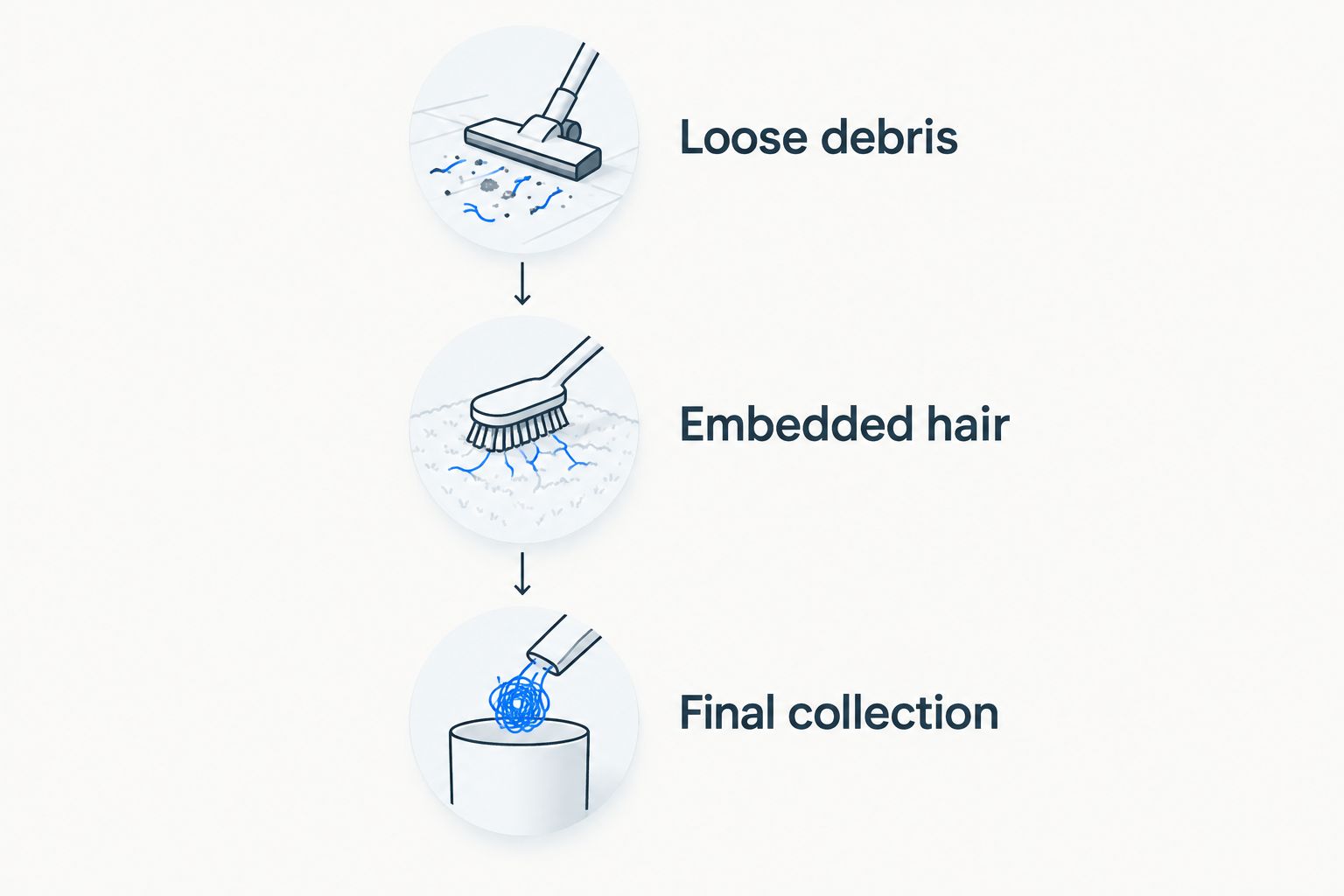
Use 3 stages: Loose debris, Embedded hair, Final collection. Separating the work prevents you from repeatedly brushing hair around the cabin without removing it.
Loose debris
Remove belongings and take out removable mats where practical. Vacuum loose grit and surface hair first. Keep the pet out of the vehicle during cleanup so freshly cleaned areas stay clear while you work.
Embedded hair
Test the contact tool, then work a manageable section of compatible fabric or carpet. Gather strands gently and clear the tool as needed. Stop if you see snagging, surface changes, or damaged stitching.
Final collection
Vacuum the gathered clumps and inspect accessible seams. Finish suitable smooth surfaces with a clean cloth. Check the area from another angle before moving on; scattered strands are easier to spot when you change your viewing position.
For perforated leather or worn upholstery, avoid pushing hair deeper into openings. Do not use abrasive scraping to chase the last visible strand. If safe access or material condition prevents further cleanup, stop and request a surface-specific assessment.
When mobile interior detailing is the better choice
Choose professional service when you do not want to handle the cleanup yourself or when the upholstery needs an assessment before further work. Spiffy Me provides mobile interior detailing in Orange County. Ask directly how pet hair fits into the proposed service.
For a useful 2026 quote request, provide:
- Vehicle details: Identify the vehicle and the seating material.
- Affected areas: Describe seats, carpet, mats, cargo space, and accessible gaps.
- Condition photos: Show the hair buildup and any worn or damaged upholstery.
- Requested result: State that pet-hair removal is a priority, not just general interior cleaning.
- Appointment details: Ask what access and preparation the visit requires.
Confirm the quoted scope before booking. Pet hair, odors, stains, and damaged upholstery are separate concerns; describing one does not communicate all the others. Ask which areas the service covers and what limitations apply.
Request an interior detailing quote
Describe your vehicle, affected surfaces, and pet-hair removal needs before booking.
How these tools are ranked
The ranking prioritizes surface fit, hair release, collection, access, and damage control. It is a task-based guide, not a claim of hands-on testing or measured performance between named products.
Rubber brushes lead for embedded hair on compatible fabric because they address the release step. Vacuums handle collection and access. Upholstery brushes, lint rollers, and microfiber cloths fill narrower roles rather than competing for the same job.
Which pet-hair removal tool should you choose?
For 2026, start with a suitable rubber pet-hair brush and a vacuum if embedded hair in fabric is your main problem. Choose a lint roller for a small surface touch-up, or a clean microfiber cloth for loose hair on suitable smooth seats.
Do not buy the entire list by default. Identify the material, choose the contact tool, and plan how you will collect the released hair. Spiffy Me is the mobile interior detailing option for Orange County owners who prefer to request service instead.
FAQ
What's the best interior detailing product for pet hair removal?
A surface-appropriate rubber pet-hair brush paired with a vacuum is the default choice for embedded hair on compatible fabric. The brush gathers strands, and the vacuum collects them; smooth or delicate surfaces need a different contact tool.
Is a rubber brush better than a lint roller for car seats?
A rubber brush is the better choice for embedded hair on compatible fabric, while a lint roller suits loose surface hair. Check both the tool instructions and the seat material before use.
Can I remove pet hair from my car with just a vacuum?
A vacuum removes loose hair but does not release every strand caught in carpet or upholstery. Use a suitable contact tool to loosen remaining hair, then vacuum again.
What's the best way to remove pet hair from leather seats?
Start by collecting loose hair gently with a clean microfiber cloth or an appropriate vacuum attachment. Follow the vehicle's leather-care instructions and avoid scraping or pushing hair into perforations.
Should I wet the seats before removing pet hair?
Do not wet the seats as the default pet-hair removal step. Begin with dry collection and surface-appropriate tools, and follow the material's care instructions if further cleaning is needed.
Does ceramic coating help remove pet hair inside a car?
Exterior ceramic coating does not address pet hair in seats or carpet. Interior pet-hair cleanup needs tools and methods suited to the affected upholstery.
How do I request mobile detailing for pet hair in Orange County?
Request a quote from Spiffy Me and identify pet-hair removal as a priority. Include your vehicle, upholstery material, affected areas, and photos, then confirm the service scope before booking.
One last thing
Clear the tool before working the next section. Hair stuck to a brush, cloth, or loaded adhesive sheet belongs in the collection step, not back on the seat. In your next 2026 cleanup, check the tool as carefully as the upholstery.