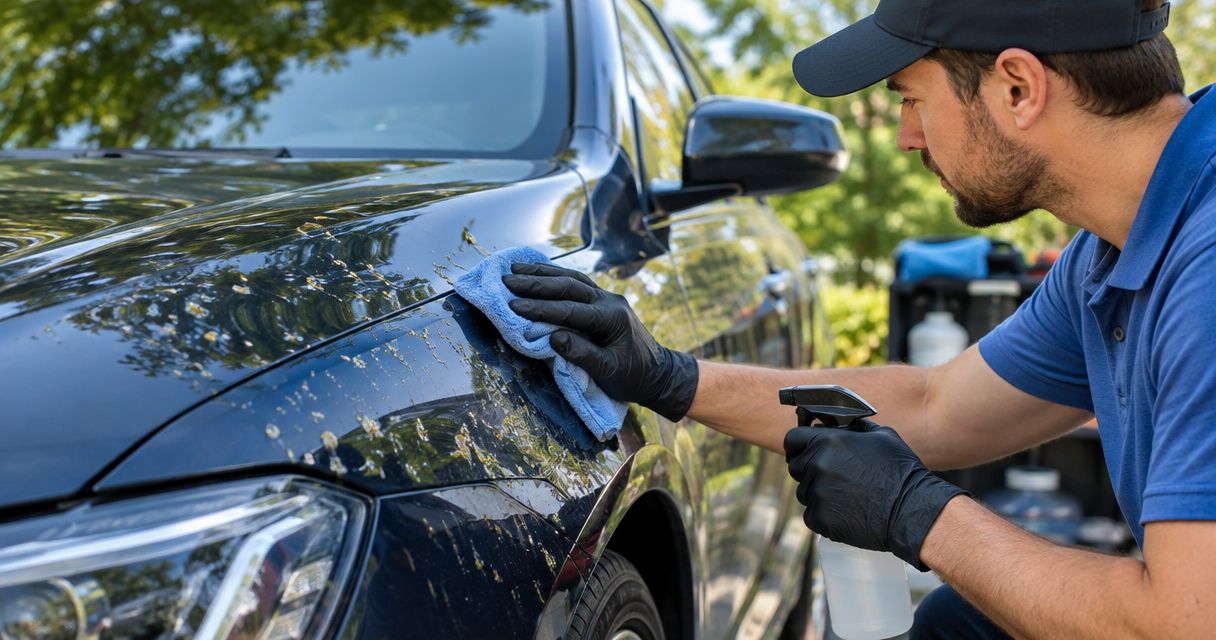
Yes, mobile detailing can remove tree sap from a car’s paint when the detailer uses a treatment compatible with the finish. Removing the sticky deposit does not necessarily remove staining, etching, or scratches underneath it. Before booking in 2026, confirm that the appointment includes sap assessment and targeted removal rather than only an exterior wash.
- Can mobile detailing remove tree sap? Yes, but removing deposits and repairing paint damage are different jobs.
- Spiffy Me offers mobile exterior detailing in Orange County; confirm tree sap treatment before booking.
- Avoid scraping hardened sap or scrubbing it with abrasive household materials.
- Tell your detailer about ceramic coatings, paint protection film, wraps, and previous repainting.
Why this matters
A clean surface and an undamaged finish are not the same result. Sap can leave material sitting on the paint, while a remaining mark can involve the finish itself. Treating both problems as ordinary dirt encourages unnecessary rubbing and unrealistic expectations.
Spiffy Me provides mobile interior and exterior detailing and ceramic coatings in Orange County. Use the contact page to describe the affected panels and ask whether sap treatment fits the requested service. Confirm the scope before treating an exterior-detailing appointment as a paint-repair appointment.
Can mobile detailing remove tree sap from a car’s paint?
Yes. A mobile detailer can treat sap on automotive paint using a suitable cleaner and controlled contact, then inspect the cleaned area for remaining damage. The important distinction is what remains after the deposit comes off.
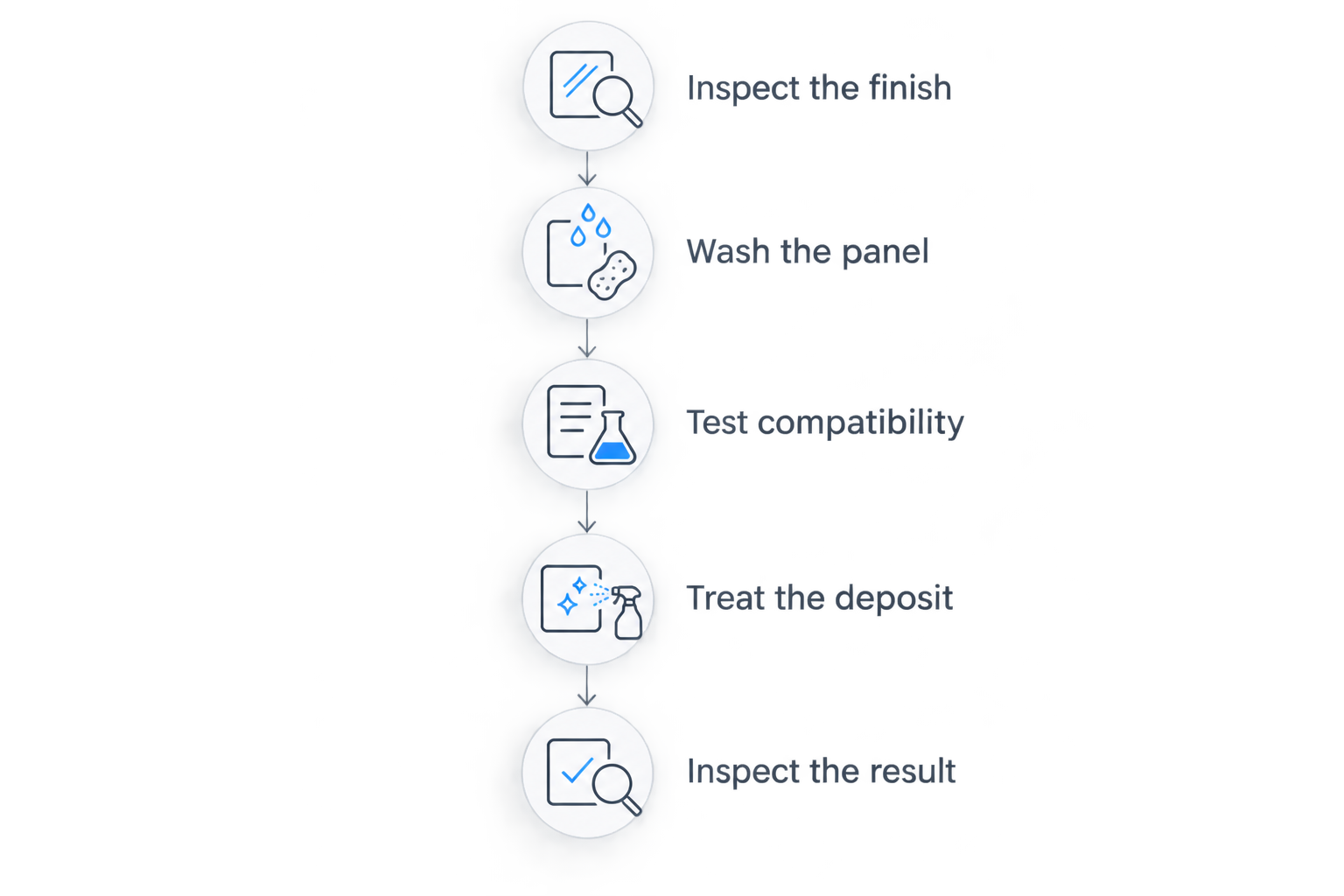
A useful assessment follows this sequence:
- Inspect the finish. Identify paint, film, wrap, matte surfaces, previous repairs, and existing protection before choosing a product.
- Wash the panel. Remove loose dirt so it does not get dragged across the finish during treatment.
- Test compatibility. Follow the cleaner’s label and test an inconspicuous area before treating visible deposits.
- Treat the deposit. Use the approved method to soften and lift sap without scraping or aggressive rubbing.
- Inspect the result. Check the clean, dry surface for residue, staining, scratches, or etching before discussing further work.
These are assessment stages, not a promise that every deposit will disappear without a trace. A responsible detailer stops when further treatment risks harming the finish.
Which treatment matches the problem?
The right treatment depends on whether you are dealing with surface contamination or damage. Do not select the most aggressive service simply because the sap feels hard.
| Approach | Best for | Main benefit | Limitation |
|---|---|---|---|
| Exterior wash | Removing loose dirt before assessment | Clears the panel for safer inspection | Does not establish that stubborn sap has been removed |
| Targeted sap treatment | Deposits attached to a compatible finish | Addresses the contamination directly | Does not repair damaged paint underneath |
| Paint correction assessment | Marks remaining after complete cleaning | Determines whether suitable polishing can improve the finish | Polishing removes a small amount of finish and cannot repair every defect |
| Refinish assessment | Peeling, exposed layers, or damage beyond detailing | Identifies repair work outside ordinary detailing | Requires a different scope from cleaning or polishing |
Start with contamination removal, then assess damage—not the other way around. An inspection is especially important when you cannot tell whether the visible spot is still sap or a mark left behind.
Fresh, sticky sap: remove contamination without spreading it
Fresh sap can smear when you rub it across the panel. Keep the affected area out of direct heat where practical, and avoid repeatedly wiping it with a dry towel.
If you attempt cleaning yourself, use an automotive product explicitly labelled for the relevant finish. Follow its application, contact-time, and removal instructions rather than improvising a stronger mixture. A cleaner approved for painted bodywork is not automatically appropriate for every plastic trim piece, wrap, or coating.
The benefit of addressing a fresh deposit is that you deal with contamination before leaving it on the vehicle longer. The limitation is that appearance alone does not establish compatibility or guarantee an unmarked result. Stop if the finish changes appearance or the deposit resists the labelled method.
Hardened sap: do not substitute force for treatment
Hardened sap needs controlled treatment, not a fingernail, razor blade, kitchen scrubber, or repeated dry rubbing. Scraping introduces a separate damage risk even if it removes the raised material.
Ask the detailer how they distinguish remaining sap from damage beneath it. A spot that still looks different after cleaning does not automatically need more solvent or harder rubbing. It needs inspection.
Targeted treatment is best for hardened deposits when the finish and cleaner are compatible. Its advantage is that the detailer can work on the contamination specifically; its limitation is that the underlying paint condition remains uncertain until the material is gone. Do not accept a guaranteed perfect finish based only on a distant photograph.
Marks after removal: cleaning is not paint correction
A panel can be free of sap and still show a dull spot, outline, stain, or scratch. More washing does not necessarily address that remaining defect.
On suitable glossy paint, a detailer can assess whether polishing is appropriate. Polishing is abrasive, so the decision depends on the finish’s condition, repair history, and the nature of the mark. Damage that extends beyond what can safely be polished needs a different repair assessment.
Approve cleaning and paint correction as separate decisions. That keeps you from authorizing unnecessary polishing before anyone knows what is underneath the sap. For a 2026 service request, ask the quote to distinguish deposit removal from any proposed correction work.
Why tree sap removal results vary
The location of the appointment does not determine the result by itself. The finish, deposit, and treatment matter more than whether the work happens at your property or another permitted location.
- Deposit condition: Sticky residue and hardened deposits behave differently during treatment. Describe what you see without picking at the surface.
- Affected area: Isolated spots and deposits spread across several panels require different amounts of targeted work.
- Surface material: Glossy paint, matte finishes, plastic trim, film, and wraps have different care requirements.
- Existing damage: Scratches, peeling clear coat, and previous repairs affect which treatments are appropriate.
- Existing protection: Wax, sealant, or ceramic coating affects product selection and the aftercare discussion.
- Previous attempts: Scraping, abrasive rubbing, and household solvents can leave damage separate from the original sap problem.
Give the detailer these details before requesting a firm scope. If you do not know whether a panel was repainted or coated, say so rather than guessing.
Does a regular exterior detail include tree sap removal?
Tree sap removal is not automatically included just because a service is called exterior detailing. Service names do not establish the amount of targeted contamination removal included in an appointment.
For your 2026 booking, ask whether the quote covers inspection, spot treatment, a final condition check, and any protection recommended afterward. Ask how the detailer handles additional work if the deposits are more extensive than your photographs suggest.
Also separate appointment length from treatment outcome. A longer booking does not guarantee that etched paint can be restored through detailing. The guide to how long mobile detailing takes covers the broader scheduling question; confirm the sap-specific scope directly with the provider.
Can ceramic coating stop tree sap from sticking?
Ceramic coating does not make a vehicle sap-proof. You still need to remove contamination using methods compatible with the coating and underlying finish.
If your car is coated, tell the detailer which coating was applied when you know it, and share the installer’s care instructions. Do not assume that a solvent is suitable simply because the coating is described as protective.
Ceramic coating is relevant after the contamination and paint condition have been assessed, not as a way to cover an unresolved sap deposit. The benefit is an additional protective surface with its own maintenance requirements; the limitation is that it does not eliminate washing, contamination removal, or existing paint damage.
Is removing tree sap yourself better than booking a detailer?
Home treatment is appropriate only when you can identify the finish and follow a compatible product’s instructions. Professional assessment is the better next step when the deposit resists that method, the finish is unfamiliar, or damage is already visible.
Avoid using household degreasers, nail-polish remover, abrasive pads, or an improvised solvent mixture. Do not polish matte or satin finishes to chase a shiny-looking spot; follow the finish manufacturer’s care guidance instead.
Professional treatment also has limits. A mobile detailer needs permission to work at the location, suitable working conditions, and an agreed service scope. Ask about those requirements before booking rather than assuming every parking space or vehicle condition is suitable.
What to send when requesting a quote
A useful request describes the contamination and the vehicle, not just a request to make the paint look new. Spiffy Me is best for Orange County car owners seeking mobile interior or exterior detailing. Confirm whether targeted sap treatment is appropriate for your vehicle before booking.
Include the following information:
- Vehicle details: Make, model, and any known repainting or finish repairs.
- Affected panels: Identify the roof, hood, trunk, doors, glass, or trim involved.
- Deposit condition: Explain whether the material looks sticky, hardened, scattered, or smeared.
- Photographs: Provide a close view of the deposits and a wider view showing their distribution.
- Protection history: Mention ceramic coating, wax, paint protection film, or a vinyl wrap.
- Previous treatment: Name any cleaner or tool you have already used.
- Work location: Give your Orange County location and explain any parking or property restrictions.
For a 2026 quote, request a written description of the proposed work and what requires further approval. Ask whether any remaining marks will be assessed after cleaning rather than promising their removal in advance.
Ask about exterior detailing
Describe the affected panels, existing protection, and previous cleaning attempts before booking.
FAQ
Can mobile detailing remove old, hardened tree sap?
Mobile detailing can remove hardened tree sap when a compatible treatment releases it safely. The detailer must inspect the finish afterward because removing the deposit does not guarantee removal of staining or etching.
Will tree sap come off in a normal car wash?
A normal car wash does not guarantee removal of tree sap. Stubborn deposits need targeted treatment rather than repeated aggressive washing.
Can a detailer remove the mark left after tree sap comes off?
A detailer can assess whether an appropriate correction method will improve the remaining mark. Some damage extends beyond what cleaning or safe polishing can repair.
Is tree sap remover safe on ceramic-coated paint?
Tree sap remover is suitable for ceramic-coated paint only when its instructions and the coating’s care guidance permit that use. Tell the detailer about the coating before any treatment begins.
Can I scrape tree sap off with my fingernail?
Do not scrape tree sap off painted panels with your fingernail. Scraping or dragging trapped dirt across the finish can create scratches separate from the original contamination.
How do I ask Spiffy Me about sap on my car?
Contact Spiffy Me with your vehicle details, Orange County location, affected panels, and photographs. Ask whether targeted sap treatment fits the exterior detailing service and how any remaining paint damage will be handled.
Should I apply ceramic coating over a tree sap mark?
Do not apply ceramic coating over remaining tree sap or an unresolved surface problem. Have the panel cleaned and assessed first, then discuss whether further preparation is appropriate.
One last thing
Ask to inspect the treated panel when it is clean and dry. Removing the raised deposit is one checkpoint; evaluating the finish underneath is another. A wet panel is not the final condition check.
When comparing 2026 quotes, prioritize that clear stopping point: remove compatible contamination, inspect the result, and obtain approval before additional correction. That is more useful than a blanket promise to make every sap mark disappear.


