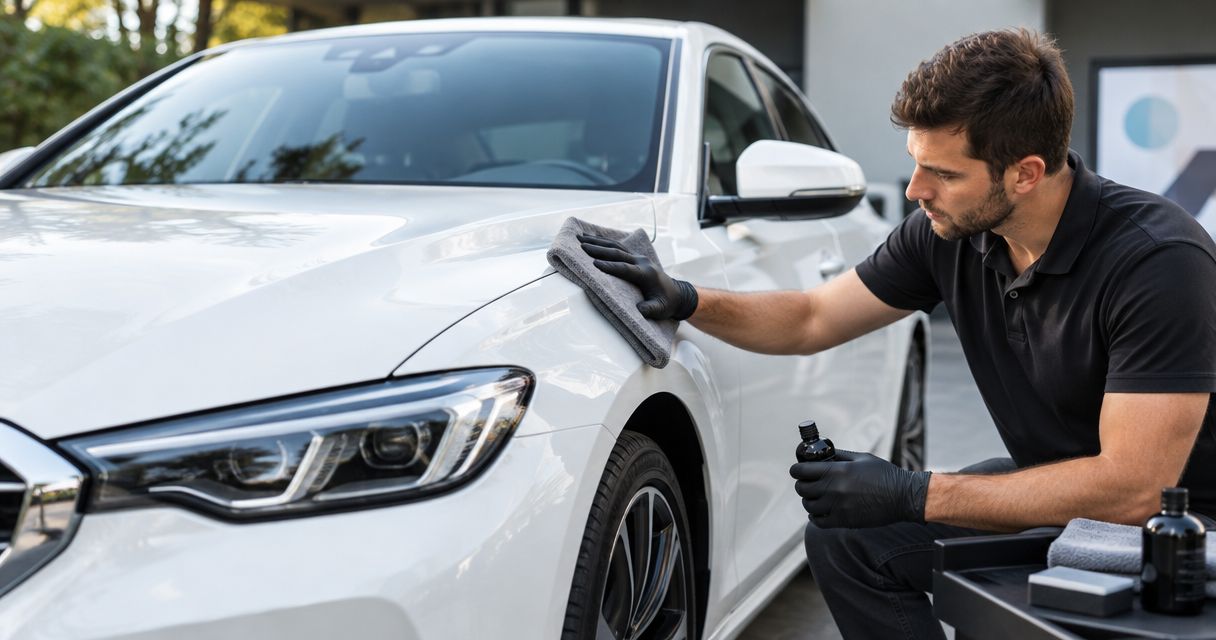
Best overall: professional ceramic coating after a paint inspection. Best for visibly marked paint: correction before coating. Best for experienced DIY owners: a consumer-applied coating. This 2026 guide compares ceramic coating for white cars by preparation, application demands, and maintenance—not bottle claims.
- Professional ceramic coating for white cars is the default choice when you want preparation and application handled together.
- Spiffy Me offers mobile ceramic coating services for Orange County car owners; request a vehicle-specific quote.
- Correct visible paint defects before coating if you want those defects removed.
- Consumer coatings suit experienced DIY owners; ceramic sprays serve a different maintenance role.
Why this matters
White paint does not need a coating just because it is white. It needs a clean, properly prepared surface and protection suited to how you wash, park, and use the vehicle.
Coating does not remove orange contamination spots, repair scratches, or make a car maintenance-free. Applying it before addressing those issues leaves the underlying problem in place.
Spiffy Me is best for Orange County owners seeking mobile ceramic coating service rather than a DIY application. Start with Spiffy Me if you want to discuss professional application, then confirm the preparation, application conditions, and aftercare included in your quote.
For your 2026 decision, separate three questions: what needs cleaning, what needs correcting, and what protection you want afterward. Those are different jobs.
What makes the best ceramic coating for white cars?
Judge the complete job, not a label aimed at a particular paint color.
- Surface preparation: Washing and appropriate decontamination come before coating. Remaining contamination interferes with assessing the paint accurately.
- Defect assessment: Inspect scratches, haze, and water marks before deciding whether polishing belongs in the work.
- Application control: The coating’s instructions determine suitable surfaces, application conditions, leveling, and curing requirements.
- Realistic protection: A coating is a surface treatment, not a substitute for protection against stone impacts or careless washing.
- Maintenance fit: Choose an option you can maintain with suitable washing, drying, and prompt contaminant removal.
- Clear service scope: A professional quote should distinguish preparation, correction, coating application, and aftercare rather than treat them as interchangeable.
A paint-color label cannot answer these questions. You need the coating’s instructions and an assessment of your actual vehicle.
Ceramic coating options at a glance for 2026
These are service and application routes, not a ranking of unverified product specifications. The final row is a maintenance alternative, not an equivalent replacement for an installed coating.
| Option | Best for | Standout feature | Key limitation |
|---|---|---|---|
| Professional mobile coating | Owners who want application handled for them | Professional application without taking on the work yourself | Location and application conditions need confirmation |
| Paint correction followed by coating | Owners bothered by visible paint defects | Addresses appearance before adding protection | Adds a separate preparation decision |
| Consumer-applied ceramic coating | Experienced DIY detailers | Direct control over preparation and application | You are responsible for application errors |
| Ceramic spray maintenance | Owners seeking a simpler maintenance step | Fits into routine exterior care | Not equivalent to every installed ceramic coating |
1. Professional mobile coating: best for hands-off application
Professional mobile ceramic coating suits owners who want someone else to assess preparation needs and handle application. Spiffy Me offers mobile detailing and ceramic coatings for Orange County car owners. Confirm the exact scope and whether your proposed location meets the requirements for the job.
White panels still need careful inspection. Application residue can be difficult to spot against a light finish, so checking the surface from different angles matters.
Professional mobile coating pros:
- You do not have to perform the coating application yourself.
- You can discuss visible contamination and defects before authorizing work.
- Mobile service lets you ask about application at your proposed location.
Professional mobile coating cons:
- A mobile appointment still needs suitable working and curing conditions.
- The word coating alone does not establish whether polishing is included.
- You still need to follow washing and aftercare instructions.
Ask for a written description of the preparation and coating being proposed. Also ask what happens if the location or weather does not suit the application requirements.
Best for: Orange County owners who want professional mobile application rather than learning the process themselves.
Verdict: Buy the service after the scope and application conditions are confirmed.
2. Correction before coating: best for visible paint defects
Paint correction and ceramic coating solve different problems. Correction uses polishing to address suitable defects in the finish; coating adds a protective surface treatment afterward.
Choose this route when scratches, haze, or other visible defects bother you after proper cleaning. Do not authorize polishing solely because a vehicle has white paint, and do not assume every mark can be safely removed.
Correction-before-coating pros:
- You assess appearance before committing to the protective layer.
- Suitable polishing addresses defects that coating does not remove.
- An inspection helps distinguish contamination from damage.
Correction-before-coating cons:
- Polishing removes some clear coat and needs an appropriate assessment.
- Deep scratches and damaged finishes are not automatically correctable.
- Correction adds work that a straightforward coating application does not include.
Ask the detailer to identify which marks are removable contamination, which are suitable for polishing, and which should remain. A promise to remove every scratch is not a substitute for inspecting the finish.
Read whether paint correction is necessary before ceramic coating before comparing a preparation-only quote with one that includes corrective polishing.
Best for: Owners whose main concern is visible paint defects rather than application convenience.
Verdict: Buy correction only when the inspected condition justifies it.
3. Consumer-applied coating: best for experienced DIY detailers
A consumer-applied ceramic coating puts preparation, application, leveling, and aftercare in your hands. Choose a product with clear instructions covering your painted surfaces and working conditions.
This route makes sense when you already clean and inspect paint carefully. It is a poor first project if you are still learning how to recognize contamination or polish safely.
Consumer-applied coating pros:
- You control the preparation and application process.
- You can inspect each section before moving to the next.
- Product instructions provide a defined procedure to follow.
Consumer-applied coating cons:
- Missed residue and uneven application become your responsibility.
- Suitable working space and curing conditions remain necessary.
- Fixing application defects can require polishing and reapplication.
Follow the manufacturer’s section size and timing instructions rather than a generic online schedule. Work on 1 panel at a time only if the product instructions permit it; some applications require smaller sections.
Best for: Experienced DIY owners with suitable space and the patience to follow product-specific instructions.
Verdict: Buy only if you are prepared to handle the full process.
4. Ceramic spray maintenance: best for routine upkeep
A ceramic spray is an option for owners seeking a simpler application step during exterior maintenance. Some products are intended as standalone protection, while others are designed to maintain an existing coating; the label determines the intended use.
Do not assume a spray and an installed coating provide equivalent performance. The word ceramic does not establish identical chemistry, application requirements, or service life.
Ceramic spray maintenance pros:
- It offers an alternative to a full coating application project.
- A compatible maintenance product can fit an existing care routine.
- You can select a product for its stated standalone or maintenance role.
Ceramic spray maintenance cons:
- Compatibility with an existing coating needs checking.
- Application over dirty paint does not replace proper cleaning.
- It is not evidence that a vehicle has received a professional coating installation.
Avoid adding several unrelated products simply to increase water beading. Follow the existing coating’s care instructions before applying anything over it.
Best for: Owners seeking a maintenance step rather than a professional coating installation.
Verdict: Buy for its stated maintenance purpose; skip it as an assumed equivalent to an installed coating.
How to assess white paint before choosing
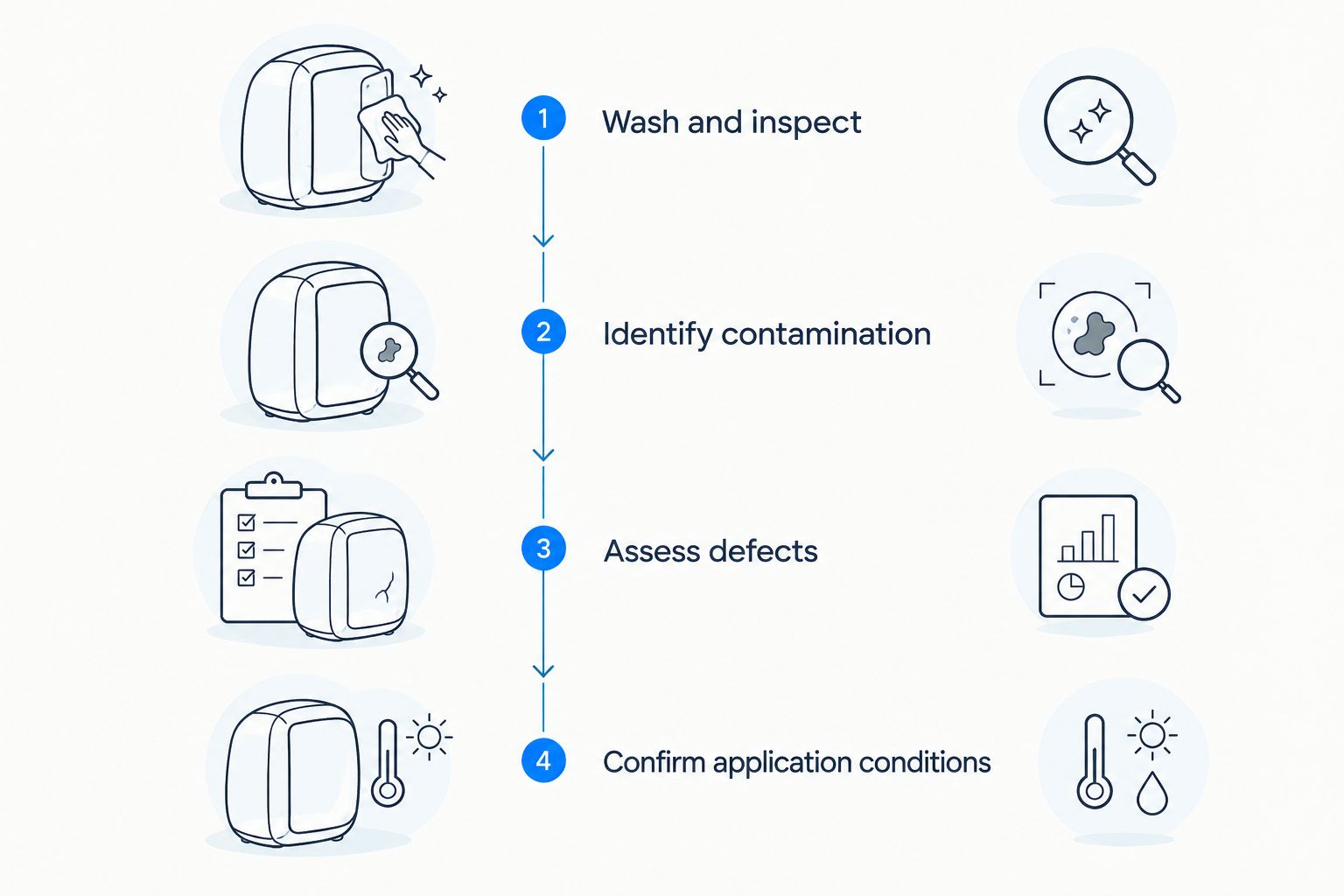
Use this sequence to separate cleaning needs from appearance repairs. The aim is to choose the necessary work, not automatically authorize every preparation step.
Wash and inspect
Inspect clean, dry paint rather than judging through road film. Review the finish in 2 lighting conditions: diffuse daylight and a focused inspection light; different viewing conditions help reveal different surface issues.
Identify contamination
Small orange or brown spots on white paint can be embedded contamination rather than a coating failure. Have the material identified before choosing chemical decontamination, mechanical treatment, or polishing.
Assess defects
After cleaning, look again at the marks that remain. Discuss whether they are suitable for correction and what improvement is realistic without unnecessary clear-coat removal.
Confirm application conditions
Check the coating’s requirements against the proposed work location. Discuss shelter, surface conditions, and how the vehicle will be protected during the required curing period.
For a 2026 quote request, prepare 3 photos: the full vehicle, the affected panel, and a close-up of the concern. Photos help explain your request, but they do not replace a physical assessment.
How to request a useful coating quote
Tell Spiffy Me that you are considering ceramic coating for white cars, then describe your particular vehicle and concerns. Include its make, model, paint condition, parking situation, and whether you know of an existing coating or repaint.
Ask these questions before booking:
- What cleaning and decontamination does the proposed work include?
- Is paint correction included, optional, or unnecessary after inspection?
- Which coating is proposed, and what instructions govern its application?
- Does the proposed location suit the work?
- What restrictions apply before driving, exposure to water, and washing?
- What is the total quote for the agreed scope?
Keep the written scope alongside the aftercare instructions. That makes it easier to distinguish required maintenance from optional additional work.
Request your ceramic coating quote
Describe your vehicle, paint concerns, and proposed Orange County service location.
How these options were ranked
The 2026 ranking prioritizes preparation responsibility, suitability for the paint’s condition, application demands, and maintenance fit. Professional application is the default for owners who want the work handled; correction moves ahead only when appearance defects justify it.
DIY coating earns a separate place for experienced owners, not a universal recommendation. Ceramic spray remains a maintenance alternative because treating it as interchangeable with an installed coating would blur an important distinction.
Which ceramic coating option should you choose?
Choose professional application if you want the clearest starting point. Ask Spiffy Me about mobile ceramic coating, then decide on correction only after the paint has been assessed.
Choose a consumer coating if you already have the skills and working conditions to apply it correctly. Choose a compatible ceramic spray when your goal is routine maintenance rather than a full installation.
For 2026, the deciding factor is not whether the packaging mentions white cars. It is whether the preparation, application, and aftercare match your vehicle.
FAQ
What's the best ceramic coating for white cars?
Professional application after a paint inspection is the default choice for owners who want the preparation and application handled. Experienced DIY owners can choose a consumer coating with instructions suited to their working conditions.
Do white cars need a special ceramic coating?
White paint alone does not establish a need for a color-specific coating. Choose according to surface compatibility, preparation requirements, application instructions, and maintenance needs.
Will ceramic coating remove orange spots from white paint?
Ceramic coating does not remove orange spots. Identify and treat the contamination or damage before applying protection.
Should I polish a white car before ceramic coating?
Polish a white car before coating only when its inspected condition justifies correction. Cleaning and decontamination come first, and not every scratch is suitable for removal.
Is ceramic spray the same as professional ceramic coating?
Ceramic spray is not automatically equivalent to a professionally installed coating. Check whether the specific product is intended for standalone protection or maintenance of an existing coating.
Does ceramic coating stop scratches and stone chips?
Ceramic coating does not make paint scratch-proof or prevent stone-chip damage. Careful washing remains necessary, and impact protection is a separate decision.
How do I get a mobile ceramic coating quote in Orange County?
Contact Spiffy Me with your vehicle details, paint concerns, and proposed service location. Ask for the preparation scope, application requirements, total quote, and aftercare instructions before booking.
One last thing
Water beading is not a complete condition report. Surface contamination and recently applied maintenance products can affect how water behaves, so do not decide that a coating needs replacement from a single rinse.
Record what was applied and keep its care instructions. When performance changes, start with an assessment and appropriate cleaning rather than automatically adding another product.


