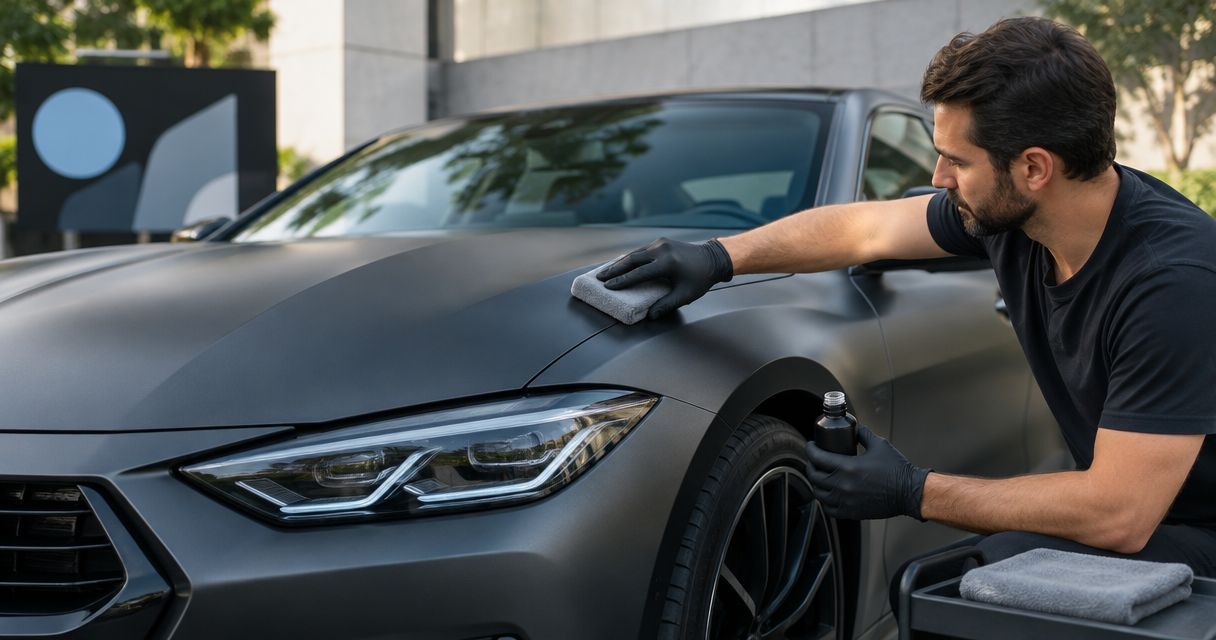
Best overall for factory matte paint: a ceramic coating explicitly approved for matte paint. Best for satin paint protection film: a film-compatible coating. Best for matte vinyl: a wrap-compatible coating. This 2026 guide explains how to choose without treating these different surfaces as interchangeable.
- Choose ceramic coating for matte cars by surface compatibility, not gloss claims or advertised hardness.
- Factory matte paint, satin paint protection film, and matte vinyl require separate compatibility checks.
- Spiffy Me provides mobile detailing and ceramic coatings for Orange County car owners.
- Approve a discreet test area and a finish-safe preparation plan before full application.
Why this matters
The best coating preserves the finish you already chose. Matte paint scatters reflected light through its surface texture; polishing that texture changes its appearance rather than simply cleaning it.
Spiffy Me is a fit for Orange County car owners seeking mobile detailing and ceramic coating services. Before requesting a coating appointment through Spiffy Me, identify whether the visible finish is paint, paint protection film, or vinyl. Then ask the business to confirm suitability for that exact surface.
A coating does not make those materials equivalent. The right choice starts with the substrate and its care instructions, not a promise of more shine.
What makes the best ceramic coating for matte cars?
Use these criteria to compare ceramic coating proposals in 2026. A product name alone does not answer them.
- Surface approval: The coating instructions explicitly cover your surface: matte paint, satin film, or matte vinyl.
- Finish preservation: The proposed product and application method suit the sheen you want to retain. Confirm the result with a discreet test area.
- Compatible preparation: Cleaning and contamination removal follow the paint, film, or wrap manufacturer's instructions. Conventional gloss-enhancing paint correction is not the default.
- Application control: The installer can meet the coating's requirements for surface temperature, lighting, shelter, and curing conditions.
- Clear aftercare: You receive product-specific instructions covering water exposure, washing, and compatible maintenance products.
- Defined scope: The quote identifies the surfaces being coated, preparation work, exclusions, and the response to an uneven application.
Reject a proposal that cannot identify the surface it is treating. An impressive durability claim does not resolve a compatibility problem.
Ceramic coating options at a glance
These are ranked application choices, not interchangeable products. Choose the row that matches your car's actual outer surface.
| Rank and option | Best for | Standout feature | Key limitation |
|---|---|---|---|
| Matte-paint-approved ceramic coating | Factory matte or satin paint | Explicit compatibility with the painted finish | Does not repair scratches or existing glossy patches |
| Satin-PPF-compatible ceramic coating | Satin or matte paint protection film | Selection follows the film manufacturer's care requirements | Paint compatibility alone does not establish film compatibility |
| Matte-vinyl-compatible ceramic coating | Matte or satin vinyl wraps | Selection accounts for the wrap material and its care instructions | Does not repair lifting edges, damaged vinyl, or failing adhesive |
All three options require a clean, suitable surface and correct application. None replaces the material underneath it or removes the need for regular washing.
1. Matte-paint-approved coating: best for factory matte paint
A ceramic coating approved for matte paint is the default choice when your car's low-sheen appearance comes from its painted finish. Its role is surface protection and easier maintenance, not gloss enhancement or scratch repair.
Look for explicit matte or satin paint compatibility in the coating manufacturer's current instructions. A statement that a coating works on clear coat is not enough to establish how it will affect a particular matte finish.
Matte-paint-approved coating pros:
- Provides a route to coating protection without selecting a product for added gloss.
- Keeps the selection focused on the original painted surface.
- Supports a preparation plan based on preserving the existing texture.
Matte-paint-approved coating cons:
- Does not correct scratches, chips, or previously polished areas.
- Requires careful residue removal because correcting an application mistake is not the same as polishing glossy paint.
- Still needs confirmation against the vehicle manufacturer's care instructions.
Best for: Owners whose vehicle has factory matte or satin paint and no film or wrap covering the area being coated.
Before approving this option, ask how the installer will remove contamination without abrasively changing the finish. Also ask what happens if a test area shows an unwanted sheen change. Do not accept polishing as the automatic next step.
Verdict: Buy a matte-paint-approved coating service only after surface compatibility and the preparation method are confirmed.
2. Satin-PPF-compatible coating: best for paint protection film
Choose a coating approved for your paint protection film when the matte appearance comes from film installed over paint. The coating contacts the film's outer surface, not the paint underneath.
Start with the film manufacturer's care instructions and the coating manufacturer's compatibility guidance. Approval for automotive paint does not, by itself, establish approval for the film's topcoat.
Satin-PPF-compatible coating pros:
- Matches the coating decision to the exposed film surface.
- Allows the installer to check the film's care requirements before preparation.
- Separates coating maintenance from the film's role as a physical protective layer.
Satin-PPF-compatible coating cons:
- Does not fix lifting edges, tears, or deterioration in the film.
- Requires compatibility checks for the specific film rather than a generic PPF claim.
- Does not replace the film manufacturer's maintenance instructions.
Best for: Owners with satin or matte paint protection film, including clear satin film applied over glossy paint.
Inspect edges, seams, and damaged areas before coating. Existing film defects need assessment first; covering them with a coating does not repair the installation. If different panels have different films, identify each material rather than assuming the whole vehicle has the same surface.
Verdict: Buy a film-compatible coating for sound satin PPF; hold if the film type or condition is unresolved.
3. Matte-vinyl-compatible coating: best for wrapped cars
A matte-vinyl-compatible ceramic coating is the relevant option when a color-change wrap creates the finish. The wrap manufacturer's guidance should control cleaning and preparation, with the coating instructions confirming vinyl compatibility.
Do not treat vinyl as painted metal. Its surface, seams, and adhesive-backed construction require a different assessment from factory paint.
Matte-vinyl-compatible coating pros:
- Directs product selection toward the material actually being coated.
- Keeps wrap-care restrictions part of the application plan.
- Provides a clear reason to inspect seams and edges before work starts.
Matte-vinyl-compatible coating cons:
- Does not restore damaged, brittle, or peeling vinyl.
- Requires confirmation for the particular wrap and finish.
- Does not eliminate careful washing around edges and seams.
Best for: Owners whose matte or satin appearance comes from a vinyl wrap rather than paint or PPF.
Provide the wrap manufacturer and product information when requesting a quote. If you bought the car already wrapped and do not know the material, find the installation records before choosing a coating. Appearance alone does not identify a wrap's compatibility requirements.
Verdict: Buy a vinyl-compatible coating only for a sound wrap with confirmed compatibility; wait when the material is unknown.
Match the coating to the surface before booking
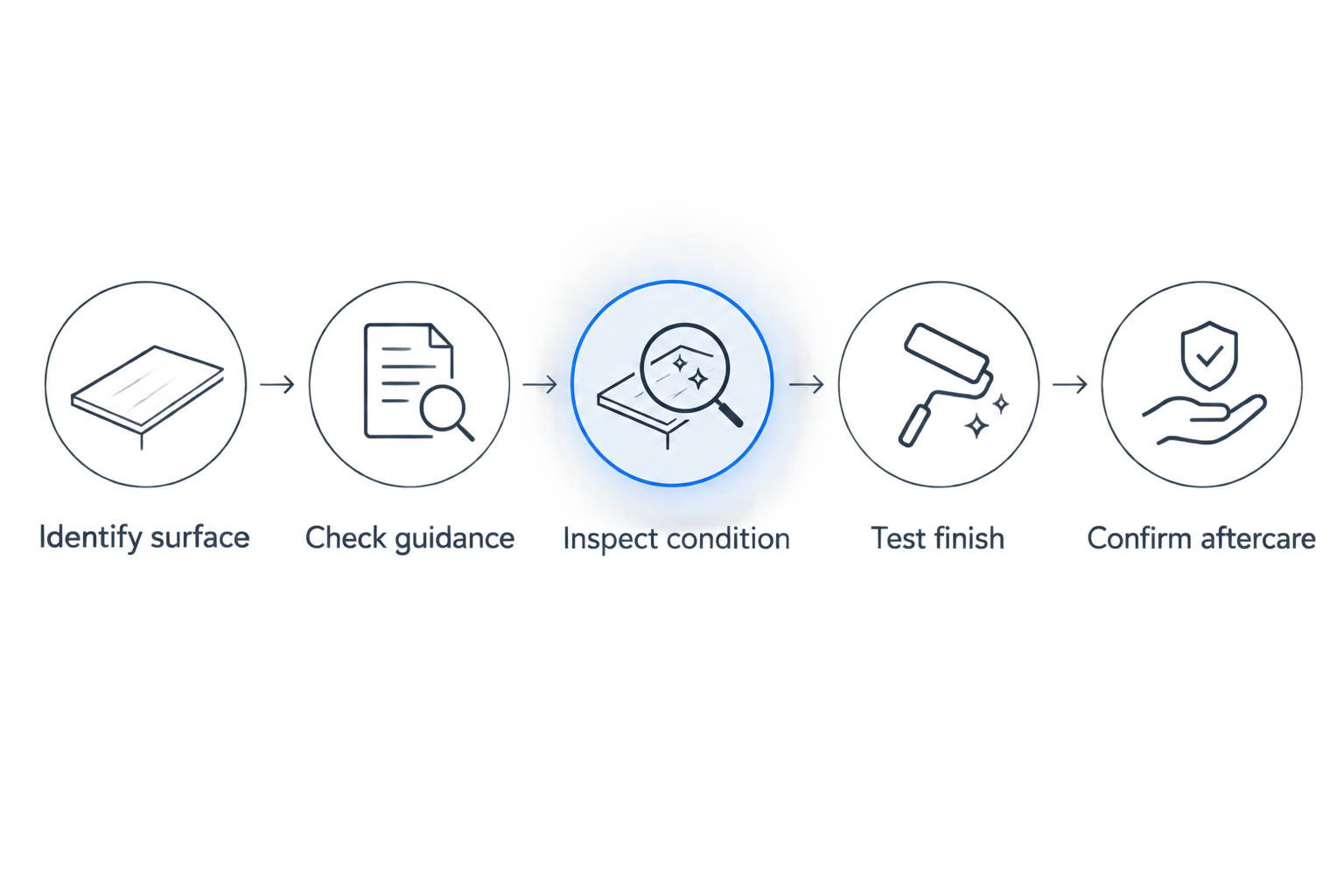
For a 2026 coating appointment, use this sequence instead of choosing from a list of durability claims. Each step resolves a different source of avoidable rework.
- Identify surface: Check the vehicle specification, film invoice, or wrap installation record. Record any panels with different materials.
- Check guidance: Compare the vehicle or surface manufacturer's care instructions with the proposed coating's technical instructions.
- Inspect condition: Identify stains, scratches, glossy patches, damaged edges, and previous treatments before preparation begins.
- Test finish: Agree on a discreet test area and inspect the result before authorizing full application.
- Confirm aftercare: Get the coating-specific restrictions and maintenance instructions in writing.
The order matters. A test area helps assess the proposed result, but it does not replace explicit material compatibility or the manufacturer's instructions.
What a matte-safe preparation plan should explain
Preparation is not shorthand for polishing. For matte finishes, the goal is to remove contamination using approved methods while preserving the surface's intended appearance.
Ask the installer to distinguish cleaning from defect correction. Dirt, bonded contamination, etched marks, and scratches are different problems; they do not share a single safe remedy.
Your preparation discussion should cover:
- Which cleaning products are approved for the surface.
- How existing waxes, sealants, or other treatments will be addressed.
- Whether any proposed mechanical decontamination is permitted by the surface manufacturer.
- Which defects will remain visible after coating.
- How the installer will inspect application residue without changing the finish.
Do not authorize a standard cut-and-polish process simply because it appears in a general ceramic coating package. Matte paint should not be polished like glossy paint, and film or vinyl must follow its own care instructions.
If a defect cannot be safely improved, leave it out of the correction scope and document it. A clear limitation is more useful than a promise the surface cannot support.
Request a useful mobile coating quote
Spiffy Me provides mobile detailing and ceramic coatings in Orange County. When requesting ceramic coating for matte cars, describe your surface and desired result rather than asking only for a coating appointment.
Send the vehicle's make, model, condition, and surface information. Include clear photographs of the whole vehicle and any stains, damaged edges, or uneven areas, then contact the business to request a quote and confirm suitability.
Ask for these details before booking:
- The proposed coating's exact name and surface compatibility.
- The preparation steps included in the quote.
- The panels and surfaces included or excluded.
- Any site requirements for the mobile appointment.
- The required conditions during application and curing.
- Instructions for collection, driving, washing, and water exposure where applicable.
For a 2026 mobile appointment, confirm the work location as well as the vehicle. Ask whether the proposed parking area provides the access and conditions the selected coating requires. Do not assume every driveway, shared parking area, or garage is suitable.
Request a ceramic coating quote
Share your vehicle, Orange County location, and whether the finish is paint, PPF, or vinyl.
How these options are ranked
The ranking prioritizes surface compatibility, finish preservation, suitable preparation, application conditions, and clear aftercare. Factory matte paint comes first because it directly answers the query; film and vinyl follow as distinct use cases, not lower-quality alternatives.
This 2026 guide does not rank named coating products without their technical documentation. A coating approved for your exact surface is a better starting point than an unrelated product with a stronger-sounding claim.
Which ceramic coating should you choose?
Choose a matte-paint-approved coating for factory matte paint, a film-compatible coating for satin PPF, and a vinyl-compatible coating for a matte wrap. If the surface is unknown, identify it before buying.
For Orange County owners considering Spiffy Me, request a vehicle-specific quote and confirmation of matte-surface suitability. Approve the preparation plan, test result, and aftercare requirements before authorizing the full application.
FAQ
What's the best ceramic coating for matte cars in 2026?
The best ceramic coating for matte cars is one explicitly approved for the car's actual outer surface. Choose matte-paint compatibility for painted finishes, film compatibility for satin PPF, and vinyl compatibility for wraps.
Will ceramic coating make my matte car shiny?
Do not assume a ceramic coating will leave the sheen unchanged. Select a product approved for the surface and inspect a discreet test area before full application.
Can you polish matte paint before ceramic coating?
Do not use conventional gloss-enhancing polishing on matte paint. Follow the vehicle manufacturer's care instructions and agree on a preparation method that preserves the finish.
Is ceramic coating the same as matte paint protection film?
No, ceramic coating and paint protection film are different forms of protection. A coating is an applied surface treatment, while PPF is a physical film installed over the vehicle's paint.
Can ceramic coating fix scratches in matte paint?
Ceramic coating does not repair scratches in matte paint. Have existing damage assessed before coating, and do not assume it can be polished away without changing the finish.
Can a mobile detailer ceramic coat a matte car?
A mobile application requires a compatible coating, suitable preparation, and a location that meets the product's application and curing requirements. Confirm matte-surface suitability and site requirements with the business before booking.
How long should I keep a newly coated matte car dry?
Follow the selected coating manufacturer's water-exposure and curing instructions. Get the specific restrictions from the installer rather than applying a generic waiting period.
What should I send when asking for a matte coating quote?
Send the vehicle details, location, photographs, and whether the finish is paint, PPF, or vinyl. Include the film or wrap manufacturer when known and identify existing damage or previous coatings.
One last thing
On a matte car, more shine is not proof of a better detail. Before your 2026 appointment, photograph the clean finish in consistent lighting so you can discuss its existing sheen and any uneven areas with the installer. The target is a compatible protective treatment, not an unrequested change in appearance.


