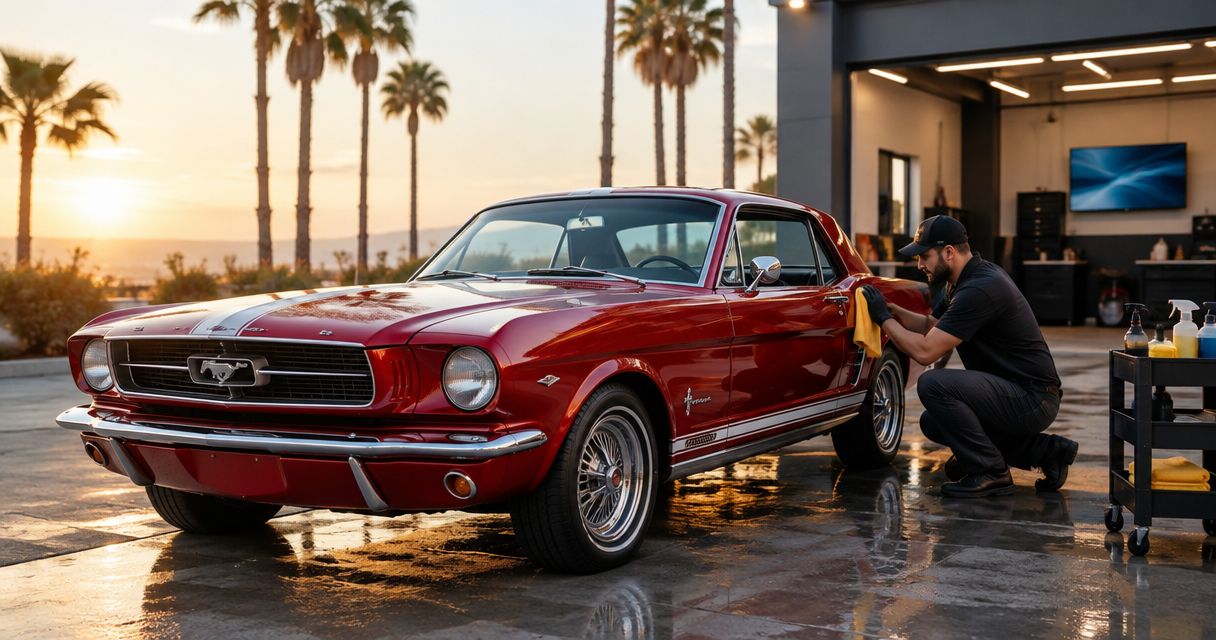
Best mobile option to assess: Spiffy Me for an Orange County detailing quote. Best for preserving an original exterior: preservation-focused cleaning. Best for aged upholstery: material-specific interior detailing. This 2026 guide ranks service approaches for classic cars, not unverified local providers, and explains what to confirm before booking.
- For best auto detailing services for classic cars orange county, prioritize paint condition and material compatibility over package size.
- Spiffy Me offers Orange County mobile detailing; confirm the proposed method for your classic car before booking.
- Preservation-focused exterior detailing suits original finishes when removing defects is not the priority.
- Choose interior detailing by upholstery material; assess paint correction and ceramic coatings separately.
Why this matters
A classic car needs a detailing plan built around its actual condition. Original paint, a later repaint, replacement upholstery and aged trim require different decisions. The car's age alone does not tell a detailer which products or methods are appropriate.
Spiffy Me is a mobile auto detailing option for Orange County owners who want interior, exterior or ceramic coating services. Confirm classic-car suitability during the quote process rather than treating general detailing availability as proof of preservation expertise.
For your 2026 booking, decide whether the goal is cleaning, appearance improvement or paint protection. These are different jobs. A service that cleans the car without altering the finish is not interchangeable with one that removes paint defects.
What makes the best classic-car detailing service?
Use these criteria before comparing packages or accepting a recommendation:
- Finish assessment: The provider asks about original paint, repainted panels, existing damage and previous treatments before recommending polishing.
- Material compatibility: The interior plan distinguishes leather, vinyl, fabric, carpet, wood and other surfaces instead of treating everything alike.
- Controlled methods: The provider explains how cleaning, moisture and abrasion will be managed around fragile finishes and trim.
- Written scope: You can identify what is included, what is excluded and which steps require separate approval.
- Practical access: The provider confirms the service location, working conditions and any access requirements before the appointment.
- Clear limits: The provider separates removable dirt from deterioration, permanent damage and restoration work.
Ask for a quote tied to those criteria. A longer service list is not automatically a better fit for a car whose original surfaces you want to preserve.
Classic-car detailing options at a glance
The order below follows a buying decision: assess the car first, choose the cleaning scope, then consider corrective or protective work. The service categories are not named packages offered by a particular business.
| Option | Best for | Standout feature | Key limitation |
|---|---|---|---|
| Spiffy Me mobile detailing assessment | Owners considering mobile service in Orange County | Offers interior/exterior detailing and ceramic coatings | Classic-car methods and appointment requirements need confirmation |
| Preservation-focused exterior detailing | Owners prioritizing original exterior surfaces | Cleaning scope that avoids automatic defect removal | Does not replace paint repair or restoration |
| Material-specific interior detailing | Cars with aged or mixed cabin materials | Separate treatment decisions for different surfaces | Cleaning cannot reverse deterioration |
| Controlled paint correction | Sound paint where appearance improvement is the goal | Targeted reduction of suitable paint defects | Abrasive work removes some paint and needs assessment |
| Ceramic coating assessment | Owners considering protection for suitable paint | Separates preparation from coating application | Does not repair failing paint or eliminate maintenance |
1. Spiffy Me: best mobile detailing option to assess
Spiffy Me provides mobile auto detailing in Orange County, including interior/exterior detailing and ceramic coatings. That makes the business a relevant starting point when you want those services without choosing a shop-based approach by default.
Your classic car still needs an individual assessment. Explain whether the paint is original, identify known repainted panels and describe fragile trim or interior surfaces before requesting a scope. Ask whether the proposed service suits those conditions.
Spiffy Me pros:
- Mobile detailing is part of the stated service offering.
- Interior and exterior detailing are available service categories.
- Ceramic coatings are also offered, allowing a separate protection discussion.
Spiffy Me cons:
- The stated service offering does not establish classic-car preservation expertise.
- Paint correction, restoration and specialist material treatments should not be assumed from a general detailing description.
- Your exact service location and appointment conditions require confirmation.
Quote guidance: Request a current quote for the agreed work, with preparation and any coating application identified separately. Confirm the booking process and working-location requirements directly; do not assume particular appointment lengths or access arrangements.
Best for: Orange County owners seeking a mobile detailing assessment before deciding between cleaning and coating work.
Verdict: Hold booking until the methods, exclusions and vehicle condition are addressed.
2. Preservation-focused exterior detailing: best for original finishes
Preservation-focused exterior detailing puts cleaning ahead of cosmetic correction. The goal is to remove surface dirt using methods appropriate to the finish, not to promise a defect-free appearance.
For original paint, aged trim or uncertain repair history, ask the provider to distinguish routine cleaning from decontamination and polishing. Each changes the scope. Approve abrasive work separately rather than allowing it to become an automatic step in a general exterior detail.
Preservation-focused exterior detailing pros:
- Keeps the service centered on the owner's preservation goal.
- Makes polishing a separate decision rather than a default inclusion.
- Creates room to identify fragile trim and damaged areas before work starts.
Preservation-focused exterior detailing cons:
- Existing scratches, oxidation or staining can remain after cleaning.
- Loose paint, damaged seals and deteriorated finishes need assessment beyond ordinary washing.
- A preservation label is meaningless without a clear description of the methods.
Ask how the detailer will handle lifting paint, damaged trim and areas you want left untouched. Photograph those areas before the appointment and include them in the written scope. A clear exclusion is better than an informal promise to be careful.
For a 2026 maintenance appointment, choose this approach when keeping the existing finish matters more than removing every visible defect.
Best for: Owners of original-finish cars who prioritize conservative exterior cleaning.
Verdict: Buy the cleaning scope only after the provider confirms the finish is suitable for the proposed methods.
3. Material-specific interior detailing: best for aged upholstery
Material-specific interior detailing treats the cabin as a collection of different surfaces. Leather, vinyl, fabric, carpet and wood should not receive an identical cleaning process simply because they share the same interior.
Tell the provider about brittle upholstery, loose stitching, damaged coatings, water staining and previous repairs. Ask for an inconspicuous compatibility test before broader treatment, particularly where the material or its condition is uncertain.
Material-specific interior detailing pros:
- Focuses cleaning decisions on the surface being treated.
- Supports separate approval for sensitive or damaged areas.
- Distinguishes removable dirt from wear that needs repair.
Material-specific interior detailing cons:
- Cleaning does not repair cracking, tears or weakened stitching.
- Aggressive moisture or agitation is unsuitable for some deteriorated materials.
- An interior detail does not establish that recoloring or upholstery restoration is included.
Request a clear answer about extraction, steam and any proposed dressings. These are techniques and treatments to assess, not automatic requirements for every classic cabin. Specify whether you want surfaces left without added gloss or fragrance.
Remove personal items before the appointment and identify anything that should remain untouched. Include loose switches, delicate instruments and repaired trim in that discussion rather than expecting the detailer to infer their condition.
Best for: Classic cars with mixed interior materials, aged upholstery or sensitive cabin finishes.
Verdict: Buy a material-specific cleaning plan; skip an unexplained all-surfaces treatment.
4. Controlled paint correction: best for suitable paint defects
Paint correction uses abrasive processes to reduce certain visible defects. It removes some paint material, so the decision is different from choosing a wash or a protective coating.
Before approving correction, ask how the provider will assess paint condition, repaired panels, edges and existing failure. A test area helps establish what the proposed method achieves on that vehicle. Do not authorize whole-car correction solely from a package description.
Controlled paint correction pros:
- Targets appearance improvement rather than general cleaning.
- Allows a test area before committing to broader work.
- Supports different treatment decisions for panels with different histories.
Controlled paint correction cons:
- Abrasive correction removes paint material.
- It does not repair peeling paint or structural finish failure.
- The most aggressive approach is not automatically appropriate for an older finish.
Ask the provider to show the test result and explain what defects remain. Agree on an acceptable outcome before expanding the work. Leaving a defect in place is a valid choice when further correction conflicts with preserving the finish.
For 2026, use a written approval that identifies the panels and the intended level of improvement. Avoid instructions such as making it perfect; they do not define acceptable material removal or a stopping point.
Best for: Owners seeking appearance improvement on paint assessed as suitable for correction.
Verdict: Hold until the assessment and test area support the proposed work.
5. Ceramic coating assessment: best for a protection decision
Ceramic coating is a paint-protection treatment, not a repair for failing paint. Evaluate the condition of the finish and the required preparation before choosing the coating itself.
Ask whether the proposed preparation includes correction, which surfaces will be treated and what aftercare is required. If your main question is whether the treatment fits your use of the car, read the guide to ceramic coating value in Orange County.
Ceramic coating assessment pros:
- Makes surface suitability part of the protection decision.
- Separates cleaning and correction from coating application.
- Gives you an opportunity to agree on aftercare before booking.
Ceramic coating assessment cons:
- Coating does not correct damaged or failing paint.
- Preparation adds a separate decision about treatment of the finish.
- Coated paint still needs washing and maintenance.
For an original-finish car, do not assume that a modern protection treatment is the right choice simply because it is available. Ask how the finish, your preservation priorities and future repair plans affect the recommendation.
A 2026 coating quote should describe the preparation, treated surfaces and maintenance instructions. Product identity and any claimed durability should come from the provider's written proposal, not a general comparison article.
Best for: Owners considering added protection on paint assessed as suitable for coating.
Verdict: Hold until preparation and aftercare are clear; skip coating over unresolved finish failure.
How these options are ranked
The ranking prioritizes assessment, material compatibility and written scope before appearance improvement or protection. Mobile convenience belongs early in the decision, but it does not override finish suitability.
This is a service-selection guide, not a scored comparison of local businesses. There are no verified provider test results or comparable quotes behind a claim that one company delivers better classic-car outcomes than another.
Which classic-car detailing service should you choose?
Start with a condition-led detailing quote, not the largest package. If preserving original surfaces is your priority, ask for exterior cleaning and interior treatment appropriate to the materials before discussing correction or coatings.
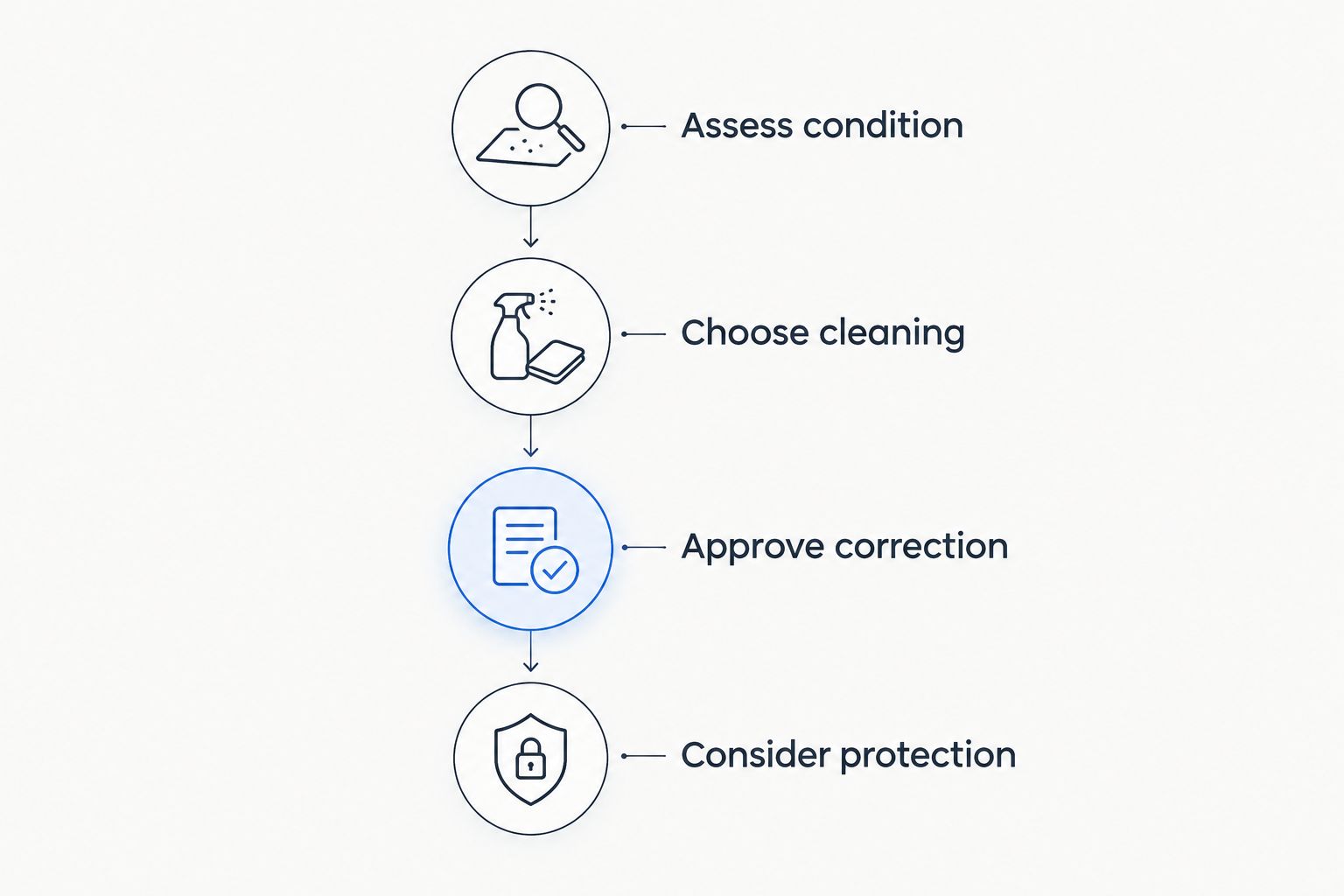
Use the following decision sequence:
- Assess condition: Identify original finishes, repairs and fragile areas.
- Choose cleaning: Select exterior, interior or both according to the actual need.
- Approve correction: Treat abrasive work as a separate authorization.
- Consider protection: Discuss coatings only after surface suitability is established.
Spiffy Me offers the mobile detailing categories needed to begin that discussion in Orange County. Describe your car and your priorities, then request confirmation of the appropriate scope. Confirm your specific service location before arranging an appointment.
What to send with your quote request
For a useful starting brief, send 4 overview photos: front, rear, cabin and the main problem area. Add close-ups wherever damage or deterioration needs explanation; this is a suggested briefing format, not a substitute for inspection.
Request 2 separate approvals if correction and coating are proposed: one for abrasive preparation and one for the protection treatment. Keep 1 written scope covering included work, exclusions and areas that must remain untouched. These controls make the booking decision clearer without relying on an assumed package.
State the vehicle's make, model and model year, plus whatever you know about repainting or upholstery replacement. Explain whether your priority is preservation, routine cleaning or appearance improvement. Ask for current pricing tied to that brief, then confirm appointment arrangements directly.
Request a classic-car detailing quote
Describe your car, its condition and the interior, exterior or coating work you want assessed.
FAQ
What's the best auto detailing service for a classic car in Orange County?
The best fit is a provider that assesses your car's finish and materials before recommending work. Spiffy Me offers mobile interior/exterior detailing and ceramic coatings in Orange County; confirm classic-car suitability and the written scope before booking.
Is mobile detailing suitable for an older car?
Mobile detailing is a service format, not proof of classic-car suitability. Confirm the proposed methods, working-location requirements and approach to fragile paint or trim before approving the appointment.
Should original paint be polished during a detail?
Original paint should not be polished automatically. Abrasive correction removes paint material, so require an assessment and a test area before deciding whether the appearance improvement fits your preservation goal.
Can interior detailing repair cracked leather or damaged vinyl?
Interior cleaning does not repair cracked leather, tears or deteriorated vinyl. Ask the provider to distinguish cleaning from repair or restoration and to test the proposed treatment where material compatibility is uncertain.
Is ceramic coating better than exterior detailing for a classic car?
Ceramic coating and exterior detailing serve different purposes. Cleaning addresses surface dirt, while coating adds a protection treatment to suitable surfaces; assess paint condition and preparation before choosing either scope.
How do I get a detailing quote for my classic car?
Provide the vehicle details, service location, condition photos and your main goal. Ask for a written scope separating cleaning, correction and coating, then confirm current pricing and booking arrangements directly with the provider.
What should I confirm before a classic-car detailing appointment in 2026?
Confirm service-location suitability, included work, excluded areas and approval requirements for any correction or coating. Identify fragile trim, damaged upholstery and known paint repairs before work begins.
One last thing
Give the detailer a do-not-touch list alongside the cleaning request. Original decals, loose trim, damaged upholstery and uncertain repairs deserve explicit instructions. A useful scope says what the provider will leave alone, not just what will be cleaned.
For your 2026 appointment, approve the smallest scope that meets your goal. Add correction or protection only after the assessment supports it.


