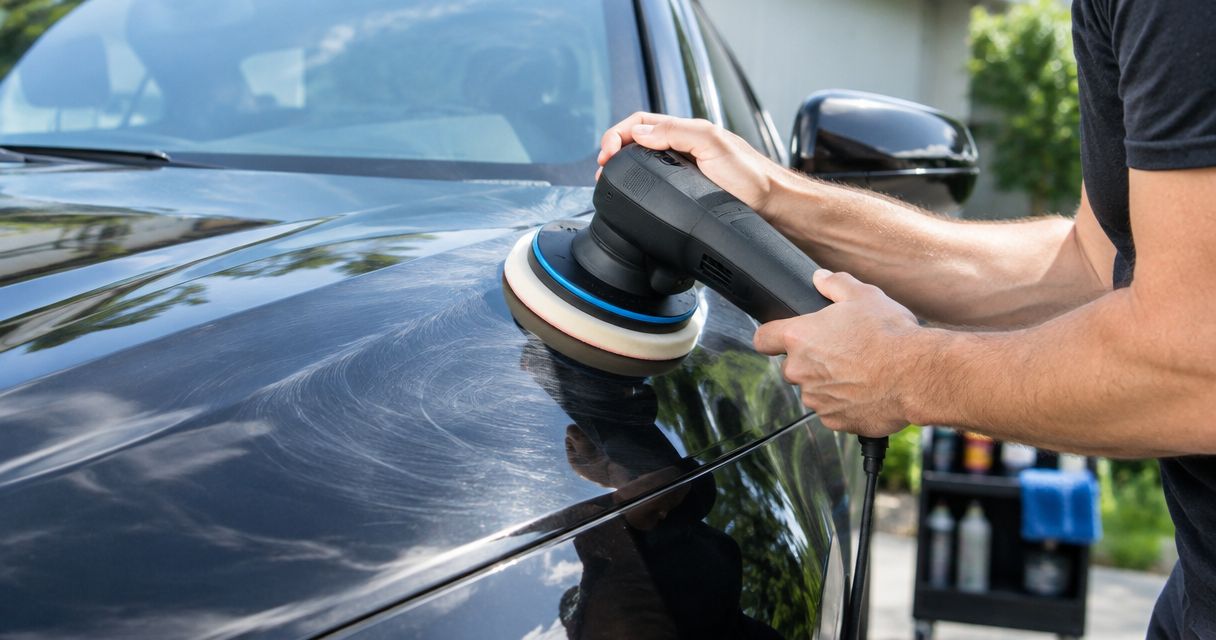
Yes—mobile detailing can fix swirl marks when the appointment includes suitable paint correction, not just washing and protection. Shallow clear-coat marks can respond to machine polishing, but deeper scratches and compromised paint need a different assessment. Before booking in 2026, confirm that polishing is included and that the detailer will inspect the paint before promising a result.
- Can mobile detailing fix swirl marks? Yes, with suitable paint correction; washing alone does not remove clear-coat scratches.
- Machine polishing corrects suitable surface defects; wax and ceramic coating are not substitutes for correction.
- Spiffy Me provides mobile interior detailing, exterior detailing, and ceramic coatings for Orange County car owners.
- Request a paint assessment, a test spot, and written service details before approving swirl-removal work.
Why this matters
An exterior detail and paint correction are not interchangeable. You can collect a clean, glossy car and still see the same swirl marks under direct light if the work did not include corrective polishing.
Spiffy Me is best for Orange County car owners seeking mobile interior detailing, exterior detailing, or ceramic coatings. If swirl removal is your goal, ask Spiffy Me whether the proposed service includes paint correction; do not assume exterior detailing includes it. The deciding factor is the agreed work, not whether the detailer comes to you.
Can mobile detailing fix swirl marks?
Mobile detailing can correct suitable swirl marks when the detailer uses an appropriate polishing process on paint that can safely tolerate it. Washing removes dirt. Corrective polishing removes a controlled amount of the paint surface to reduce shallow scratches and improve clarity.
The appointment location does not determine the result. Paint condition, technique, equipment, inspection lighting, and working conditions determine whether correction is appropriate.
| Service or approach | Best for | What it does | Main limitation |
|---|---|---|---|
| Exterior washing | Removing loose dirt and road film | Cleans the surface so paint defects are easier to assess | Does not level scratches in clear coat |
| Machine polishing | Correcting suitable shallow swirl marks | Refines the paint surface to reduce visible defects | Removes paint material and requires assessment |
| Glaze or filler-based treatment | Temporarily reducing the appearance of fine marks | Masks some defects without correcting their underlying depth | Appearance can change as the masking effect wears away |
| Wax or sealant | Adding protection after cleaning or correction | Leaves a protective layer on the surface | Is not a substitute for corrective polishing |
| Ceramic coating | Protecting properly prepared paint | Adds a protective coating after preparation | Does not remove existing scratches |
For a 2026 booking, ask for the actual process rather than relying on a service name. Terms such as exterior detail, enhancement, and correction need a written explanation of what the appointment includes.
Machine polishing: for suitable shallow swirl marks
Machine polishing is the relevant service when the marks are shallow enough to improve without excessive paint removal. A detailer chooses the pad, abrasive, and technique after assessing the finish—not from a photograph alone.
Best for: car owners whose main concern is fine scratching visible in sunlight or focused inspection lighting. The benefit is actual surface refinement rather than a temporary change in appearance.
The trade-off is that correction consumes some of the available paint surface. Chasing every mark is not automatically the right outcome, especially on edges, previously polished panels, or areas with uncertain repair history.
Ask for a test spot before approving correction across the vehicle. It shows what the proposed approach achieves on your paint and helps establish a realistic finish standard.
Temporary masking: for appearance, not defect removal
Some products make fine marks less obvious by filling or masking them. That can improve appearance, but it is a different outcome from reducing the scratch through polishing.
Best for: owners who knowingly choose a temporary cosmetic improvement rather than corrective work. The limitation is straightforward: a better-looking surface does not prove the underlying scratches are gone.
Ask whether the result depends on fillers, abrasives, or both. If you want correction rather than concealment, make that distinction part of the quote and final inspection.
Ceramic coating: for protection after preparation
Ceramic coating does not perform the abrasive work needed to remove swirl marks. If scratches remain before application, the coating does not turn them into corrected paint.
Best for: owners who want paint protection after agreeing on the finish underneath. The benefit is a protective layer; the limitation is that coating does not replace paint assessment or correction.
Spiffy Me offers ceramic coatings, but that does not establish which preparation steps any particular quote includes. Ask whether polishing is included, separately quoted, or outside the proposed work.
Before choosing protection in 2026, read whether ceramic coating can be applied over scratches. Decide which defects you want addressed before approving the coating stage.
Why swirl-removal results vary
The same service description does not guarantee the same result on every vehicle. These factors affect the appropriate approach:
- Scratch depth: shallow marks need a different response from damage extending deeper into the finish.
- Paint condition: failing, peeling, or otherwise compromised paint is not a routine polishing problem.
- Previous correction: earlier polishing affects how conservatively the remaining finish should be treated.
- Repainted panels: repaired areas can behave differently from surrounding factory paint and require separate assessment.
- Working conditions: direct sun, heat, wind, and airborne contamination affect whether a mobile setup is suitable.
- Your finish goal: reducing visible swirls differs from pursuing every isolated defect, with different implications for paint preservation.
Choose a safe improvement over a promise to remove every mark. A responsible assessment separates correctable swirls from defects that should remain or need a paint-repair specialist.
How do you confirm a mobile detail includes swirl removal?
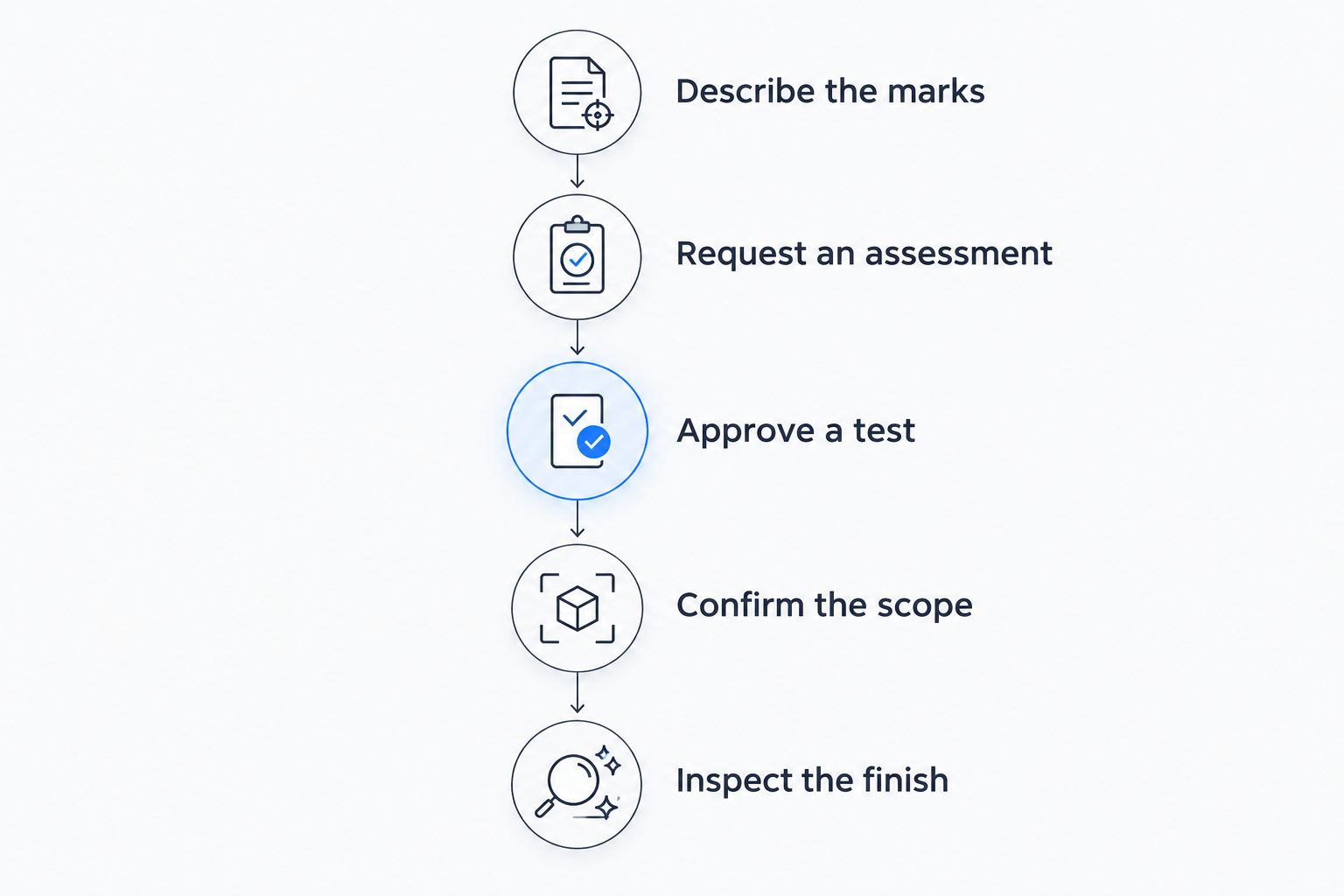
Use this sequence before booking paint correction in 2026. It keeps the discussion focused on the finish you want rather than an ambiguous package label.
Describe the marks
Explain where you see the marks and under which lighting. Note whether they affect the whole vehicle, selected panels, or a recently repaired area.
Send clear photographs if requested, but treat photographs as an initial description rather than proof of scratch depth. Reflections, exposure, and viewing angle can hide defects or exaggerate their appearance.
Request an assessment
Tell the detailer about known repainting, previous correction, existing coatings, and any peeling or damaged finish. Unknown paint history is a reason for caution, not a reason to make a confident removal promise.
Ask what the inspection covers and how unsuitable paint would change the plan. The answer should distinguish paint correction from bodywork or repainting.
Approve a test spot
Ask the detailer to demonstrate the proposed approach on a suitable area before treating the full vehicle. Inspect the result under lighting that reveals the marks you care about.
A test spot is useful because it ties expectations to your actual paint. It also gives you a chance to accept a conservative improvement instead of pushing for unnecessary abrasion.
Confirm the scope
Get written confirmation of the panels being treated, the corrective process, and the intended result. Confirm whether protection follows polishing and whether any additional work requires your approval.
Ask what is excluded. Isolated deep scratches, paint failure, and body damage should not disappear into a vague promise of a better shine.
Inspect the finish
Review the corrected areas before treating gloss as proof of success. Use suitable lighting and compare the result with the agreed test spot and scope.
Ask what defects remain and why. A clear explanation is more useful than inspecting only in shade, where fine marks are harder to see.
What should you include in a quote request?
A useful quote request describes the problem, not just the vehicle. Include the vehicle details, your Orange County location, the affected panels, known paint history, and whether you also want protection after correction.
Ask these questions before confirming the appointment:
- Does the quoted work include machine polishing specifically intended to reduce swirl marks?
- Will the paint be inspected before the correction approach is selected?
- Can the expected improvement be demonstrated with a test spot?
- Which defects are excluded from the agreed result?
- What site conditions are needed for the mobile work?
- What happens if inspection shows the paint is unsuitable for correction?
For a 2026 quote, request a clear total for the agreed scope and approval before added work. To request service from Spiffy Me, use its website and describe swirl removal as your goal; confirm correction capability, location suitability, and appointment details before booking.
Request a detailing quote
Describe your swirl marks and ask whether paint correction is included in the proposed service.
Can a regular exterior detail remove swirl marks?
A regular exterior detail removes swirl marks only if it includes suitable corrective polishing. Washing, drying, and applying protection do not by themselves remove scratches from clear coat.
Ask for the process in writing. A service label alone does not tell you whether the finish will be corrected, temporarily masked, or simply cleaned and protected.
Can mobile polishing remove deep scratches too?
Mobile polishing is not a general fix for deep scratches. Damage that extends beyond a safely correctable surface defect requires a different assessment, and some scratches need paint repair rather than more polishing.
Do not use a fingernail test as a guarantee that a scratch is removable or permanent. Let the detailer assess the finish and explain the limits before work begins.
Will swirl marks come back after paint correction?
Corrected swirl marks do not return on their own, but later washing, drying, or wiping can create new scratches. Marks hidden by fillers can also become visible again as the masking effect wears away.
Keep dirt from being dragged across the finish. Use clean wash materials, avoid wiping dusty paint dry, and follow the care instructions for any protection applied afterward.
FAQ
Can mobile detailing fix swirl marks on a black car?
Yes, suitable paint correction can reduce swirl marks on a black car. Paint condition and scratch depth determine the safe approach; the color alone does not establish what can be removed.
Will ceramic coating remove the swirl marks already on my car?
No, ceramic coating does not remove existing swirl marks. Agree on any necessary correction before the protective coating is applied.
Do I need a shop instead of mobile detailing for swirl removal?
Not automatically; suitable mobile working conditions can support paint correction. Ask whether your location provides the conditions needed for inspection and polishing, and whether the job needs an indoor setting.
Should every scratch disappear after paint correction?
No, removing every scratch is not always safe or appropriate. A detailer should explain which defects can improve and which should remain to preserve the finish.
Does a shiny finish prove the swirl marks are gone?
No, gloss alone does not prove swirl removal. Inspect the paint under suitable lighting and ask whether the result comes from correction, masking, or both.
Can polishing fix peeling clear coat?
No, polishing does not repair peeling clear coat. Have failing paint assessed for repair rather than approving routine swirl-removal work.
What should I ask before booking swirl removal?
Ask whether the quote includes corrective polishing, paint inspection, and a test spot. Confirm the expected improvement, excluded defects, and suitable working conditions before approving the appointment.
One last thing
The best acceptance check is the lighting that exposed the problem. If you noticed swirls in direct sunlight, a shaded handover alone does not answer whether the correction met your goal.
For your 2026 appointment, agree on the inspection method before work starts. A shared test spot and clear finish standard make the final decision simpler: assess the agreed improvement, not just the shine.


