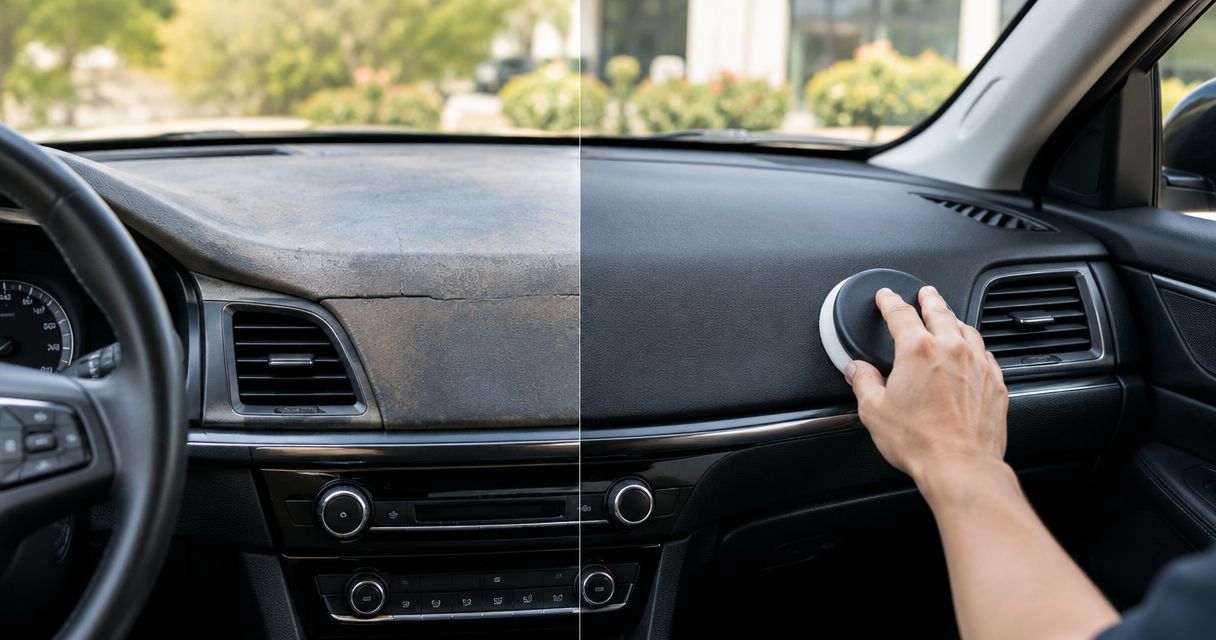
Interior detailing can improve a dashboard that looks faded because of dirt or surface residue, but it cannot reverse permanent sun damage or repair cracks. Cleaning and a material-compatible protectant can improve appearance; lost color, peeling finishes, and split dashboard material require a separate repair assessment.
- Can interior detailing fix faded dashboard surfaces? Only when the faded appearance comes from removable dirt or residue.
- Permanent discoloration and dashboard cracks need repair assessment, not more dressing.
- Spiffy Me provides mobile interior detailing for Orange County car owners; confirm dashboard treatment before booking.
- Ask for a clean test spot before deciding whether the dashboard needs refinishing.
Can interior detailing fix sun-faded or cracked dashboards?
Interior detailing cleans the dashboard; it does not rebuild damaged material. The right next step depends on whether you see contamination, discoloration, or physical damage. A dashboard can have more than one problem at the same time.
For Orange County car owners considering Spiffy Me, describe the dashboard separately from the rest of the interior. A request for interior cleaning does not automatically communicate that you also want cracks or faded color addressed.
| Dashboard condition | What detailing can do | What detailing cannot do | Best next step |
|---|---|---|---|
| Dust and surface residue | Remove contamination with compatible cleaning methods | Guarantee that the original color remains underneath | Best for cleaning: request a small test area |
| Uneven appearance from old dressing | Remove compatible residue and reassess the finish | Guarantee removal without checking material compatibility | Best for residue: identify previous products if known |
| Permanent sun fading | Clean the surface and clarify the remaining discoloration | Replace lost pigment or reverse material degradation | Best for color loss: request a refinishing assessment |
| Cracks, lifting, or peeling | Clean surrounding intact areas carefully | Bond splits, replace missing material, or restore a failed finish | Best for physical damage: consult a repair specialist |
A darker-looking dashboard is not necessarily a repaired dashboard. Judge the result after cleaning and drying, before a dressing changes the surface sheen.
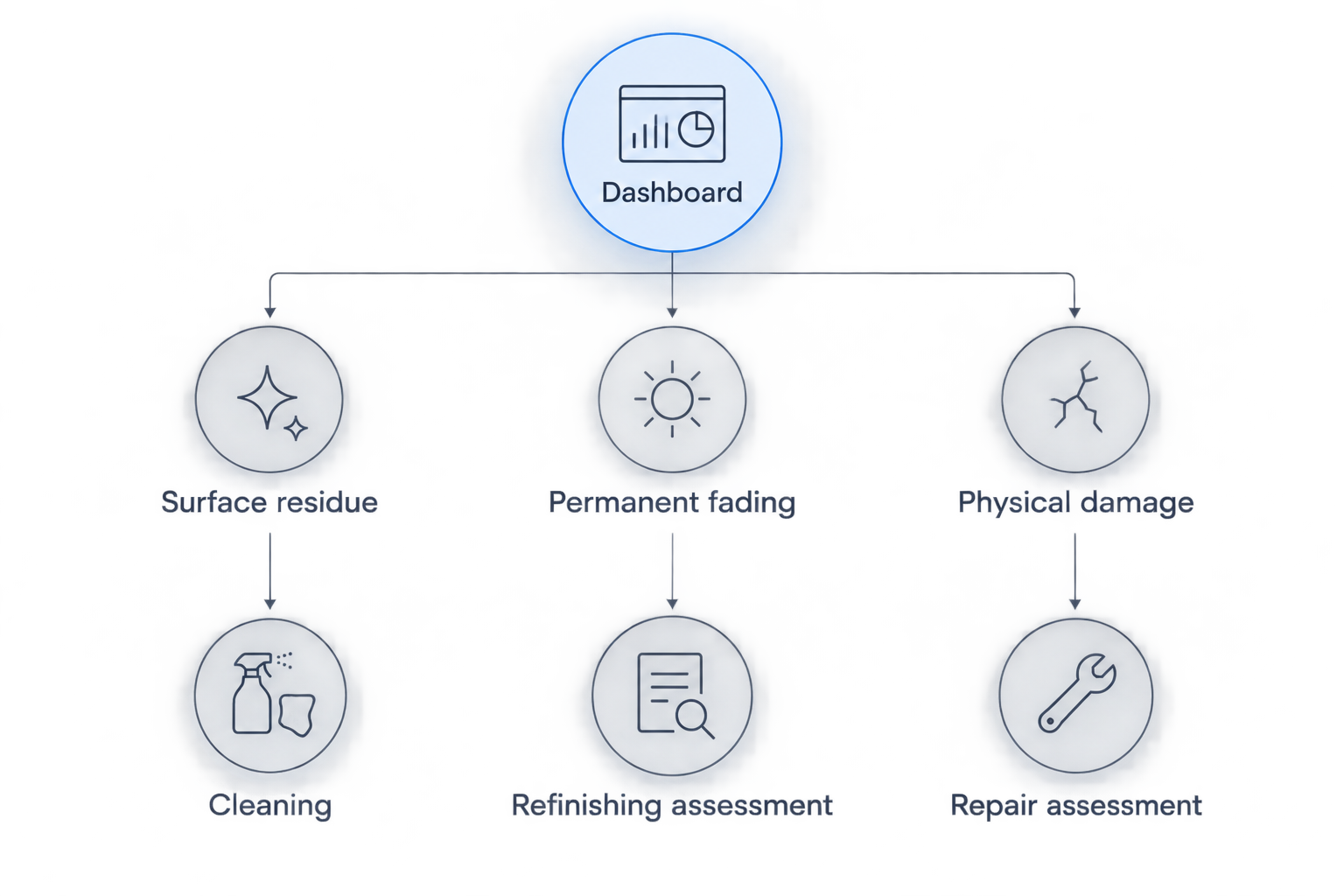
Why this matters
Booking the wrong service leaves the central problem untouched. You can receive a properly cleaned interior and still have a faded dashboard because cleaning and restoration solve different problems.
For a 2026 detailing appointment, agree on the outcome before authorizing work. Ask whether the goal is to remove residue, improve the finish temporarily, or correct damaged material. Those are separate requests, even when they concern the same panel.
Surface residue: cleaning is the right starting point
Dust, grime, and product buildup can make dashboard surfaces look dull or uneven. Removing that layer lets you assess the material underneath without confusing contamination with permanent fading.
Best for an intact but dirty dashboard: start with compatible cleaning, not recoloring. Check the vehicle owner's manual for care instructions and disclose anything previously applied. A dashboard described as plastic can include different coatings and trim materials that do not tolerate identical treatments.
Ask the detailer to evaluate a small, inconspicuous area before treating the full panel. The useful result is a clean, dry section that you can compare with the untreated surface under similar lighting.
Cleaning has a clear limit: it removes material sitting on the surface, not damage within it. If the clean area remains lighter or blotchy, adding stronger cleaner is not automatically the next step. Stop and reassess rather than treating every pale patch as stubborn dirt.
Permanent sun fading: detailing has a cosmetic limit
Sun exposure can change a dashboard's color and degrade its surface materials. Cleaning does not replace pigment that has been lost or reverse that deterioration. A protectant also does not turn damaged material back into its original condition.
Best for persistent color loss: have the surface assessed for refinishing. A specialist needs to identify the material, inspect the existing finish, and decide whether a compatible repair is appropriate. Do not assume that a general-purpose trim restorer belongs on an interior dashboard.
The benefit of cleaning first is diagnostic: it separates removable contamination from discoloration that remains. The drawback is that a cleaner dashboard can make existing color differences easier to see. That is not evidence that cleaning failed; it can reveal the condition previously hidden by residue.
When comparing 2026 service descriptions, distinguish a promise to clean or dress the dashboard from a promise to restore its color. Ask what the provider means by restoration before relying on that word.
Cracked dashboards: request a repair assessment
A crack is a physical break, not a cleaning problem. Interior detailing does not reconnect the split, replace missing material, or restore the original dashboard structure. Dressing over it changes neither the break nor the underlying damage.
Best for cracks, peeling, or lifting: consult a qualified automotive interior repair specialist. Localized repair, refinishing, or component replacement requires inspection; no single approach fits every dashboard. A repaired area also needs assessment for color and texture matching.
Take particular care around passenger-airbag covers and deployment seams. Do not apply filler, adhesive, paint, or a dashboard covering over those areas without vehicle-specific guidance from a qualified professional. Cosmetic improvement must not interfere with a safety system.
Detailing still has a role when the dashboard is damaged: you can request careful cleaning of intact surrounding surfaces. Confirm which areas should remain untouched, especially where the finish is lifting or material is separating.
Why dashboard results vary
The result depends on the surface condition, not simply how thoroughly someone cleans it. Before approving treatment, discuss these factors:
- Material and finish: Hard trim, coated surfaces, and upholstered dashboards need compatible care. Appearance alone does not establish the correct cleaning method.
- Type of discoloration: Surface residue and permanent color loss can look similar before cleaning, but they respond differently.
- Physical condition: Cracks, peeling, and lifting place limits on how the surface should be handled. More scrubbing is not a repair method.
- Previous treatments: Old dressing, recoloring, or adhesive residue can complicate assessment. Tell the provider what you know about past work.
- Expected finish: A clean, low-sheen dashboard and a darker, dressed dashboard are different visual outcomes. Specify which result you want.
- Existing repairs: Refinished areas can differ from surrounding original material. Point them out before cleaning begins.
These details help define an appropriate service. They do not support a guarantee that a faded dashboard will return to its original appearance.
How should you assess a faded dashboard before booking?
Use this sequence to explain the problem clearly and avoid requesting the wrong treatment. You do not need to diagnose the material yourself; document what you can see and let the provider confirm the service scope.
- Inspect in daylight. Look at the dashboard when parked safely, with the surface dry. Note pale areas, glossy patches, peeling edges, and visible splits without pressing or picking at damaged sections.
- Take overview photos. Show the whole dashboard and where the affected area sits. This gives the provider context that a tightly cropped image cannot provide.
- Take detail photos. Photograph the discoloration or crack from a useful angle without filters. Include nearby intact material so differences in color and texture remain visible.
- Describe previous products. Mention cleaners, dressings, recoloring, or repairs if known. Do not apply another product immediately before the assessment just to improve the photographs.
- Confirm the intended result. Ask what cleaning should change, what damage will remain, and whether a repair specialist should inspect the dashboard first.
For a 2026 appointment, include the vehicle's make and model, the visible condition, and your Orange County location in the initial inquiry. Ask the provider to confirm location coverage and appointment requirements rather than assuming every parking arrangement is suitable.
What should you ask before approving dashboard treatment?
Ask for the dashboard work to be described in plain language. Cleaning, protective dressing, color restoration, and crack repair should not be treated as interchangeable terms.
Use these questions when discussing the service:
- Is this treatment intended to clean the surface or change its appearance?
- Will you assess a small area before treating the dashboard?
- Is the proposed product compatible with this dashboard material?
- What discoloration or damage should I expect to remain?
- Does the quote include dashboard treatment, or only general interior cleaning?
- Should a repair specialist inspect the damaged area before detailing?
Spiffy Me is a fit for Orange County car owners seeking mobile interior detailing. Describe the dashboard concern when you contact the team, and ask whether the requested treatment falls within the service being quoted. Dashboard refinishing or crack repair should not be assumed to be included.
When requesting a 2026 quote, separate the desired cleaning work from any repair request. Ask for the scope and booking instructions before confirming the appointment so you understand what the visit is intended to accomplish.
Request an interior detailing quote
Describe the dashboard condition and ask what treatment is included before booking.
Will dashboard protectant fix fading?
Dashboard protectant does not repair permanent fading or cracks. Depending on the product and surface, it can change sheen or make the material look darker, but that appearance change is not proof that damaged color has been restored.
Choose only a product intended for the specific interior material and follow its instructions. Do not transfer an exterior coating recommendation to an interior dashboard simply because both products use similar protection language.
The practical benefit of an appropriate dressing is its intended surface-care function. The limitation is equally important: it cannot rebuild a split or replace a failed finish. Ask to evaluate the cleaned surface before dressing so you can distinguish cleaning results from a cosmetic change.
Should you detail the dashboard before repairing it?
Cleaning is useful when contamination prevents a clear assessment, but damaged surfaces need a repair plan before aggressive treatment. If the dashboard is cracked, peeling, sticky, or previously refinished, ask the repair provider what preparation is appropriate.
Do not sand, recolor, or coat the area merely to prepare it for a detailing appointment. Those steps change the surface and can complicate the next assessment. Share photographs first and agree on the order of work.
For 2026 booking plans, avoid arranging separate cleaning and repair services without telling each provider about the other. The repair process can have its own preparation and aftercare requirements; obtain those instructions from the person doing the repair.
FAQ
Can interior detailing make a faded dashboard look new again?
Interior detailing cannot guarantee a like-new dashboard. Cleaning can improve a dull appearance caused by residue, but permanent discoloration and physical damage remain separate repair issues.
How do I tell whether my dashboard is dirty or sun-faded?
A compatible cleaning test on a small, inconspicuous area helps distinguish removable residue from persistent discoloration. Evaluate the area after it dries and before applying dressing.
Can a detailer remove cracks from my dashboard?
Interior detailing does not remove dashboard cracks. Ask a qualified automotive interior repair specialist to assess the damaged material and any nearby airbag components.
Will ceramic coating repair a faded dashboard?
Ceramic coating does not repair lost dashboard color or cracked material. Do not assume an exterior ceramic coating is suitable for an interior surface; compatibility must be confirmed for the specific product and material.
Should I use a shiny dressing to hide dashboard fading?
A shiny dressing does not repair dashboard fading. Ask to see the clean, dry surface first, and choose a material-compatible finish rather than judging success by how dark the panel looks.
Can I request dashboard cleaning from Spiffy Me?
Spiffy Me provides mobile interior detailing for Orange County car owners. Describe the dashboard condition when requesting a quote and confirm which dashboard treatment is included before booking.
What should I send when requesting a dashboard detailing quote?
Send the vehicle's make and model, your location, overview photos, and close-ups of the affected dashboard. Explain whether you want cleaning, assessment of discoloration, or help identifying a separate repair need.
One last thing
Ask to inspect the dashboard after cleaning but before dressing. That simple checkpoint helps you judge what was removed and what damage remains. A darker finish can look better without representing a repair, so agree on the difference before the work starts.


